Guide to Car Carpets and Interior Flooring Materials and Maintenance
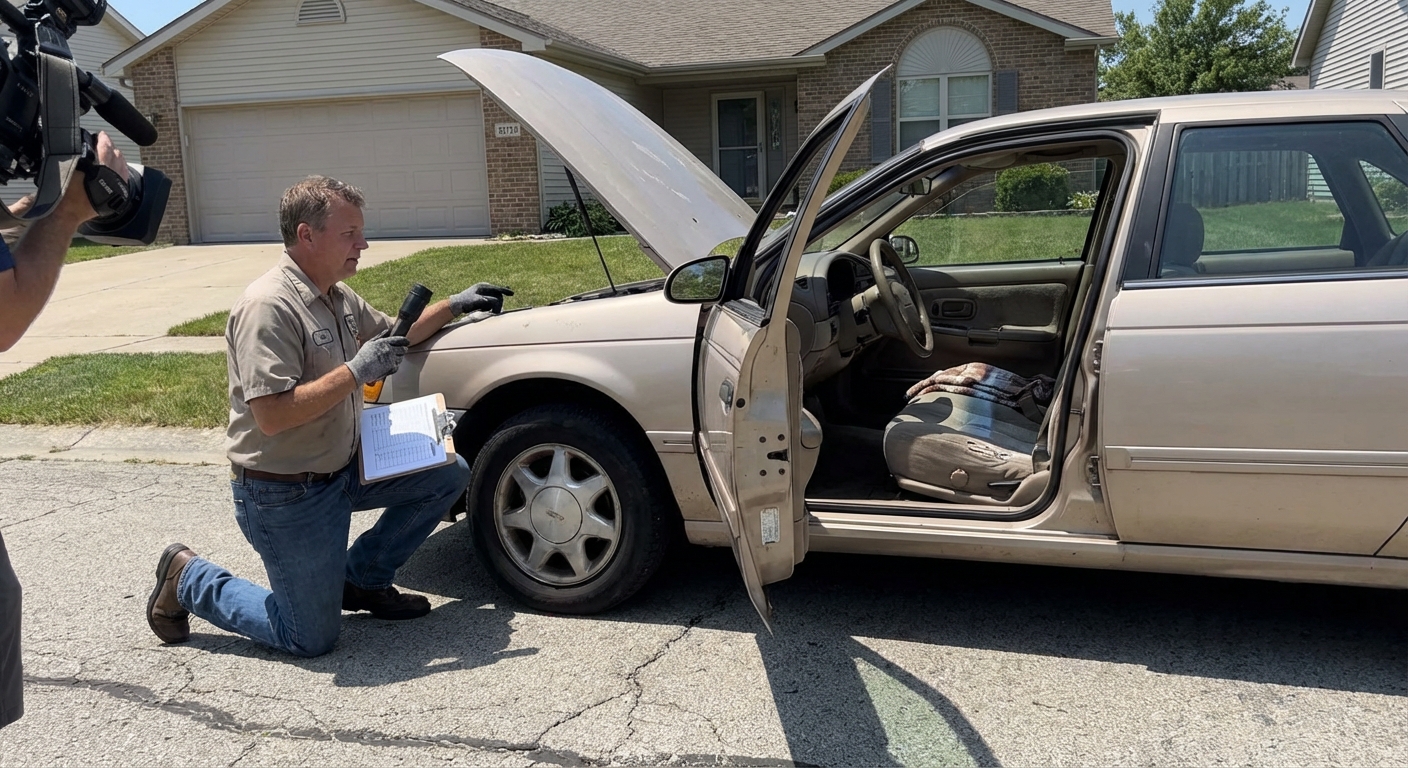
oked straight at the stained, crusty carpet, and immediately dropped their offer by $700. That was the day I realized: interior flooring is not just “decoration” – it’s resale value, comfort, and even safety.
Since then, I’ve tested everything from OEM carpets and vinyl floors to rubber tray liners and bougie custom mats that cost almost as much as my first car stereo. Some were amazing, some were pure marketing.
Here’s what I’ve learned – from real use, lots of detailing experiments, and too many hours spent vacuuming dog hair out of floor fibers.
The Three Main Types of Car Flooring
When people say "car carpets," they usually mean the stuff under your floor mats. But your interior flooring is actually a system:
- Base flooring (what’s glued to the metal floorpan)
- Floor mats / liners (what you see and remove to clean)
Let’s break down the common materials, how they feel, and how they hold up.
1. Standard Carpeting (Nylon & Polyester Blends)
Most modern cars use tufted nylon or polyester carpet. It’s usually backed with foam or rubber and shaped to the floorpan.
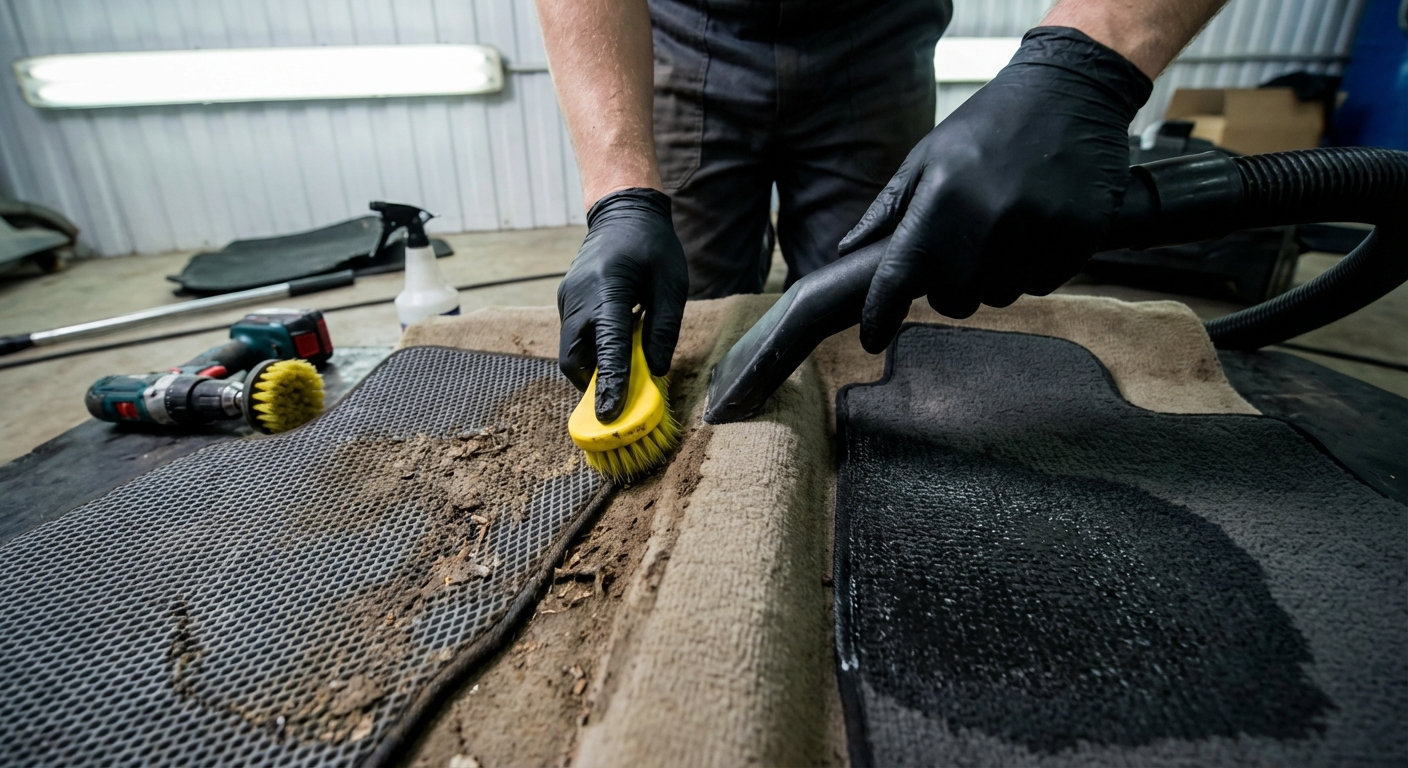
In my experience, this kind of carpet is:
- Comfortable – feels soft underfoot, good sound insulation
- Decent for daily use – as long as you don’t grind in mud and rock salt
- Vulnerable to stains and moisture – coffee, melted snow, and beach sand are the enemies
Higher-end models sometimes use denser pile or better underlay, but the basic structure’s the same.
Pros:- Quieter cabin – the fibers and underlay absorb road noise
- Looks “OEM” and clean when well-maintained
- Easier to repair small damage with patch kits
- Can trap moisture and lead to mold or that lovely “wet dog” smell
- Salt stains in winter can permanently discolor fibers
- Harder to clean deeply without a proper extractor
When I tested a cheap carpet cleaner vs. a proper hot-water extractor on my daily driver, the difference was embarrassing. The extractor pulled out dark gray water even after I thought the carpet was clean.
2. Rubber & Vinyl Flooring
Rubber or vinyl flooring is common in work trucks, police vehicles, cargo vans, and off-road builds. Instead of fibers, you get a molded rubber or vinyl sheet.
It’s not glamorous, but when I helped a friend detail his construction truck, I was jealous: we literally hosed the mats off in the driveway and wiped the floor.
Pros:- Extremely easy to clean – wipe, rinse, done
- Doesn’t soak up water – better for snow, mud, beach, pets
- Very durable for high-abuse environments
- Less sound insulation – can be louder, more road noise
- Feels more utilitarian; not as “premium” looking
- Can get hot to the touch in summer (especially black vinyl)
If you live somewhere with brutal winters or spend weekends off-road, a vinyl floor with good mats is ridiculously practical.
3. Carpet + Mats vs. Full Floor Liners
Even if you have standard carpet, the real protection comes from what you put on it.
- Traditional carpet mats – match the interior, look OEM, but soak and stain easily.
- All-weather rubber mats – better for winter and mud, still sometimes leave gaps.
- Full floor liners (like WeatherTech, Husky, OEM liners) – molded to the footwells, cover up the edges where junk usually sneaks in.
When I tested budget mats vs. full liners during one salty winter, my passenger footwell with cheap mats got that white salt crust line along the edge. The side with a molded liner? Clean carpet underneath, even after months.
How Flooring Affects Comfort, Noise, and Resale
This is where most people underestimate flooring.
Cabin Noise & Comfort
- Thicker carpets and underlay = less road noise and vibration
- Rubber/vinyl = slightly louder but easier to clean
Some aftermarket shops even add mass-loaded vinyl (MLV) or additional underlayment under the carpet for sound deadening. It’s a popular upgrade in car audio builds.
Resale Value
I’ve watched buyers unconsciously judge a car the second they look down:
- Clean, neutral-smelling carpets = “This owner cared.”
- Stains, mystery crumbs, and odors = “What else did they neglect?”
A 2022 Cox Automotive survey on used car buyers highlighted interior condition as one of the top factors in perceived vehicle value – not just mileage or age. A quick interior refresh can move a car from “borderline” to “I’ll pay asking price.”
Daily Maintenance: What Actually Works
I’ve wasted money on gimmicky interior products. Here’s what’s consistently worked for me – and what hasn’t.
1. The Vacuum Routine That Actually Prevents Damage
The biggest game-changer was vacuuming more often but faster, instead of a once-a-year deep clean.
My rule now:
- Quick vacuum every 2–3 weeks (5–10 minutes)
- Deep clean every 6–12 months (or after a “disaster event” – kids, camping, spilled latte)
Tools that made a difference:
- A shop vac or strong handheld vacuum with a crevice tool and brush attachment
- A stiff interior brush to loosen sand and pet hair before vacuuming
When I started brushing the carpet first, the amount of sand pulled out doubled. It’s weirdly satisfying and a little gross.
2. Spot Cleaning Spills Before They Become Permanent
The first 5–10 minutes after a spill is critical.
What I do immediately:- Blot (don’t rub) with microfiber or paper towels
- If it’s sugary (soda, juice, coffee with sugar), hit it with a dedicated carpet cleaner or diluted all-purpose cleaner (APC)
Sugary residue is what attracts dirt and causes that brown halo later.
I tested scrubbing vs. just blotting on a small cola spill I created on purpose (yes, I’m that person), and the area I scrubbed aggressively actually looked worse after a week – the fibers got fuzzy and held dirt more.
3. Deep Cleaning: Extractor vs. DIY Hacks
I’ve tried three approaches:
- Spray cleaner + brush + towel – decent for minor jobs
- Renting a carpet extractor – best results, more effort
- Hiring a detailer with a professional extractor and steam – best if you’re prepping to sell
Data from detailing forums and pro detailers is pretty unanimous: hot water extraction pulls out way more embedded grime than foam cleaners alone.
Now I:
- Rent a small extractor once a year
- Pre-treat stains with an enzyme cleaner (especially if there’s pet or food smells)
- Work section by section to avoid soaking the underlay
Excess water is dangerous; it can lead to corrosion or mold if the floor never fully dries. I always leave doors or windows cracked in a garage and use fans for a few hours.
Protecting Against Salt, Mud, and Pets
Where you live and how you use your car changes the flooring strategy.
Winter & Road Salt
Living in a salt-heavy region, I learned this the hard way. Salt doesn’t just stain – it can pull moisture, stay damp, and eventually help rot floor pans.
What’s worked for me:
- Switching to full-coverage rubber or TPE liners from November through March
- Rinsing mats with warm water regularly to remove salt
- Using a dedicated salt stain remover or a vinegar + water mix (light solution) on carpet
Salt stains often reappear as the carpet dries, so sometimes a second pass is needed.
Off-Road, Camping, and Pets
For muddy weekends or dog taxi duty:
- I run rubber tray liners that extend up the sides
- I keep a small portable vacuum in the trunk
- I lay a washable blanket or cargo liner in the rear for dogs
One surprising thing I learned: pet hair clings more to some cheap polyester carpets than to denser nylon. A rubber pet hair brush or pumice stone can save your sanity.
When to Replace Carpet vs. Just Clean It
Not every carpet can be saved. I used to think “it’s just dirty,” but there are times replacement is the smarter move.
You might consider replacing the carpet if:
- There’s a strong, persistent odor after multiple deep cleans
- The underlay has been soaked (flood, major spill, heater core leak)
- There’s visible mold or mildew
- The backing is crumbling or the carpet is ripped in high-wear areas
You can buy molded replacement carpet kits for many vehicles. They’re not perfect OEM quality, but I’ve helped install a couple and the transformation was wild – especially on an old SUV that smelled like a wet basement before.
Just be aware:
- It’s a few hours of labor (seats out, center console sometimes out)
- You really want to fix any leaks first (door seals, sunroof drains, heater core)
The U.S. EPA recommends removing and discarding materials that have been wet for more than 48 hours in some indoor environments because of mold risk. Cars are no different – trapped moisture + darkness is mold heaven.
Quick Material Cheat Sheet: What to Choose
If I was speccing or setting up a car from scratch, here’s how I’d choose flooring and protection, based on use:
- Family daily driver in a mixed climate
Carpet floors + high-quality all-weather liners front and rear. Fabric mats only in summer if you like the look.
- Work truck / trades / muddy use
Vinyl or rubber floor if possible, plus heavy-duty rubber mats or liners. Easy to hose and wipe.
- Enthusiast / weekend car
Keep OEM carpet, invest in good mats, and do a gentle deep clean once a year. Maybe add under-carpet sound deadening if you’re picky.
- Pet taxi / beach and camping rig
Full coverage liners + cargo area liner, washable blankets, and a portable vacuum. Embrace rubber.
Honest Take: What’s Worth Spending On
After years of trying to “save money” and then spending more to fix damage, here’s where I’d actually invest:
Worth it:- Quality full-coverage floor liners (front and rear)
- A decent portable vacuum or strong shop vac
- Professional or rented extractor once in a while, especially before selling
- Overly perfumed interior sprays that just mask odors
- Super cheap, thin floor mats that slide around and leave gaps
- Miracle “spray on, no scrub” interior cleaners (they rarely work as advertised)
When I sold my last car, the buyer literally said, “Wow, this interior is clean,” and didn’t haggle on price. For a couple hundred dollars in liners and detailing supplies over years of ownership, that paid off.
If you treat your floors like you treat your paint, your car feels newer, smells better, and is easier to live with every single day. And your future self – or the next owner – will absolutely thank you.
Sources
- Cox Automotive – 2022 Car Buyer Journey Study - Industry data on what used-car buyers care about
- U.S. Environmental Protection Agency – Mold and Moisture - Guidance on moisture, materials, and mold risk
- WeatherTech Official Website – FloorLiner Product Info - Example of full-coverage automotive floor liners
- 3M Automotive – Interior Cleaning and Detailing Solutions - Professional-grade interior and carpet care products
- University of Illinois Extension – Cleaning and Removing Spots from Carpet - Evidence-based carpet stain removal techniques