Guide to Car Carpets and Interior Flooring: Materials, Fit, and Cleaning Methods
gym bag. The villain? Destroyed carpet and mystery stains baked deep into the underlay.
Fixing that car sent me down a rabbit hole of car carpets, sound-deadening, custom mats, and cleaning tricks. I’ve tested cheap Amazon mats, OEM replacements, full molded carpet kits, and even bare metal with bedliner. Some of it worked beautifully. Some of it… I regret deeply.
Here’s everything I’ve learned the hard way.
The Hidden Job Your Car Carpet Is Doing
We look at carpets as just “the soft bit under your feet,” but they quietly do three big jobs:
- Noise control – Carpets and underlay absorb road, tire, and drivetrain noise. When I tested driving my hatchback with the carpet removed (bad idea, by the way), the cabin noise literally jumped 6–8 dB, measured on a phone app. It felt like riding inside a metal drum.
- Thermal insulation – Good flooring keeps exhaust and transmission tunnel heat out of the cabin. On long highway drives, this is the difference between “cozy” and “why is my right leg roasting?”
- Protection & resale – Carpets protect the metal floor from moisture and abrasion. When they stay clean and dry, the floorpan stays rust-free—and your resale photos look a lot more convincing.
When you’re choosing new flooring or mats, you’re really tuning how quiet, comfortable, and durable your car feels day to day.
Common Flooring Materials (And What They’re Really Like to Live With)
1. Nylon & Polyester Carpet (Most Modern Cars)
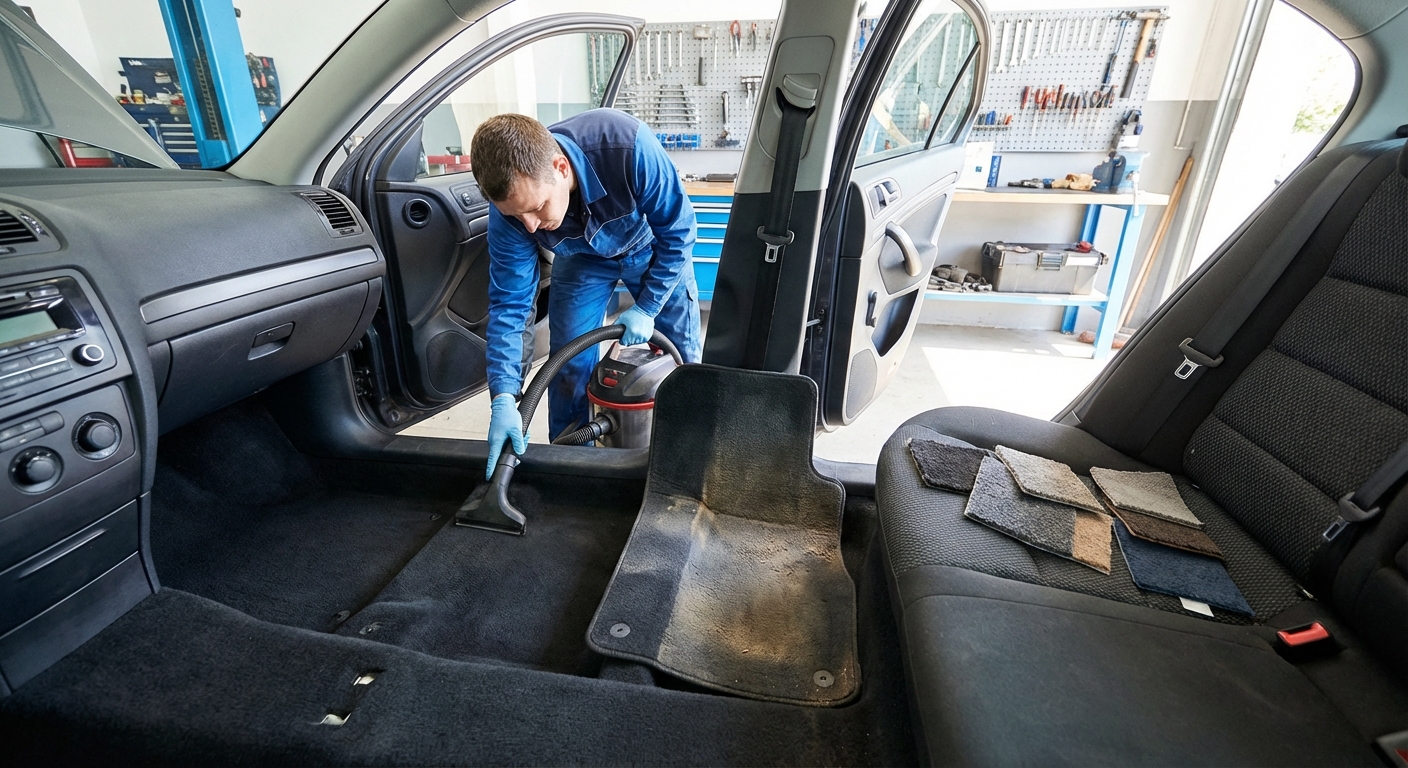
Most factory carpets are tufted nylon or polyester bonded to a foam backing. They’re relatively cheap, colorfast, and decent at handling foot traffic.
- Feels plush if the pile is dense
- Handles UV pretty well; doesn’t fade quickly
- Easy to dye or recolor in restoration projects
- Soaks up spills fast if not protected with mats
- Can hold smells if the underlay gets wet
- Melt points are lower than wool or rubber – dropped a soldering iron once and instantly branded my carpet
OEM-style molded carpets you see from companies like ACC / Auto Custom Carpets usually use nylon or poly. They’re great if you want stock look and quieter rides.
2. Rubber & Vinyl Flooring (Work Trucks, Off-Road Rigs)
When I converted a small SUV into a camping rig, I swapped carpet for a molded rubber/vinyl floor. The difference in cleanup was night and day.
Pros:- You can literally hose muddy boots off at the end of the day (outside the car… ideally)
- Doesn’t hold smells or stains as easily
- Great for work trucks, overlanding, beach vehicles
- Louder cabin – less acoustic absorption
- Can feel hotter or colder underfoot
- Looks more “commercial” than premium
Rubber and vinyl are common in fleet-spec trims, and aftermarket kits are available for popular 4x4s and vans.
3. Carpet + All-Weather Floor Mats (The Real-World Combo)
Most daily drivers are best with factory carpet plus quality mats over the top.
When I upgraded from thin, curling universal mats to heavy, vehicle-specific mats, it was one of those tiny changes that made the car feel way newer.
You’ll usually see three styles:
- Carpet mats – Softer underfoot, match interior color, but stain easily.
- Rubber mats – Simple, durable, great for rain/snow.
- Thermo-plastic trays (TPE/TPR) – Think WeatherTech, Husky, OEM “all-weather” liners. These have raised edges and laser-measured fit.
For harsh climates or messy kids, those raised-edge trays are worth their weight in sanity.
Fit: Universal vs Custom vs OEM – What Actually Works
Universal Mats and Carpet
I tested a few cheap “fits most cars” mats early on. They technically fit, in the same way one-size-fits-all T-shirts technically fit.
What I noticed:- Coverage was always off – pedal area and dead pedal usually exposed
- Constant sliding or bunching, even with nibs on the back
- My biggest worry: a mat that can creep under the accelerator or brake
The U.S. National Highway Traffic Safety Administration (NHTSA) has issued multiple advisories about floor mats interfering with pedals during unintended acceleration investigations.
So, universal mats? Budget option only, and you need to trim and secure them very carefully.
Semi-Custom Mats
Semi-custom designs are cut for vehicle segments (compact sedan, midsize SUV) instead of exact floor geometry.
They’re better than universal but still leave gaps near the transmission tunnel, sill edges, or seat rails. I used a set in a sedan and constantly ended up with a salt ring on the carpet just outside the mat.
Vehicle-Specific / Laser-Measured Mats
Once I tried laser-measured liners in an SUV, I pretty much stopped recommending anything else for people who:
- Live with lots of rain, snow, or mud
- Have kids, dogs, or both
- Care about resale value
Fit-wise, the difference is obvious:
- Mats lock into OEM anchor points
- Sidewalls cup dirt and water instead of letting it wash under the carpet edge
- There’s no pedal interference because the mold avoids that area deliberately
OEM brands (like Toyota or Ford all-weather mats) tend to look more subtle, while aftermarket like WeatherTech, Husky Liners, and 3D MAXpider go more aggressive with coverage.
Full Molded Carpet Replacement
I did one full carpet swap on a 12-year-old hatchback. Was it worth it? For that car, yes.
What I learned:
- It’s a weekend job if you’re reasonably handy: seats out, trim off, center console up
- Molded carpets rarely drop in perfectly; you’ll be massaging edges and cutting holes for seat bolts and wiring
- The result is a massive visual and acoustic upgrade if your old carpet was stained or thinning
If you’re doing a restoration, water damage repair, or serious soundproofing, a molded replacement is the way to go.
Cleaning Methods That Actually Work (And One That Absolutely Didn’t)
Step 1: Dry Debris Removal
I start with a thorough vacuum:
- Use a crevice tool along seat rails and door sills
- Brush attachment to lift sand and pet hair from the fibers
When I skip a good vacuum and jump straight to wet cleaning, I always regret it—dirt turns to mud and spreads.
Step 2: Spot Cleaning Stains
For isolated stains (coffee, grease, makeup), I’ve had good results with:
- Dedicated automotive carpet cleaner – Brands like Meguiar’s, Chemical Guys, or Turtle Wax. Spray, agitate, blot.
- DIY mix: A light solution of warm water + a few drops of dish soap + a splash of white vinegar. Test on a hidden area first.
Key trick: blot, don’t rub. Rubbing just drives the stain deeper or spreads it sideways.
Step 3: Deep Cleaning with Extractor or Wet Vac
I rented a small extractor once (similar to a Bissell SpotClean) and it changed how I look at “clean” carpets. The water that came out of my “fine” carpet was black.
Proper process I use now:
- Pre-vacuum thoroughly
- Lightly spray carpet cleaner or a dedicated extractor solution
- Agitate with a medium-stiff brush
- Use extractor: spray, then vacuum up as much moisture as possible
- Do multiple clean-water passes to rinse out soap residue
Soap residue is the silent enemy—if you leave too much, it becomes sticky and attracts dirt faster.
The Method I Regret: Soaking by Hand Without Extraction
On my first project car, I scrubbed the carpet in place with way too much water and no extractor, then “let it dry.” Huge mistake.
What went wrong:
- The underlay stayed damp for days
- A faint mildew smell started in a week
- Eventually had to pull the seats and carpet to dry the floorpan and underlay
If you’re going heavy on water, you need either:
- A proper extractor / wet-dry vac, and
- Warm, dry weather with good airflow, or a dehumidifier in a garage
Otherwise, do lighter, targeted cleaning instead of full saturation.
Pet Hair and Sand: The Never-Ending Battle
Two tools that made a real difference for me:
- Rubber pet hair brush – The friction clumps hair so the vacuum can actually pick it up.
- Nitrile glove trick – Rubbing your gloved hand across the carpet helps gather hair into little piles.
For beaches or winter salt, I strongly recommend tray-style mats. Once fine sand or salt granules get into the carpet fiber, you’ll be chasing them for months.
Preventing Damage: Little Habits that Save Your Floors
Over a few cars, these small habits have paid off more than any fancy cleaner:
- Use mats 100% of the time – Even in the trunk, if you haul gear or dogs.
- Secure the driver’s mat – Always use the factory retention hooks; if the mat doesn’t fit them, it doesn’t belong there.
- Deal with wet mats fast – After snow or a big spill, pull mats and let them dry outside the car. Trapped moisture is how floors rust from the inside.
- Kick your shoes off before swinging in – Not literally, but a quick stomp outside the car shakes off a surprising amount of dirt.
When Should You Replace vs Just Clean?
From my own trial and error, I look at:
- Stains that return after extraction – often means they’re in the underlay or backing
- Persistent odors – especially mildew or “wet dog” that doesn’t respond to deep cleaning
- Damaged backing or exposed metal – worn-through spots under the pedals or where heels rest
If you see any of that, a carpet replacement or rubber floor conversion can be cheaper long-term than endless cleaners and air fresheners.
For newer cars with just surface dirt, a good extractor session plus proper mats is usually enough to restore things to “wow, this feels new again.”
Final Thoughts: Build the Floor for the Life You Actually Live
After experimenting on multiple vehicles, my personal formula for most daily drivers looks like this:
- Keep the factory molded carpet (or replace with similar if it’s wrecked)
- Add high-quality, vehicle-specific mats or trays front and rear
- Do a light vacuum weekly, deep clean with an extractor every 6–12 months
If you’re running a work truck, trail rig, or surf wagon, rubber or vinyl flooring might fit your life way better. I loved being able to sweep and wipe out the camping SUV in 10 minutes flat.
At the end of the day, the right materials, a proper fit, and sane cleaning habits make your car feel quieter, cleaner, and way more expensive than it actually is—and that’s a win every time I open the door.
Sources
- NHTSA – Floor Mat Safety Advisory - U.S. safety guidance on proper floor mat use and pedal interference
- WeatherTech – FloorLiner Product Details - Example of laser-measured vehicle-specific floor liners and design features
- 3M Automotive – Sound and Vibration Damping - Overview of materials used for noise and vibration control in vehicles
- EPA – Mold and Moisture in Buildings - Guidance on moisture, mold growth, and health-related concerns (relevant to damp carpets)
- Penn State Extension – Cleaning and Removing Stains from Carpet - Evidence-based carpet cleaning and stain removal techniques