Guide to Choosing Car Carpet and Interior Floor Mats
he light-gray carpet in my daily driver. That was the week I went down the rabbit hole of car carpet and interior floor mats. Since then, I’ve tested everything from $20 universal rubber mats to custom laser-measured liners that fit tighter than a glove.
This guide is everything I wish I’d known before wasting money on the wrong stuff (twice).
Step 1: Decide What You’re Really Protecting Against
When I started comparing mats, I realized I wasn’t buying “floor protection” in general—I was buying protection from specific abuse.
Ask yourself:
- Do you deal with snow, slush, and road salt?
- Is it mostly rain and mud?
- Do you carry kids, pets, tools, or sports gear?
- Are you trying to keep resale value high or just avoid daily grossness?
In my experience:
- For snowy climates, you want deep-dish rubber or TPE liners with tall edges.
- For dry climates and light use, high-quality carpet mats can look better and feel more premium.
- For work trucks or rides that see abuse, heavy-duty vinyl or rubber is the way to go.
Once you know your enemy (salt, mud, crumbs, fur, etc.), the right material becomes way clearer.
Step 2: Understand Material Types (and Who They’re For)
When I tested different mats over a year, I kept rotating between three main types.
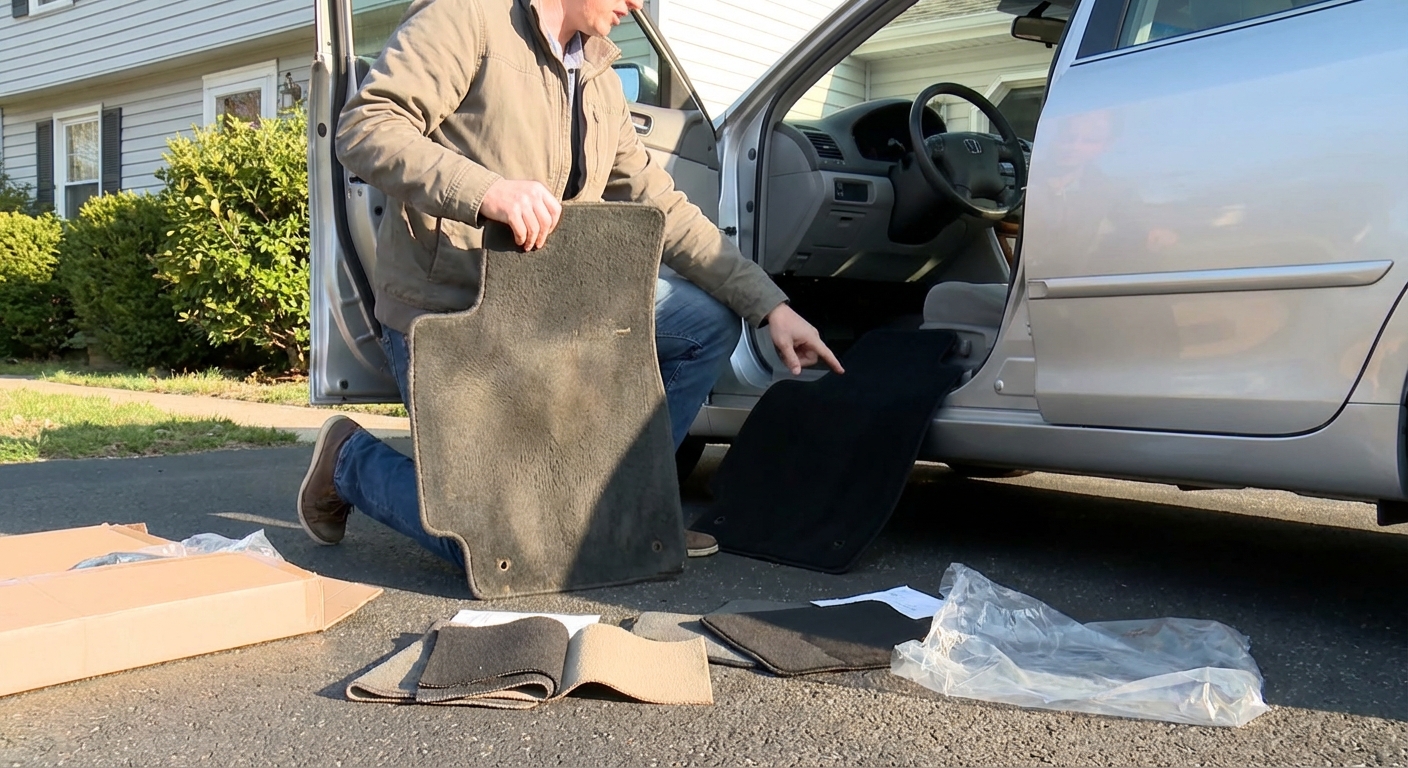
1. Carpet Floor Mats
These are the classic OEM-style mats that usually come with the car.
Pros (from my experience):- Look more luxurious, especially with color-matched or branded logos
- Feel nicer under your feet—especially if you drive barefoot or in thin shoes
- Quieter, as they help dampen road noise a bit
- Stain magnets: coffee, snow salt, and grease are brutal
- Harder to deep-clean—vacuuming only goes so far
- Can hold odors (wet dog + two days of heat = nightmare)
Look for:
- High pile density (denser fibers resist flattening)
- Heel pad reinforcement under the driver’s heel
- Non-skid backing (rubber nibs or velcro-style backing)
Carpet mats are perfect if you:
- Drive in mostly good weather
- Care more about aesthetics and comfort than nuclear-level protection
2. Rubber / TPE / All-Weather Mats
These are the ones with channels, ridges, and often serious branding.
Pros:- Amazing against mud, snow, slush, and spills
- Super easy to clean—hose them off and done
- Don’t absorb liquid, so mold is less of an issue
- Can feel a bit industrial in luxury interiors
- Some cheaper ones get slippery when wet
- Can warp or curl if you buy low-quality no-name brands
I recently tested a set of TPE (thermoplastic elastomer) liners in a compact SUV through one full winter. They caught everything—melted snow, road salt, and gravel. When spring came, the OEM carpet underneath was basically showroom-fresh.
These are a must if you:
- Live where it snows or rains a lot
- Have kids or pets
- Resell your car regularly and want to keep the interior pristine
3. Vinyl and Hybrid Designs
Some mats blend carpet with a rubber border or use textured vinyl instead of rubber.
Why they’re interesting:- Vinyl is tough and chemical-resistant—great for work vans and fleet vehicles
- Hybrid mats give you some luxury look with better spill control
They’re less common but can be perfect if your car is both a family hauler and weekend project vehicle.
Step 3: Universal vs Custom-Fit (This Matters More Than You Think)
When I tested universal mats in a mid-size sedan, I spent 20 minutes trimming the driver’s mat, and it still bunched up near the pedals. That’s not just annoying—according to the NHTSA, improperly secured floor mats have contributed to pedal entrapment incidents and safety recalls.
Universal Mats
Pros:- Cheaper
- Easy to find at big-box stores
- Can be trimmed to “fit” multiple vehicles
- Coverage is rarely perfect—bare spots near the sill or under pedals
- More likely to slide if they don’t lock into OEM anchor points
- Edges may curl or interfere with pedals if trimmed too aggressively
Universal is fine if you:
- Have an older car you’re not precious about
- Just need quick, basic protection
Custom-Fit / Laser-Measured Mats
These are designed specifically for your exact make, model, and year.
Pros:- Hug every curve and contour—better coverage and cleaner look
- Usually designed to work with factory retention hooks
- Deep sidewalls can trap massive amounts of liquid and debris
- Higher cost
- Need to wait for shipping instead of grabbing same-day
I swapped to custom-fit liners in my newer car and immediately noticed how much better they covered the dead pedal, the transmission tunnel, and the edges under the seats.
If you care about safety, coverage, and resale, custom-fit is worth the extra money.
Step 4: Check Safety Features (Yes, Even for Mats)
This is the part most people skip, and it’s where problems happen.
When I tested cheaper mats, I ran into:
- Mats sliding forward and touching the accelerator
- Edges curling upward and catching my heel during braking
What you want:
- Retention hooks or clips compatible with your car’s stock mounting points
- A rigid enough structure that doesn’t fold or collapse
- Anti-slip backing (rubber nibs, textured backing, or velcro-like material)
The NHTSA actually recommends that drivers only use mats that are correctly sized and secured, and that they never stack mats on top of each other—even if it feels more cushioned.
If your mat doesn’t sit flat on the floor or interferes with pedals even slightly, it’s the wrong one. Period.
Step 5: Style, Color, and Matching Your Interior
This is the fun part.
When I first ordered all-weather mats, I went with basic black. In my beige interior, they looked like I’d borrowed them from a rental pickup. Second time around, I chose a dark tan that matched the carpet and it changed the whole vibe.
Things I’ve learned:
- Black hides stains best but can show dust and salt lines
- Gray or tan blend better in many interiors and still hide moderate dirt
- Colored stitching or embroidered logos can make even practical mats look premium
If you’re replacing the entire carpet (not just mats), you can even:
- Upgrade to heavier weight carpeting for a more upscale feel
- Add mass-backed carpet to improve sound insulation
I did a full carpet replacement once in an older coupe. I used a pre-molded kit, a few hours of elbow grease, and some patience. The car instantly felt 10 years newer.
Step 6: Cleaning and Maintenance Reality Check
I love carpet mats visually, but when I tested them with kids in the back seat, I was vacuuming constantly.
Here’s what it’s actually like:
Carpet Mats:- Need regular vacuuming and occasional shampooing
- Benefit from fabric protectants like Scotchgard to resist stains
- Take longer to dry if they get soaked
- Pull them out, hose them down, let them drip-dry
- For road salt and greasy residues, a little all-purpose cleaner and a soft brush works wonders
- Don’t forget to clean underneath the mats once in a while—grit still migrates
If you’re the type who cleans the car once a month (or, let’s be honest, once a quarter), all-weather mats will save your sanity.
Step 7: Budget vs Value (Where to Spend and Where to Save)
When I compared cheap and premium mats side by side, a few things jumped out that justify the higher price—if you care about long-term ownership.
Where premium mats usually win:
- Better fitment and coverage
- More durable materials and UV resistance (cheaper mats fade and crack)
- Stronger odor control (cheaper rubber mats can stink like chemicals)
Where you can save:
- Rear mats if they barely get used
- Trunk/cargo liners if you don’t haul messy stuff often
If your car is leased or you plan to resell within 3–5 years, higher-end mats can literally pay for themselves at trade-in when the carpet looks untouched.
When Replacing the Entire Carpet Makes Sense
Sometimes mats aren’t enough. I had a used car where the carpet smelled faintly like a wet dog and old fast food no matter what I sprayed on it.
Full carpet replacement can be worth it if:
- The car had water leaks or flooding
- There’s long-term smoke or pet odor soaked into the fibers
- The OEM carpet is heavily worn, torn, or bleached
Most aftermarket molded carpets are made to OEM patterns. You’ll need:
- Basic tools to pull seats and trim
- A free afternoon (or two) and patience
If that sounds like too much, a detailer can do it, but the labor can exceed the value on older cars. For newer vehicles or passion projects though, fresh carpet + quality mats transforms the cabin.
Quick Recap: How to Choose Smart
If I had to compress everything I’ve learned into a simple playbook:
- Snow / heavy rain climate: Go with custom-fit TPE or rubber liners with tall sides.
- Dry climate / mostly solo commuting: High-quality carpet mats with heel pads work great.
- Kids, pets, sports gear: All-weather mats, no question.
- Work truck / van: Heavy-duty vinyl or rubber, universal only if they’re secured properly.
- Want luxury feel: Dense carpet mats (possibly over fresh replacement carpet) in a color that matches or subtly contrasts.
I used to think mats were an afterthought. After wrecking one set of OEM carpet and then rescuing the next car with proper liners, I treat them like an essential part of the car—right up there with good tires and a decent phone mount.
Your floors quietly tell the story of how your car’s been treated. The right mats make that story a lot more flattering.
Sources
- NHTSA – Floor Mat Safety and Pedal Entrapment - Official safety guidance on proper floor mat use and installation
- Consumer Reports – How to Protect Your Car’s Interior - Practical tips on carpets, mats, and interior protection
- WeatherTech – FloorLiner Product Information - Example of laser-measured, custom-fit floor liners and their design philosophy
- U.S. EPA – Road Salt and Environmental Impact - Background on road salt, useful to understand why winter mats matter
- Penn State Extension – Controlling Mold and Odors in Vehicles - General mold guidance relevant to wet carpets and interior moisture