Guide to Choosing Car Carpets and Interior Floor Mats
y-stain corner of the carpet, and I just sat there thinking, “Okay, this is disgusting… and probably expensive to fix.”
That weekend, I went down the rabbit hole of car carpets and interior floor mats. What started as a “let me grab something cheap online” turned into a full-on comparison of materials, fit types, brands, and even how dealerships quietly upcharge for mats.
Here’s what I’ve learned—tested in my own daily-driver, a friend’s dog-taxi SUV, and one embarrassing road-trip mud disaster.
Why Floor Mats Actually Matter (More Than You Think)
When I pulled back my factory carpet after a year without proper mats, I found salt stains from winter, spilled coffee outlines, and early signs of wear near the pedals. Once that carpet is permanently damaged, you’re basically looking at:
- Lower resale value
- Expensive re-carpeting
- An interior that always feels a bit grimy
The floor is one of the highest-abuse areas of any vehicle:
- Shoes grind in sand and tiny gravel that act like sandpaper
- Moisture from snow, rain, and sweat soaks in
- Food and drink spills creep under the pedals
The right mats are like putting a phone case on your car’s interior. You don’t think about them when they’re good… but you absolutely notice when they fail.
Step 1: Know Your Real-Life Use Case
When I first started shopping, I made the classic mistake: I only thought about how the mats looked. Then I took a weekend trip to a muddy campsite and my “fancy carpet mats” basically turned into a portable swamp.
Run through this quick self-check:
1. Commuter / City DriverMostly paved roads, occasional rain, rare snow?
- Carpet mats or hybrid mats can be fine
- Focus on comfort, noise reduction, and appearance
If you’re hauling strollers, sports gear, or a golden retriever that sheds like crazy:
- All-weather rubber or TPE mats are your best friend
- Look for deep channels and raised edges for juice spills, mud, and fur
I grew up where road salt is everywhere, and it will eat your carpet and floorpan over time.
- Heavy-duty all-weather mats with tall lips are almost mandatory
- Easy-to-hose-off material becomes crucial
If you’re going to meets or shows:
- Premium carpet mats, custom embroidered logos, color-matched piping
- Some people even run two sets: rubber for daily use, carpet for events
Once you’re honest about how you actually use your car, 60% of the decision is already made.
Step 2: Material Showdown – Carpet vs Rubber vs TPE vs 3D Mats
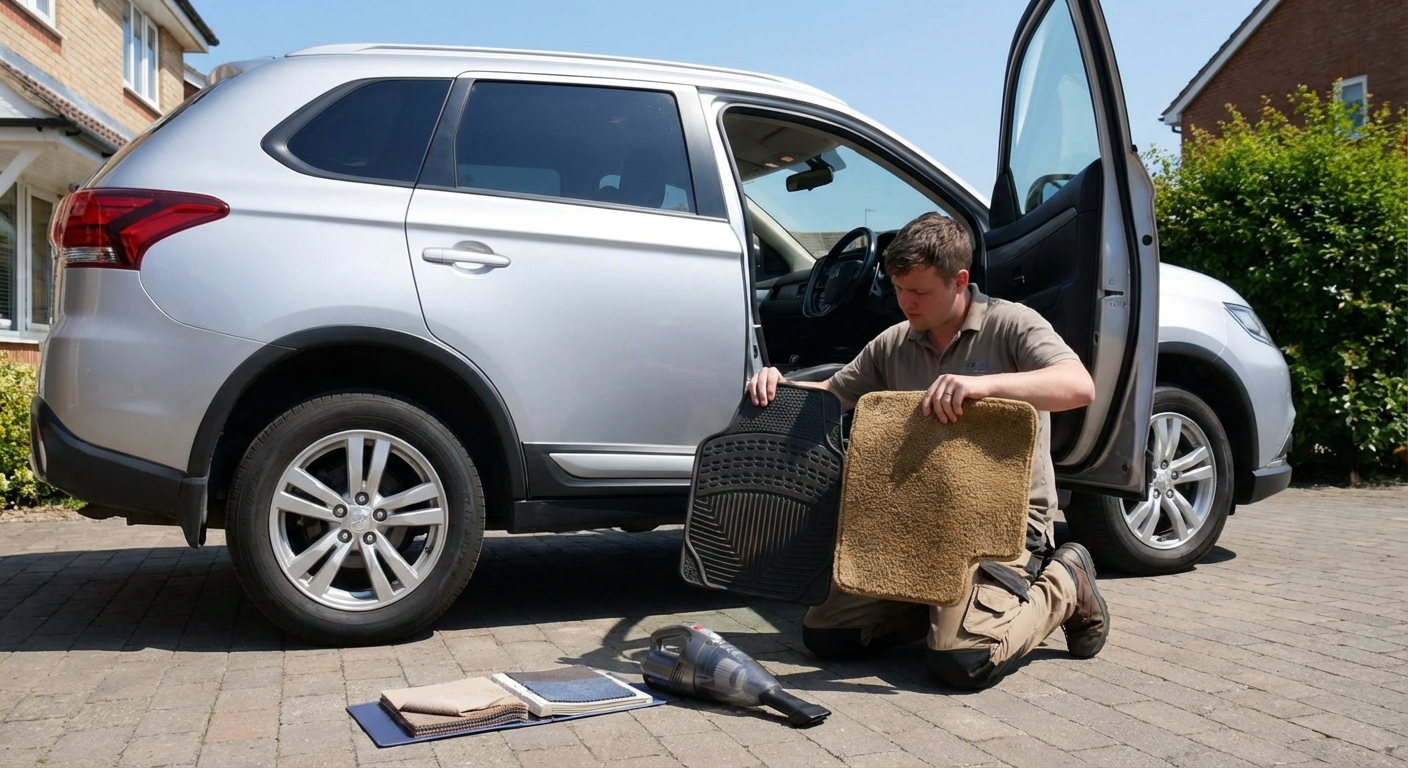
When I tested different mats in my own car and my brother’s SUV, a few material differences became crystal clear.
Carpet Mats
These are what most people imagine first—and what many cars come with from the factory.
Pros:- Look upscale and “OEM correct”
- Feel softer and quieter underfoot
- Great for absorbing light dust and noise
- Soak up liquids; stains are harder to remove
- Bad for heavy snow, mud, or pets
- Cheap versions crush flat and look tired fast
Look for:
- Higher ounce weight (denser pile)
- Rubberized backing so they don’t slide
- Proper retention grommets that match your factory hooks
Rubber Mats
Rubber was my first upgrade test. I threw a set of no-name rubber mats into my hatchback. They smelled like a tire shop punched me in the face for about a week—but they did work.
Pros:- Durable and heavy
- Simple to clean with a hose
- Great for mud, snow, and work boots
- Can look a bit “industrial”
- Some cheaper ones have strong odor (off-gassing)
- Can get slippery when wet if the surface design is poor
I’d only buy rubber mats from reputable brands now because of material quality and smell. Some cheaper mats also curl at the edges over time and interfere with pedals.
TPE / Thermoplastic Mats (All-Weather Liners)
This is what most “all-weather” premium brands are using now—think WeatherTech, Husky, OEM all-weather kits.
Pros:- Molded, vehicle-specific fit (often laser-measured)
- Deep channels and tall edges for containing mess
- Lighter and often less smelly than old-school rubber
- Can feel a bit plastic underfoot
- Cheaper versions can warp in extreme heat
- Sometimes squeak against shoes or carpet
When I tested TPE liners in a friend’s SUV that hauls two kids and a bulldog, the difference was massive: melted snow, spilled juice, and crushed crackers all stayed in the mat instead of soaking into the carpet.
3D / Molded Multi-Layer Mats
These are the fancy ones you see all over social media: 3D molded mats that follow the curves of the floor, sometimes with multiple layers (surface + foam + anti-slip backing).
Pros:- Very snug, custom look
- Good sound insulation
- Some combine the premium look of carpet with the protection of liners
- More expensive
- Fit quality really depends on the brand
- Some trap debris along edges if the design is off
When I tested a 3D-style mat set in a sedan, the cabin actually felt quieter at highway speed—small difference, but noticeable on longer drives.
Step 3: Universal vs Custom-Fit – Does It Really Matter?
I used to think universal mats were fine… until one slid just enough to interfere with the accelerator during a hard merge. That was a “heart rate instantly doubled” moment.
Universal Mats
Pros:- Cheap and easy to find
- You can trim them to approximate your floor shape
- Usually don’t cover the full area
- More prone to sliding
- Can bunch up near pedals—this is a legit safety hazard
Vehicle-Specific / Custom-Fit Mats
These are designed for your exact make, model, and year. Many high-end brands now use laser scanning to create molds.
Pros:- Better coverage, including footrest and transmission tunnel
- Less movement due to precise shape and anchor points
- Look integrated, not like an afterthought
- Higher upfront cost
- You need to order the correct variant (sedan vs hatch, AWD vs RWD, 2-row vs 3-row, etc.)
If you care about safety and long-term protection, my experience is pretty simple: custom-fit wins almost every time.
Safety Features Most People Ignore (But Really Shouldn’t)
When I dug into NHTSA reports about unintended acceleration incidents, loose floor mats kept popping up. It’s not the majority cause, but it’s on the list.
Here’s what I always check now:
- Retention clips / anchors: Make sure your mats actually use the factory anchor points. Never stack mats on top of each other.
- Pedal clearance: After installing new mats, I always sit in the car and fully depress and release each pedal. If the mat moves, curls, or touches the pedal at any point, something’s wrong.
- No driver-side “floating” mats: If the driver mat doesn’t anchor to anything, I skip it.
The U.S. National Highway Traffic Safety Administration (NHTSA) has literally issued guidance about proper floor mat installation for this reason.
Step 4: Design, Color, and Keeping It Looking Good
I used to pick only black mats, thinking they’d hide everything. Reality check: black shows dust and salt lines like crazy.
Color tips from actually living with these things:- Dark gray hides dust better than pure black
- Tan and beige look great but show stains faster
- Patterned or textured surfaces disguise wear surprisingly well
Some enthusiasts go further: contrast stitching, embroidered logos, or color-matched edging. I tested a set with red piping in a dark interior, and it subtly made the whole cabin feel more “intentional,” even though it was just floor mats.
Cleaning-wise, here’s what worked best for me:
- Carpet mats: Vacuum first, then use a carpet cleaner or a diluted APC, scrub lightly, and wet-vac or air dry thoroughly.
- Rubber/TPE: Hose off, scrub with a soft brush and mild soap, rinse. Avoid super harsh chemicals—they can dry out rubber and fade logos.
Step 5: Price vs Value – Where to Spend and Where to Save
When I compared budget mats to premium ones, I noticed three main differences over 6–12 months:
- Edge curling – Cheaper mats tend to curl or warp, especially in heat.
- Backing – Low-end mats slide more and can shred the underlying carpet.
- Stain memory – Budget carpet mats hold onto stains and odors longer.
My general rule of thumb:
- Daily driver, rough usage: Spend more once on good all-weather liners; they’ll probably outlast the car.
- Lease vehicle: Go mid-range; protect enough to avoid turn-in fees, don’t over-invest.
- Enthusiast car: Consider two sets—premium carpet for “clean” days and rugged all-weather for winter or dirty runs.
Red Flags When Shopping
Based on a few bad purchases I’ve made so you don’t have to repeat them:
- Vague sizing descriptions like “fits most vehicles” with no dimensions listed
- Strong chemical smell in reviews (that odor can linger for months)
- No mention of compatible anchor systems for your specific car
- Only stock photos, no real-life install images from users
I now always cross-check part numbers on the brand’s official website, especially for OEM-style mats.
Quick Recap: How I’d Choose, Step-by-Step
If I was picking mats again tomorrow, here’s exactly what I’d do:
- Be honest about use – Kids? Pets? Snow? Mud? Or mostly clean city driving?
- Pick material – Carpet for looks, TPE/rubber for heavy duty, or 3D mats as a hybrid.
- Go custom-fit if budget allows – Especially for the driver’s side.
- Double-check safety – Anchors, pedal clearance, no stacking.
- Think cleaning – If you hate cleaning, lean hard into all-weather liners.
The right set of car carpets and interior floor mats won’t just keep your car cleaner. They’ll make the whole driving experience feel more put-together, more comfortable, and—if you avoid the pedal interference nightmare—a lot safer too.
Sources
- NHTSA – Floor Mat Safety Advisory - U.S. government guidance on safe floor mat use and installation
- Consumer Reports – Car Floor Mats: Why They Matter and How to Choose - Overview of floor mat safety and buying tips
- WeatherTech Official Site – FloorLiner Product Details - Example of laser-measured, model-specific thermoplastic liners
- AAA – Winter Car Care Tips - Discusses salt, slush, and protecting vehicle interiors in winter
- Edmunds – How to Clean Your Car’s Interior - Practical guidance on maintaining carpets and mats