Guide to Choosing Car Cleaning Products for Interior and Exterior Care
” detergent from the supermarket and spent a weekend correcting swirls. That was the day I got nerdy about car care chemistry.
If you’ve ever stood in the auto aisle staring at 40 types of shampoos, waxes, and interior sprays wondering what’s legit and what’s marketing fluff, you’re not alone. Let’s go through this like we’re in the aisle together, basket in hand, and you want the stuff that actually works, not just smells like fake cherries.
Step 1: Know Your Paint, Interior Materials, and Climate
Before grabbing any bottle, I always ask three questions:
- What’s my paint situation?
- Clearcoat, single-stage, matte, PPF (paint protection film), or ceramic coated?
- When I tested a harsh shampoo on a matte-wrapped car, it left uneven dark spots. Never again.
- What’s inside the cabin?
- Leather, leatherette (vinyl), cloth, Alcantara, piano black plastics?
- The “leather cleaner” I tried on synthetic vinyl once just sat there and smeared. Totally useless.
- What climate am I in?
- Hot and sunny? You need strong UV protection.
- Wet and snowy? You need durable protection against road salt.
Once you know those three, choosing products becomes way easier and way cheaper in the long run.
Exterior: Shampoos, Wash Methods, and Why pH Matters
pH and why your dish soap is a villain
When I first started washing my own car, I used dish soap. My wax lasted about three weeks. Totally stripped.
Most dedicated car shampoos are pH-balanced (around 7). That means they’re strong enough to remove road film but gentle enough for clearcoat and wax. Dish soap is often alkaline and loaded with degreasers—it nukes protection.
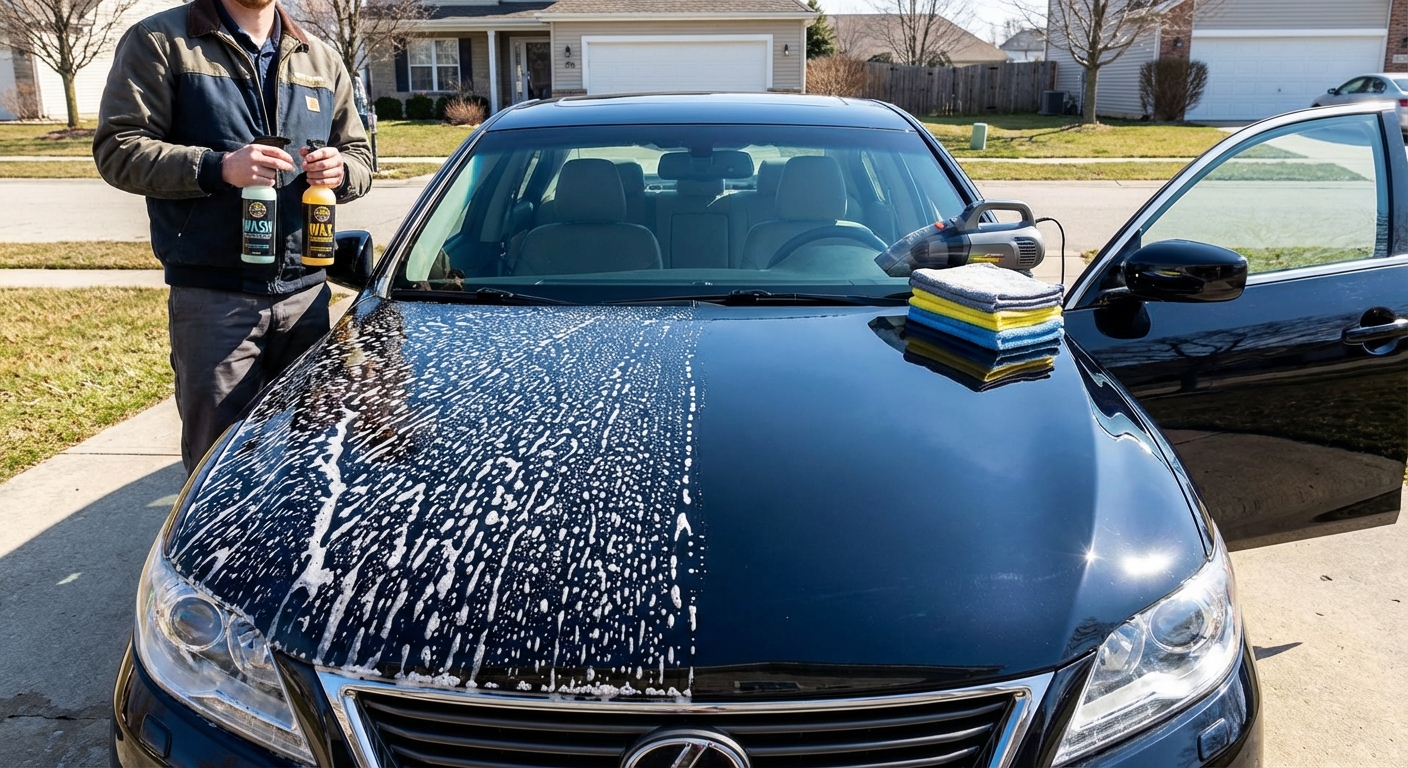
- pH-balanced, wax-safe (often labeled as such)
- Contains surfactants designed for automotive paint
- Good lubrication so the wash mitt glides (you’ll literally feel the difference; less drag = fewer swirls)
If your car is ceramic coated, many brands make coating-safe shampoos that don’t interfere with hydrophobic properties. When I tested a cheap, strong detergent on my coating, the beading died for weeks.
Contact vs. Touchless vs. Waterless
I’ve tried all three wash styles:
- Contact wash (two-bucket method) – Safest when done right. One bucket soap, one rinse bucket with a grit guard.
- Best for: Regular weekly/biweekly washing.
- Touchless (pressure washer + strong chemicals)
- Pros: No physical contact = minimal swirl risk.
- Cons: Needs harsher chemicals, can be harder on wax and sealants.
- Waterless/rinseless washes
- Great for apartments or winter. I use a rinseless wash in a bucket with plush microfiber when it’s too cold for a hose.
- Avoid waterless on heavily dirty cars; you’ll drag grit across the paint.
For most people, a pH-balanced shampoo + two-bucket wash is still the gold standard.
Decontamination: Iron Removers, Clay Bars, and When to Use Them
When I first used an iron fallout remover, I thought the purple bleeding effect was just TikTok drama. Then I sprayed my white daily driver and watched the entire car “bleed” purple – industrial fallout, brake dust, rail dust… all stuck in the clearcoat.
Iron removers
- Contain chemicals (often thioglycolic acid derivatives) that dissolve ferrous particles.
- Use before claying if the paint feels rough or you park near trains, industrial zones, or commute a lot.
Clay bar vs. synthetic clay mitt
- Clay bar: old-school, effective, but if you drop it, it’s trash.
- Clay mitt/pad: easier to grip, faster on large panels. I switched to a mitt and never looked back.
Use clay sparingly—maybe 1–2 times a year. Every clay session introduces some micro-marring; you’ll need to polish lightly after if you’re picky about finish.
Protection: Wax, Sealant, or Ceramic?
I’ve tried all three tiers: old-school carnauba, synthetic sealants, and DIY ceramics.
Waxes
- Pros: Warm, glossy look; easy to apply; smells good.
- Cons: 4–8 weeks durability in real-world daily driving.
Synthetic sealants
- Pros: 4–6 months durability, stronger chemical resistance.
- Cons: Look is a bit more “glassy” and less warm (some people prefer this).
DIY ceramic coatings (SiO2-based)
- Pros: 1–2 years durability if prepped right; insane water beading.
- Cons: Prep is everything—paint must be clean, decontaminated, and ideally polished. Application can be unforgiving if you rush.
For most daily drivers, I recommend:
- A quality sealant every 4–6 months, and
- A maintenance spray (SiO2 detailer) after washes.
If you park outside year-round or live where winters are brutal, a reputable ceramic coating (professionally installed or a high-quality DIY kit) absolutely pays off.
Wheels, Tires, and Glass: Don’t Use One Product for Everything
Wheel cleaners
When I tested various wheel cleaners on the same filthy, brake-dust-coated wheel, the difference was night and day.
- Acidic wheel cleaners – Extremely strong, can etch certain finishes if misused. Usually overkill for modern clear-coated wheels.
- pH-neutral or mildly alkaline – Safer and usually enough for regular maintenance.
If you’ve got bare aluminum, polished, or anodized wheels, always double-check the label. Some products explicitly say “not for uncoated aluminum.”
Tire cleaners and dressings
I’m picky about tires because greasy, slingy dressings drive me crazy.
- First, use a dedicated rubber cleaner and a stiff brush until the brown “blooming” is gone.
- Then choose your dressing:
- Water-based: More natural, satin finish, less greasy.
- Solvent-based: Lasts longer but can look too glossy and may be harsher on rubber long-term.
Glass cleaners
Quick PSA: don’t use household glass cleaners with lots of ammonia on tinted windows. Many automotive glass cleaners are ammonia-free for this exact reason.
I’ve found the best combo is an automotive glass cleaner + a waffle weave microfiber. Two towels: one to clean, one to buff. Streaks vanish.
Interior: Fabrics, Leather, Plastics, and Screens
When I tested random “interior detailers” on different cars, results varied wildly. Some left shiny, greasy dashboards; others looked factory-fresh.
Upholstery and carpets
For cloth seats and carpets, I use:
- A dedicated fabric cleaner (dilutable concentrates can save money)
- A soft/medium brush and a wet/dry vacuum
If you have kids or pets, consider a fabric protectant (similar to Scotchgard) after cleaning. It really does make spilled coffee bead instead of soaking in—tested that one personally, accidentally.
Leather and leatherette
Most “leather” car interiors are actually coated leather—a pigmented layer with a clear protective coating. That’s why they often feel plasticky.
That means:
- You don’t need super oily conditioners like you would on uncoated leather.
- You do need gentle cleaners and coating-safe conditioners/protectants.
I’ve had great results with mild, pH-balanced leather cleaners followed by a matte-finish protector with UV inhibitors. Shiny leather usually means product overload.
For leatherette/vinyl, a dedicated vinyl cleaner/protectant is better—leather creams don’t absorb, they just smear.
Plastics, rubber, and trim
Dashboards, door panels, and center consoles are usually plastic or soft-touch polymers.
Look for interior products that:
- Have UV inhibitors (the sun will fade and crack plastic over time)
- Finish matte or low-sheen, not greasy
- Are silicone-free if you’re sensitive to that slick feel
When I tested a high-gloss interior dressing on a hot day, the reflections on the windshield were dangerously distracting. Since then, I stick to “OEM matte” style products.
Screens and piano black
Central infotainment screens and piano black trim scratch way too easily.
- Use a screen-safe cleaner or even just distilled water and a very soft microfiber.
- Avoid products with strong solvents or ammonia.
I scratched a piano black panel once with a regular terry towel. Now I treat that stuff like it’s a smartphone screen.
Reading the Label Like a Pro (Without a Chemistry Degree)
You don’t have to understand every chemical name, but in my experience, watching for a few things helps:
- Clear usage instructions – Reputable brands specify dwell times, compatibility (matte paint, PPF, tints, etc.), and safety.
- Safety data – If they offer an SDS (Safety Data Sheet) easily, that’s a good sign.
- Avoid miracle claims – “Cleans, polishes, seals, and ceramic coats in one step for 5 years” is usually fantasy.
- Check for compatibility – Especially for matte finishes, PPF, and ceramic coatings.
I also like to cross-check products against independent tests (forums, detailing communities, YouTube reviewers who do side-by-side tests). It’s eye-opening how often a mid-priced product outperforms the hyped, expensive stuff.
Budget vs. Premium: Where to Spend and Where to Save
From my own trial-and-error (and wasted money), here’s where I’d prioritize:
Spend a bit more on:- Shampoo (you use it often; good lubrication = less damage)
- Protection (sealant or coating; it saves time and protects resale)
- Interior protectants with real UV protection
- APC (all-purpose cleaners) for non-delicate areas, diluted properly
- Brushes and buckets (just avoid super cheap stuff that sheds or scratches)
- Microfibers bought in bulk (but keep a separate stash of high-quality towels for paint)
I’ve found that the difference between “cheap and okay” and “fair-priced and excellent” is usually just a few dollars—but the difference in results is big.
Final Thoughts: Build a Simple, Smart Kit
If you twisted my arm and forced me to simplify it to a core kit that works for most cars, it’d be:
- pH-balanced car shampoo
- Rinseless wash (for winter or quick cleans)
- Iron remover (every few months)
- Clay mitt (1–2 times a year)
- Synthetic sealant + quick detailer or SiO2 spray
- Wheel cleaner (pH-neutral) + tire cleaner and water-based dressing
- Interior cleaner (for plastics and vinyl) + UV-protectant
- Leather cleaner/protectant (if applicable)
- Ammonia-free glass cleaner
From there, you can get fancy if you enjoy the process—machine polishing, ceramic coatings, trim restorers, the whole rabbit hole.
I’ve tested enough products to know this: the magic isn’t in a miracle bottle. It’s in choosing the right type of product for the surface, using it correctly, and being consistent. Do that, and your car will always look like it’s secretly just left a detail shop.
Sources
- U.S. Environmental Protection Agency – Safer Choice: Car Care Products - EPA list of safer automotive care products and ingredients
- Consumer Reports – How to Wash a Car the Right Way - Testing-based guidance on proper car washing and product selection
- University of California, Berkeley – Surfactants and Detergents Overview - Educational explanation of how surfactants work in cleaners
- 3M Automotive – Clearcoat and Paint Protection Basics - Manufacturer information on automotive clearcoat and paint protection films
- AAA – Protecting Your Car’s Finish - AAA advice on paint care, UV exposure, and maintenance