Guide to Choosing Senior-Friendly Cars: Seats, Safety Features, and Easy Entry
soundtrack of knee pops you could almost hear from space. He looked at me and said, “Next car we buy, I want to step in, not fall in or climb out of a trench.”
That little parking lot moment sent me down a rabbit hole of senior-friendly cars—testing, measuring, and pestering salespeople with way too many questions. I’ve since helped three older relatives and two neighbors choose cars that are actually comfortable, safe, and easy to live with.
This guide is everything I wish I’d had before we started: real-world experience, mixed with hard data and expert advice.
Start With the Big Three: Height, Doors, and Visibility
When I tested cars with my dad, I realized the "perfect" vehicle for seniors tends to hit a sweet spot:
- Seat height roughly between mid-thigh and hip level
- Doors that open wide without being heavy
- Big windows and thin-ish pillars so you’re not craning your neck to see
Ideal Seat Height: The Goldilocks Zone
In my experience, cars that are too low (sports sedans, coupes) force you to squat down and then haul yourself back up using the door frame. Cars that are too high (big trucks, full-size SUVs) feel like climbing a ladder.
The sweet spot is what ergonomics researchers often call a “hip-height” entry: you basically back up to the seat, sit down, and then swing your legs in. No dramatic bend, no deep squat.
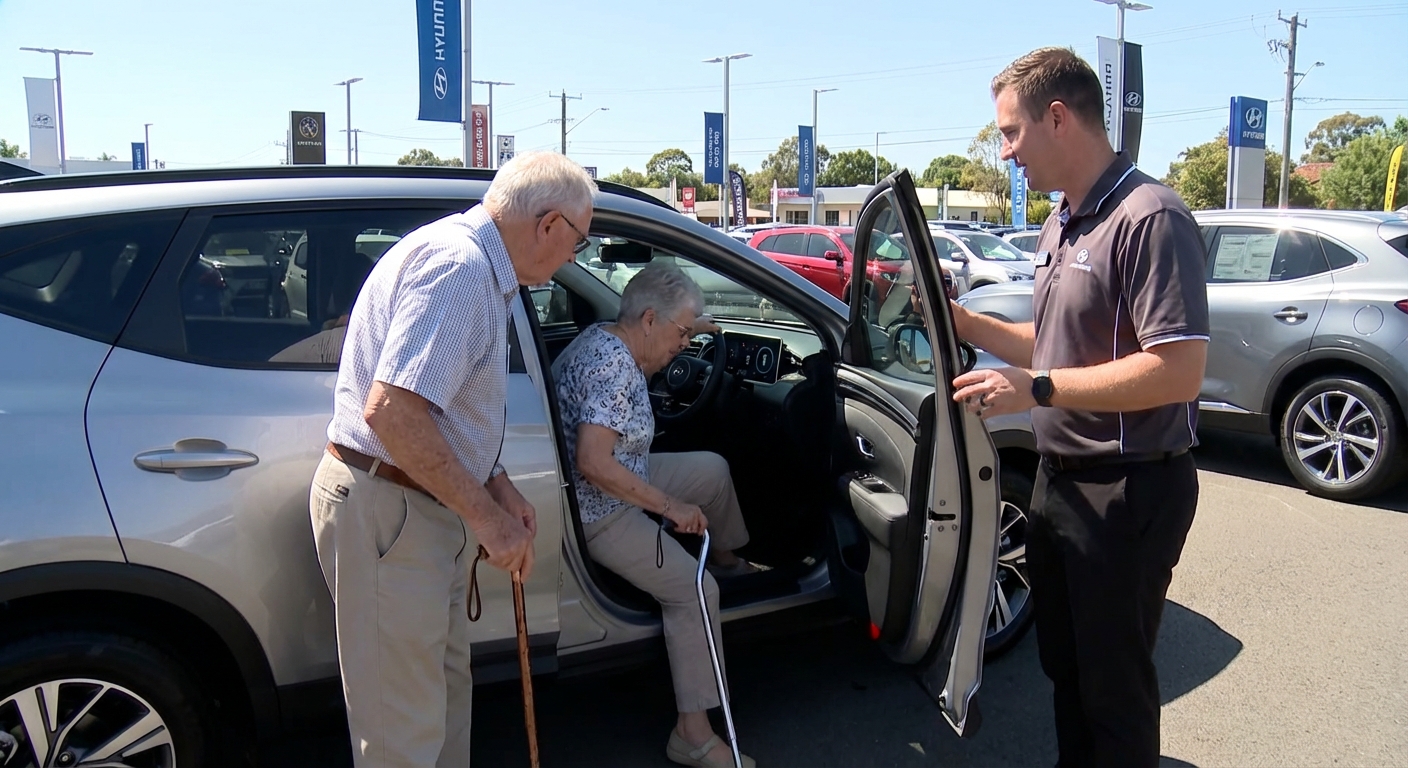
Roughly speaking, that’s:
- 18–22 inches from ground to seat cushion for many people over 65
You won’t see that number in brochures, so here’s what I actually did at dealerships:
- Brought a soft tape measure and measured ground to seat.
- Had my dad try a simple test: could he sit without grabbing the door frame or doing a mini squat? If yes, it passed.
- Checked how he felt after getting in and out five times in a row. A car can feel fine once and be exhausting on the third attempt.
Compact SUVs and crossovers (think Honda CR‑V, Subaru Forester, Toyota RAV4) nailed this height better than almost anything else we tried.
Seats: Where Comfort Becomes Safety
When I tested cars with firmer, better-shaped seats, my dad drove longer before needing breaks. Less pain equals better focus and slower fatigue.
What to Look For in Senior-Friendly Seats
- Firm but not rock-hard cushioning
Overly soft seats feel comfy in the showroom but can cause back pain on longer drives. You want supportive foam that holds shape.
- Adjustable lumbar support
This is huge if there’s any history of lower back issues (and let’s be honest, that’s most people over 65). Power lumbar is better, since you can fine-tune it.
- Power seat adjustments with memory
My parents share a car. With memory seating, they press one button instead of re-adjusting everything every trip. Small win, big daily stress reduction.
- Easy-to-grab headrests and stable bolstering
Side bolsters that aren’t too aggressive make getting in and out easier. I’ve watched my aunt literally fight with bucket seats that trapped her hip.
- Heated seats (and sometimes cooled)
For arthritis and joint stiffness, heated seats can feel life-changing in winter. One uncle called them his “back meds on wheels.”
If possible, schedule a 45–60 minute test drive on real roads. Five minutes around the block hides a lot of seat problems.
Easy Entry and Exit: Details That Matter More Than Horsepower
Senior-friendly cars are less about 0–60 times and more about 0–door-step comfort.
Check These Real-World Entry/Exit Factors
When I tested vehicles with older drivers, we evaluated:
- Door opening angle – Does the door swing wide enough? Narrow openings make cane or walker use awkward.
- Door sill height and width – A tall or wide sill is a tripping hazard and makes sliding in harder.
- Grab handles – Overhead or pillar-mounted handles are a lifesaver for balance.
- Steering wheel reach and tilt – You don’t want to have to twist or hunch to hold the wheel.
One trick I use: ask the senior driver to get in and out three times in a row while chatting casually. If they’re breathing harder, rubbing a knee, or grabbing the door frame more each time, that car’s probably not the one.
Minivans (yes, the uncool heroes) are surprisingly excellent here: wide sliding doors, low flat floors, and big openings. If style isn’t the priority, a Honda Odyssey or Toyota Sienna can be incredibly practical for seniors.
Safety Features That Actually Help Older Drivers
Modern cars are loaded with tech, and not all of it plays nicely with slower reaction times or hearing/vision changes. The key is choosing assistive features, not distracting ones.
The U.S. Insurance Institute for Highway Safety (IIHS) and NHTSA have both found that certain driver-assistance features reduce crashes, especially rear-end collisions and lane-departure events.
High-Value Safety Features for Seniors
In my experience, these are the big wins:
- Automatic emergency braking (AEB)
Uses sensors to brake if the car detects an imminent collision. Great backup if someone misjudges distance.
- Forward collision warning
Audible and visual alerts when you’re closing in too fast on a car ahead.
- Blind spot monitoring
Critical for anyone with reduced neck mobility. The little light in the mirror plus a beep can prevent a bad lane-change crash.
- Rear cross-traffic alert
Fantastic for backing out of busy parking spots when turning your head fully is tough.
- Lane keeping assist (lightly tuned)
Helpful if it gently nudges, not aggressively shoves the car back. I always recommend seniors try this extensively on a test drive—some systems feel annoying or even startling.
- Adaptive cruise control
Maintains a set distance from the car ahead and adjusts speed. Reduces fatigue on highway trips.
Safety Tech That Can Backfire
Not everything is a win. My dad nearly swore off a great car because the lane assist kept buzzing and grabbing the wheel.
Potential drawbacks:
- Overly sensitive lane and collision alerts can cause anxiety.
- Hyper-busy screens with tiny icons are hard to use while driving.
- Touch-only climate controls are often worse than old-school knobs for older hands and eyes.
The fix: during a test drive, ask the salesperson how to turn each feature on and off or adjust sensitivity. If it’s buried in 5 menus, that’s a warning sign.
Vision, Hearing, and Hands: Matching the Car to the Driver
As parents and grandparents age, small changes in car design make an outsized difference.
For Aging Eyes
When I sat in a few "trendy" models with ultra-dark interiors and tiny fonts, my mom just said, "I can’t see anything on this screen." Lesson learned.
Look for:
- Big, clear fonts on the instrument cluster
- High-contrast buttons (white on black, not gray on gray)
- Bright, sharp backup camera with clear guidelines
- Large mirrors and good outward visibility
For Hands, Joints, and Grip Strength
My aunt has mild hand arthritis, so we paid special attention to:
- Thick, padded steering wheels that are easier to grip
- Big, chunky gear selectors or simple buttons (not tiny fiddly knobs)
- Large, easy-to-press climate and radio controls
Power tailgates and keyless entry were also surprisingly useful—less twisting, pushing, and fumbling.
The Best Body Styles for Seniors (From My Test-Drive Marathon)
From driving and shopping with multiple seniors over the last year, here’s how I’d rank body styles overall:
- Compact and midsize crossovers/SUVs
Typically the best mix of seat height, visibility, and cargo room. Examples: Honda CR‑V, Subaru Forester, Toyota RAV4, Hyundai Tucson.
- Minivans
Amazing for walkers, grandkids, and road trips. Low floors, sliding doors, tons of space.
- Midsize sedans
Some still work well if the seats are high enough and the roofline isn’t too low. Check entry height carefully.
- Full-size SUVs and trucks
Often too tall to climb into comfortably, unless you add side steps—and even then, it can be a strained move.
- Sports cars and low coupes
Almost always challenging to enter and exit. Fun, yes, but physically demanding.
This isn’t absolute—there are exceptions in every category—but it’s how things shook out in real testing with actual seniors, canes, and bags of groceries.
Budget, Used Cars, and When to Walk Away
I’ve helped seniors shop on everything from tight fixed incomes to "I just want something safe and comfy" budgets. A few patterns emerged:
- Don’t chase the newest tech at all costs. A 3–5 year old model with well-rated safety features and good ergonomics is usually a sweet spot.
- Check safety ratings. I always run vehicles through NHTSA and IIHS crash-test ratings before we get too attached.
- Look for CPO (certified pre-owned) if budget allows. Longer warranties give peace of mind on a fixed income.
And it’s absolutely okay to walk away if:
- The senior looks tired after a short test drive.
- They’re complaining about glare, hard-to-read screens, or too many beeps.
- You can’t quickly disable a feature that’s stressing them out.
The right senior-friendly car should feel like this after a week:
> “I don’t have to think about getting in and out. I just go.”
That’s what my dad said about his current crossover, and it’s the line I keep in my head when helping anyone over 65 shop for a car.
Quick Checklist to Bring to the Dealership
Here’s the short version I now print and hand to friends:
- Can you sit down without dropping or climbing? Seat height near hip level.
- Can you get in and out three times in a row without knee or back pain?
- Are the seat and lumbar support comfortable after at least 30–45 minutes?
- Can you see clearly out of all windows and mirrors without twisting too much?
- Are crucial buttons (hazards, climate, radio volume) easy to spot and press?
- Do the safety features help you feel calmer, not more nervous?
If you can honestly say yes to those, you’re very close to a senior-friendly car that’ll work in real life, not just in a glossy brochure.
Sources
- NHTSA – Older Drivers Safety - U.S. government guidance and data on older driver safety and vehicle considerations.
- IIHS – Crash Avoidance Technologies - Research on how modern driver-assistance features reduce crashes.
- Harvard Health Publishing – Driving and Older Age - Medical and ergonomic considerations for older drivers.
- AAA Foundation – Senior Driver Safety Research - Studies and reports focused on aging, mobility, and safety.
- Subaru – Driver Assist Technology Overview - Example of how one automaker implements senior-friendly safety tech.