Guide to Essential Accessories for Camper Vans
eetlamp, lying on a lumpy mattress, wondering why anyone thought van life was glamorous.
That trip taught me fast: the right accessories don’t just make van life nicer — they make it actually livable.
This guide is everything I wish someone had handed me before I started pouring money into gear. I’ve tested a lot of stuff (and wasted cash on more than a few “van life must-haves” that were… not). Here’s what’s actually worth having in a camper van, and where you can save.
1. Power & Electrical: The Beating Heart of Your Van
If you’re going to splurge anywhere, it’s here.
When I tested my first cheap 300W inverter from Amazon, it overheated trying to run a laptop and a small blender at the same time. The fan screamed like a jet engine. I replaced it two weeks later with a pure sine wave inverter and never looked back.
What you really need
- Battery system (house battery) – AGM or lithium. Lithium (LiFePO4) costs more but lasts longer and weighs less. Many full-time van lifers I’ve met eventually upgrade to lithium because AGM just can’t handle deep cycles as well.
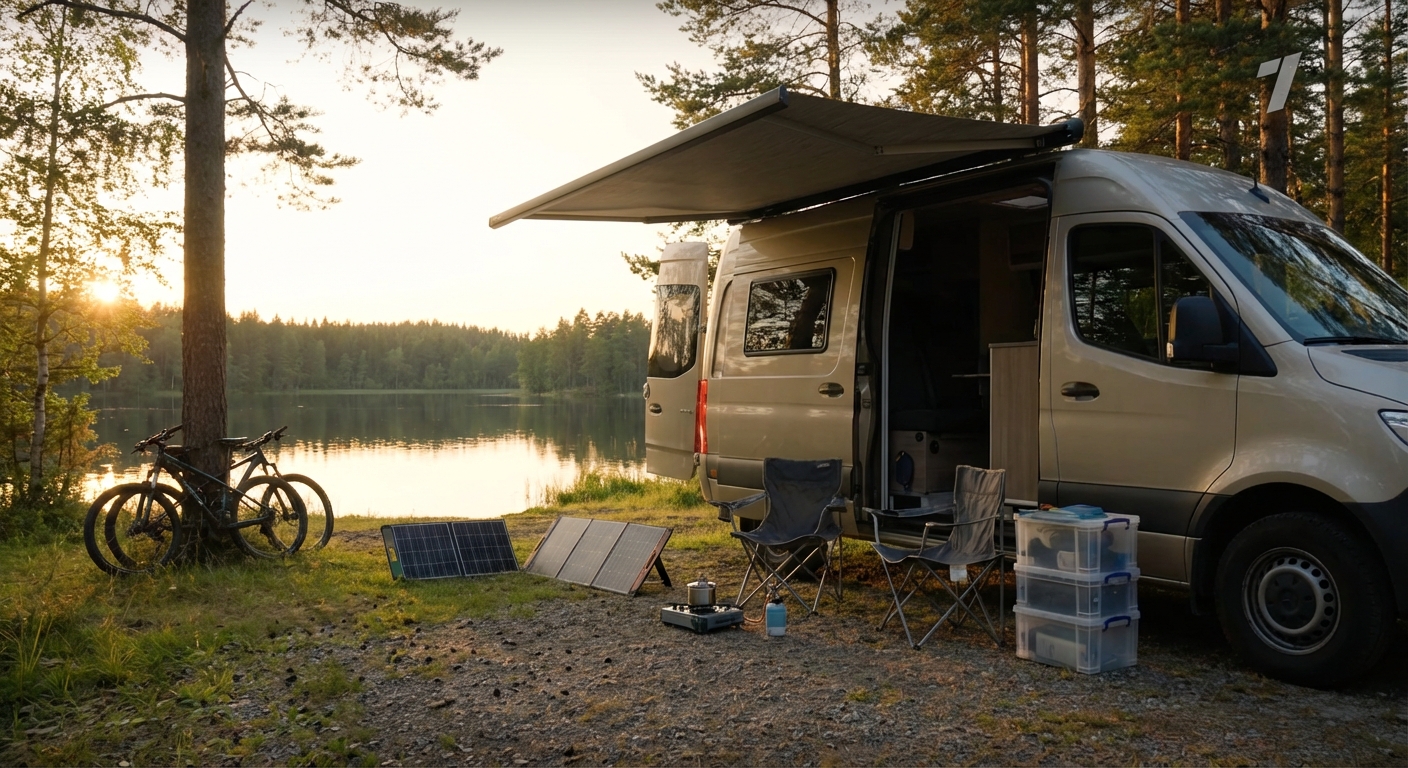
- Solar panels – Roof-mounted or portable. I like having a 100–200W portable panel so I can park in the shade (I learned this the hard way after cooking my van in Arizona just to keep my batteries happy).
- DC-DC charger – Charges your house battery from the alternator while driving. Absolute game-changer on cloudy weeks.
- Pure sine wave inverter – For running AC devices like laptops, cameras, small appliances.
From a technical standpoint, lithium batteries can cycle thousands of times versus a few hundred for AGM. Battle Born (a popular lithium brand) rates many of their LiFePO4 batteries for 3,000–5,000 cycles at 80% depth of discharge.
Pros
- True off-grid capability
- Protects your devices
- Can support a fridge, fan, and laptop without stress
Cons
- Upfront cost is real
- You need at least a basic understanding of 12V systems
If the full electrical system feels intimidating, power stations like Jackery and EcoFlow are a solid bridge. I used an EcoFlow for six months before installing a full system, and it handled my basic needs flawlessly.
2. Climate Control: Fans, Insulation, and Not Melting
When I first installed a roof fan, I honestly didn’t expect much. The first hot night I used it, I slept like a rock instead of rolling around in a sweaty van wondering about my life choices.
Roof fan vs. no fan
A 12V roof vent fan (Maxxair, Dometic, etc.) is one of the most universally loved camper van accessories. It pulls hot air out, helps with cooking steam, and keeps condensation under control.
Pair that with decent insulation (Thinsulate, sheep wool, or foam board) and you’ve got a van that actually holds a comfortable temperature longer.
Portable heaters & safety
In colder climates, I used a small diesel heater. They’re common in Europe and increasingly popular in North America. They sip fuel and throw off a lot of dry heat. But here’s where trustworthiness matters:
- You absolutely need proper ventilation
- Install carbon monoxide and smoke detectors
I’ve also used a small ceramic electric heater when plugged into shore power at a campsite. Simpler and safer when you’ve got hookups.
Pros
- Massive comfort upgrade
- Less condensation and mold risk
Cons
- Roof fans need cutting a hole in your roof (terrifying the first time)
- Diesel heaters require careful, safe installation
3. Sleeping Setup: Your Back Will Thank You
I once tried to “save money” by using a cheap tri-fold mattress I found online. By day four, my shoulders were on strike.
A good mattress and bedding setup are not luxury items. They’re your sanity.
What’s worked best for me
- 4–6 inch medium-firm foam or memory foam mattress cut to fit the bed platform
- Breathable cotton or linen sheets (van interiors get humid)
- Mattress ventilation layer (like a 3D mesh underlay) to prevent condensation under the mattress
If you’re doing a convertible bed/sofa system, try to avoid too many cushion gaps. I tested a three-panel cushion bed and constantly rolled into the cracks.
Pros
- Better sleep = better everything
- Reduces back pain on long trips
Cons
- Custom sizes can be pricey
- Foam can trap moisture without a ventilation solution
4. Kitchen & Cooking Gear: Tiny Space, Big Function
I love cooking in the van, but an overcomplicated kitchen is chaos.
When I first started, I brought way too many “just in case” utensils. Half of them lived in a drawer I never opened. Over time, I stripped it down to the essentials:
Core kitchen accessories
- Dual-burner stove – I prefer a portable propane or butane stove over a built-in for flexibility (I cook outside when it’s hot).
- 12V or compressor fridge – Way more efficient than a standard cooler. When I tested a cheap thermoelectric cooler, it barely chilled my food and drained my battery.
- Collapsible sink basin – Easy to stash, great for washing dishes.
- Simple cookware – One deep pan, one pot, one cutting board, sharp knife, spork set.
A compressor fridge (Dometic, ARB, ICECO, etc.) draws relatively low power compared to absorption fridges and can hold safe temperatures even in heat. That’s not just comfort, it’s food safety.
Pros
- Healthier, cheaper than eating out
- Less food waste with a real fridge
Cons
- Fridge is a major power draw if your system is small
- Propane needs safe storage and leak awareness
5. Water, Showers & Toilets: The Un-glamorous Essentials
Nobody goes viral on Instagram for their gray water tank… but managing water well is one of the biggest quality-of-life upgrades.
Water system basics
- Fresh water tank – Even a 10–20L jerry can with a manual pump is workable
- Gray water container – Please don’t dump sink water directly onto the ground in parking lots
- Inline water filter or portable filter for filling from questionable taps
For showers, I’ve tried:
- Solar shower bag – Works surprisingly well in summer; useless in winter
- Portable propane water heater – Great for semi-permanent builds or basecamps
- Gym memberships / truck stop showers – My most used “accessory,” honestly
Toilet options
I’ve used everything from a simple pee bottle + emergency folding toilet to a composting toilet.
- Pee bottle + emergency setup – Cheapest and lightest, works fine if you’re often near facilities
- Cassette or composting toilet – More self-contained, better for stealth parking or long stays off-grid
Pros
- True independence from campgrounds
- Way less stress when nature calls
Cons
- Toilets need regular emptying (no way around this)
- Water storage takes up a lot of space
6. Storage, Organization & Space Hacks
When I finally added overhead cabinets and packing cubes, it felt like I’d doubled the size of the van without changing the footprint.
My favorite storage accessories:
- Overhead cabinets or netting for lightweight items
- Under-bed drawers or pull-out bins
- Soft packing cubes for clothes instead of bulky drawers
- Magnetic strips for knives and metal tools
One mistake I made early on was using too many hard plastic containers of random sizes. They wasted space and turned into a game of 3D Tetris. Switching to a “zones” system — cooking, clothes, tools, work gear — sped up everything.
Pros
- Faster daily routines
- Less clutter stress
Cons
- Overbuilding storage can add weight
- Too many compartments = you forget where things live
7. Safety, Security & Legal Must-Haves
I don’t leave home without this stuff now:
- Carbon monoxide & smoke detector
- Fire extinguisher (rated for electrical and grease)
- First aid kit (a real one, not a tiny pouch)
- Reflective triangles / safety vest
On the security side:
- Secondary door locks or deadbolts
- Lockable safe for documents and electronics
- OBD lock or steering wheel lock for theft deterrence
I once parked overnight near a trailhead and woke up to find someone had clearly tried my door handle. The extra deadbolt held. Worth every cent.
Also, laws differ by region: some countries and U.S. states have specific rules about where you can overnight, seatbelt requirements for passengers in the back, and propane storage.
8. Comfort, Convenience & “Nice-to-Haves” That Actually Matter
There’s a lot of fluff marketed to van lifers, but a few “luxury” items ended up being surprisingly essential for me:
- Blackout window covers – For stealth camping, temperature control, and actual darkness
- Swivel seat base – Turns the cab into living space instantly
- Outdoor camp chairs & small table – Makes your “tiny home” feel 10x bigger outside
- LED puck or strip lights with dimmers – Warm, adjustable lighting changes the whole vibe at night
I also love having a small handheld vacuum. A van collects dust, sand, and crumbs way faster than a house.
Pros
- Huge boost in daily comfort
- Makes long-term travel feel sustainable
Cons
- Easy to overbuy “nice-to-haves” you won’t use
How to Prioritize: If You’re On a Budget
If I had to start from scratch again, on a tight budget, I’d prioritize accessories in this order:
- Safety – Detectors, fire extinguisher, first aid
- Sleeping – Proper mattress and window covers
- Ventilation – Roof fan or, at minimum, good 12V fans
- Basic power – Power station or small battery + solar
- Simple kitchen – Portable stove, basic cookware, cooler or budget fridge
- Water system – jerry cans + simple pump, then upgrade later
Everything else you can add over time as you discover how you actually use your van. The most helpful habit I picked up: do a few weekend trips with a minimal setup, then adjust based on reality, not Instagram.
Van life is less about owning every accessory and more about choosing the right ones for your style of travel.
Sources
- U.S. Department of Energy – Batteries for Electric Vehicles - Background on battery chemistries and cycle life
- Battle Born Batteries – LiFePO4 Deep Cycle Battery Specs - Example specifications for lithium camper/RV batteries
- Consumer Product Safety Commission – Carbon Monoxide Information - Safety guidelines for heaters and CO in small spaces
- REI Co-op – How to Choose a Camping Stove - Detailed overview of stove fuel types and options
- National Park Service – Leave No Trace Principles - Guidance relevant to waste and gray water management