Guide to Essential Camper Van Accessories
my phone battery hovered at 3%. I had a mattress, a dream, and basically zero of the accessories I actually needed.
Since then, I’ve spent months on the road, tested gear from budget Amazon specials to premium overland brands, and made more than a few expensive mistakes. This guide is the list I wish someone had shoved into my hands before I turned my daily driver into a rolling home.
Power: The Beating Heart of Your Van
When I tested my first cheap 300W inverter, it whined louder than my old laptop fan and barely powered a camera charger. I upgraded fast.
In my experience, three power accessories matter most:
1. Portable Power Station (or House Battery System)
If you’re not ready for a full wired system with DC-DC chargers and fuse blocks, a portable power station (Jackery, EcoFlow, Bluetti, etc.) is a game-changer. I recently tested an EcoFlow River 2 Max — it fast-charged from 0–100% in about an hour via AC and comfortably ran my fridge, lights, and laptop.
Pros:- Plug-and-play, no wiring knowledge needed
- Built-in inverter, USB, 12V ports, and safety protections
- Easy to take out of the van or into a tent
- More expensive per watt-hour than DIY house batteries
- Limited expandability vs a full 12V system
If you plan to run a 12V fridge and work remotely, look at something in the 500–1000Wh range. For serious off-grid trips, 100Ah of LiFePO₄ (≈1280Wh) wired into a proper system is what a lot of full-timers end up with.
2. Solar Panels
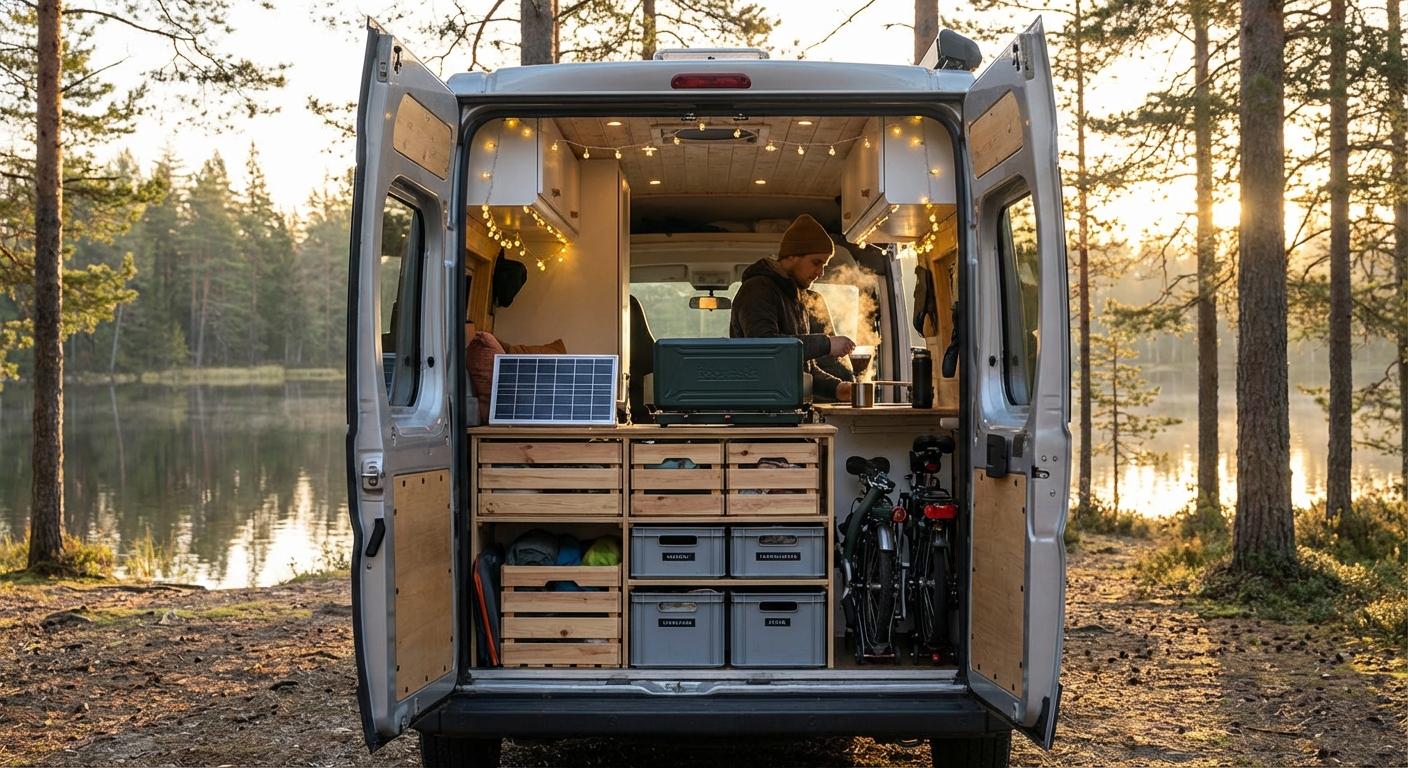
The day I added 200W of solar, my van life changed from “battery panic” to “meh, plug it in.”
You’ve got two main styles:
- Roof-mounted rigid panels – Efficient, durable, more permanent
- Portable folding panels – Point them at the sun, park in the shade
When I tested portable panels on a desert trip, I loved being able to chase the sun, but I hated putting them away dusty and hot every day. Roof panels win for convenience if you own your van long-term.
3. Quality Inverter
If you’re using laptops, camera batteries, or small appliances, a pure sine wave inverter is non‑negotiable. Modified sine wave inverters made some of my chargers buzz and heat up.
For most people, 600–1000W pure sine wave is the sweet spot. If you want to run an induction cooktop, you’re realistically looking at 1500–2000W plus a stout battery bank.
Sleep & Insulation: Actually Getting a Good Night’s Rest
My first build used a cheap foam mattress topper on plywood. After a week, my back felt like I’d been camping on a sidewalk.
4. A Real Mattress
The best upgrade I ever made: a 4–6 inch high-density foam or hybrid mattress, cut to size. I cut a full-size memory foam mattress with an electric carving knife, and it fit perfectly.
Pro tip: go slightly firmer than you think. Softer foam compresses too much in the center where you sit and sleep, especially in narrow vans.
5. Window Covers & Insulation
When I tested my first DIY Reflectix window covers with magnets, the difference was dramatic — the van stayed cooler during the day and felt less like a fishbowl at night.
Good covers do three things:
- Insulate from heat and cold
- Block light (for stealth camping and better sleep)
- Add privacy
Custom insulated covers with Thinsulate or wool are pricey, but they outperform plain Reflectix. In winter, they can be the difference between “chilly but okay” and “my breath is condensing on the metal walls.”
Cooking & Kitchen Gear: Eating Better Than Microwave Burritos
I’ve tried almost every cooking setup: butane, propane, induction, and “let’s just eat cold beans.” I don’t recommend the last one.
6. Stove Setup
- Portable butane stoves – Super convenient, consistent flame, but cartridges add up and aren’t ideal in cold temps.
- Propane stoves (Coleman-style) – Cheaper fuel, widely available, but the bottles are bulkier.
- Induction cooktop – Fantastic if you have a big battery and inverter. When I tested one on a 100Ah lithium setup with 200W solar, I could cook two meals a day, but I had to watch my power use carefully.
For most beginners, a single or double-burner propane or butane stove is the simplest and safest bet.
7. 12V Fridge vs Cooler
I put off buying a 12V fridge for a year because of the price. Big mistake.
In my experience:
- Cooler = constant ice runs, soggy food, takes up space, surprisingly expensive over months
- 12V compressor fridge (Dometic, ARB, BougeRV, Iceco) = higher upfront cost, but more efficient, no ice, stable temps
When I finally tested a 45L 12V fridge on a week-long trip, I used ~25–35Ah per day and never had to think about ice once. That alone made it worth it.
Water, Hygiene & Sanity
Nobody gets into van life for the glamorous topic of… portable toilets. But this stuff matters more than the Instagram photos.
8. Water Storage & Filtration
I started with random 1‑gallon jugs rolling around the floor. Total chaos.
What works far better:
- Two 7–10 gallon jerry cans (one for fresh, one for grey)
- A simple 12V pump and faucet or a manual foot pump
For drinking, I now use a gravity filter (similar to backpacking systems) to top off reusable bottles. It’s slower than built-in systems, but cheaper and flexible.
9. Toilet Options
I’ve tried three:
- No toilet – Works until you’re stuck somewhere remote or it’s 3 a.m. in a city
- Simple “poo bucket” setup with bags and absorbent material – Cheap, manageable if done properly
- Cassette or composting toilet – More expensive, more pleasant for long-term living
In my experience, a well-set-up bucket system with gel or sawdust works fine for weekenders. For full-timers, a cassette or composting toilet feels like a mental health upgrade.
Comfort, Safety & Little Things That Matter More Than You Think
10. Ventilation: Roof Fan or Bust
When I installed my first MaxxAir fan, I realized how unlivable the van had been before. Condensation dropped, cooking smells cleared, and summer nights became bearable.
If cutting a hole in your roof sounds terrifying (fair), you can start with:
- USB or 12V fans for airflow
- Cracked windows with rain guards and bug screens
But long-term, a roof vent fan (MaxxAir, Dometic, Fiamma) is one of the most impactful upgrades.
11. Lighting
I used to rely on a single harsh overhead light. It made the van feel like a dentist’s office.
Now I run:
- Warm white LED puck lights on dimmers for general lighting
- Small USB fairy lights or strip lights for ambience
Low power draw, much better vibe, and your eyes will thank you.
12. Storage Solutions
When I lived part-time in a short wheelbase van, clutter was my number one enemy.
Things that actually helped:
- Soft storage cubes for clothes (easy to stuff into odd spaces)
- Overhead netting for jackets and bedding
- Collapsible bins for food and kitchen gear
I found that “everything needs a home” is more important than having tons of storage. Otherwise the floor becomes your default shelf.
13. Safety & Recovery Basics
I learned the hard way—on a muddy forest road at dusk—that even “tame” campsites can go sideways.
Bare minimum I now carry:
- First aid kit (with trauma basics, not just band-aids)
- Fire extinguisher rated for electrical and fuel fires
- Jumper cables or jump starter
- Tire repair kit and portable compressor
If you’re going off paved roads, add a traction board pair and a proper tow strap.
Tech & Connectivity: For Remote Workers and Map Addicts
As someone who edits, uploads, and works from the van, connectivity isn’t optional.
My real-world setup:
- Unlocked 4G/5G hotspot with a generous data plan
- Signal booster in fringe areas (helped on rural highways, less so in true dead zones)
- Offline map apps with downloaded regions (Google Maps, Gaia GPS)
4K video uploads from the van are still painful, but for emails, video calls, and web work, a decent hotspot and careful campsite selection have been enough.
What You Don’t Need on Day One
When I look back at my first build, I wasted money on:
- Fancy modular storage I later ripped out
- Overly complex electrical gear I didn’t understand
- A rooftop deck I barely used
If you’re just starting, I’d prioritize:
- Safe power + ventilation
- Comfortable sleep setup
- Reliable way to store food and water
Everything else can evolve as you figure out how you like to travel.
The best camper van accessories are the ones that quietly disappear into the background and let you forget you’re even in a vehicle. Once your stove fires up quickly, your bed feels like home, and you’re not stressing about outlets, the magic of waking up with a new view every few days really kicks in.
Sources
- U.S. Department of Energy – Energy Saver: Portable Generators and Standby Power Systems - Background on power, inverters, and safety
- National Renewable Energy Laboratory (NREL) – Solar Photovoltaic Technology Basics - Technical overview of solar panels and efficiency
- REI Co-op – How to Choose a Portable Fridge/Freezer for Camping - Expert guidance on 12V fridges for mobile setups
- CDC – Drinking Water Safety - Guidelines on safe drinking water and filtration considerations
- MaxxAir – MaxxFan Product Page - Example specs and features for common van roof vent fans