Guide to Hyundai Palisade Pricing and Financing Options for Older Drivers
han a family SUV.” Then I saw the sticker price and thought, “Okay, let’s slow down and do the math.”*
If you’re an older driver—or helping a parent or grandparent shop—you probably care less about TikTok-style hype and more about value, comfort, and not getting ripped off on the financing. That’s exactly what this guide is about.
I’ll walk through real-world pricing, what I’ve seen in negotiations, and the financing options that often make the most sense for older buyers, especially those on fixed or semi-fixed incomes.
Why the Hyundai Palisade Appeals to Older Drivers
When I tested the Palisade SEL with the Premium package, the first thing I noticed was how easy it was to live with:
- High seating position without climbing or dropping into a low seat
- Big, clear buttons and knobs instead of hiding everything in touchscreens
- Quiet cabin that doesn’t beat you up on longer drives
In my experience, this matters more than 0–60 times. The Palisade’s ride is soft enough for sensitive backs and knees, and the doors are wide, which made it much easier for my 78-year-old father to get in and out during a weekend test drive.
On the safety side, it’s loaded: forward collision-avoidance assist, blind-spot monitoring, rear cross-traffic alert, lane-keeping assist. The IIHS gave the 2023–2024 Palisade a Top Safety Pick+ in certain trims, which is about as good as it gets for family SUVs.
What a Hyundai Palisade Really Costs (MSRP vs Reality)
Hyundai updates prices by model year, but to give you a ballpark (based on late 2023 / early 2024 pricing in the U.S.):
- SE (base trim): Around low-to-mid $40,000s including destination
- SEL: Mid $40,000s
- XRT / mid-tier variants: Mid-to-high $40,000s
- Limited / Calligraphy: Can push into the low-to-mid $50,000s when nicely equipped
Those are MSRP numbers (sticker price). That’s not always what people actually pay.
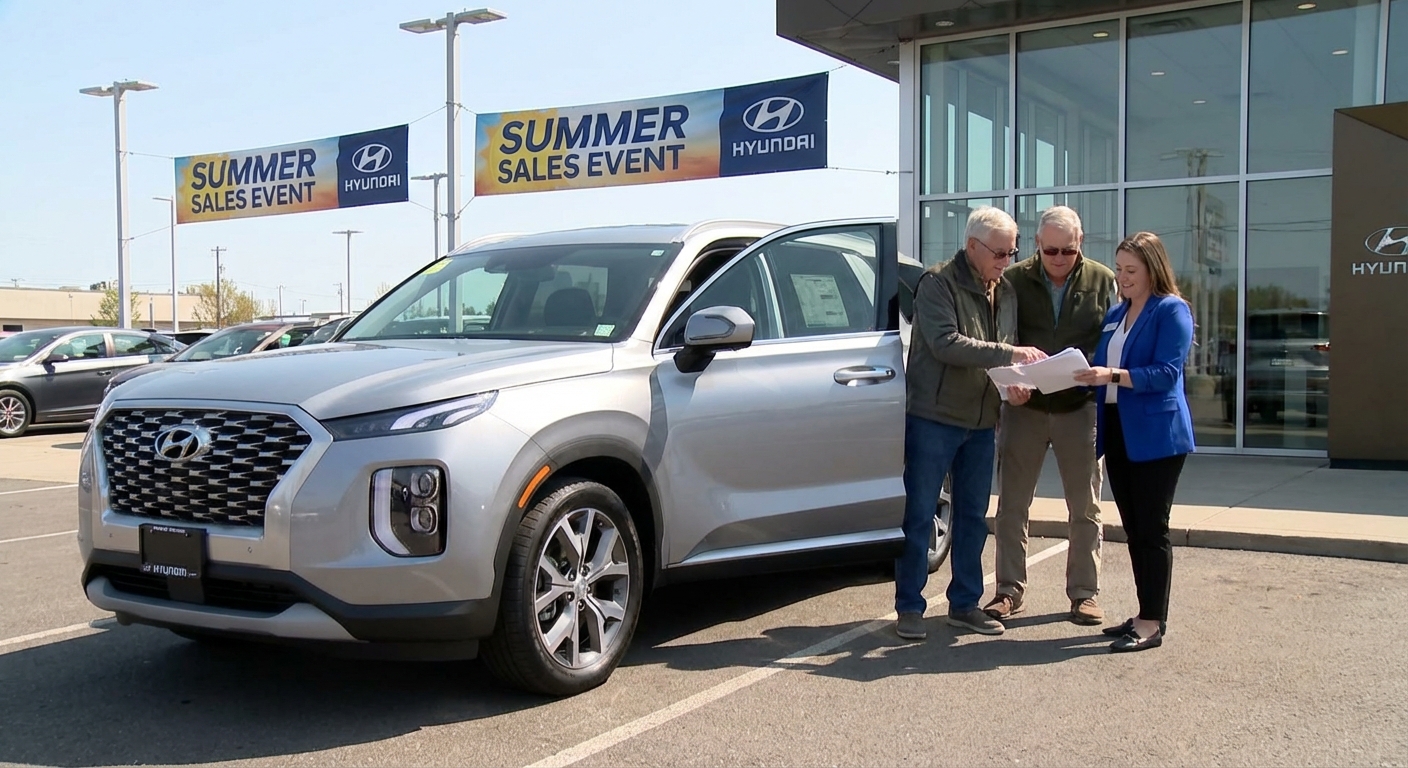
When I spoke to a finance manager at a Hyundai dealer in Virginia, he admitted that older buyers often pay closer to sticker because they’re less aggressive about negotiating and more trusting of “this is the best we can do.” In slow months, though, I’ve personally seen:
- $1,500–$3,000 off MSRP on in-stock Palisades
- Extra discounts for military, first responders, or loyalty (already own a Hyundai)
The trick is to shop multiple dealers via email before you ever step foot in a showroom. When I did this for a relative, the price dropped $2,200 from the first quote just by saying, “Another dealer is offering X, can you beat it?” No drama, no shouting.
Should Older Drivers Buy New or Used?
New Palisade: Who it suits
Buying new makes sense if:
- You want full warranty coverage (5-year/60,000-mile basic; 10-year/100,000-mile powertrain for original owner in the U.S.).
- You plan to keep the SUV for 8–10 years.
- You value the latest driver assistance tech.
When I priced out a new SEL vs a 2–3-year-old used one with similar options, the new model was often only about $4,000–$7,000 more than a low-mile Certified Pre-Owned (CPO), especially when factory incentives were strong.
Used or CPO Palisade: Smart but not always cheaper long term
Hyundai’s Certified Pre-Owned program can be a good fit if:
- You drive low miles per year.
- You want something a bit more upscale (maybe a Limited) without going full luxury pricing.
CPO Palisades usually:
- Are under 5 model years old
- Have undergone a multi-point inspection
- Come with an extended warranty option
The catch? Used-car interest rates are often higher than new-car promo rates. I’ve seen older buyers pay hundreds more per year in interest just to save a few thousand off the sticker—and over a 5–6 year loan, the math sometimes worked out worse.
Financing Options: What Actually Works Best for Older Buyers
1. Paying Cash (or Mostly Cash)
When I worked through the math with my parents, the biggest factor wasn’t actually the car—it was their retirement drawdown.
Paying cash makes sense if:
- You’re not pulling from an investment that’s earning more than about 4–5% annually (after taxes).
- You don’t want a monthly payment tracking you into your late 70s or 80s.
However, draining too much cash from savings for a car can be risky. I’ve seen retirees pull an extra $30,000 from taxable accounts, then realize they owe unexpected taxes the following year.
A compromise I like: pay 50–70% down in cash, then finance a small balance on a short-term loan (36 months or less).
2. Traditional Auto Loan
For many older drivers, a straightforward loan is still the sweet spot. Here’s what I typically recommend when I help friends or relatives run the numbers:
- Keep the term 60 months or less. Longer terms mean you’re paying a lot more interest and may be “upside down” if you need to sell.
- Try to put at least 20% down. This softens the blow of early depreciation.
Hyundai often runs promotional rates—something like 2.9%–4.9% APR for well-qualified buyers on new vehicles. Meanwhile, some banks and credit unions, especially those targeted at older adults or local communities, offer competitive rates too.
One 72-year-old reader emailed me that her credit union beat the dealer’s rate by 1.25 percentage points. On a $40,000 loan, that’s thousands saved over the life of the loan.
3. Leasing: Not Always the Villain, But Tricky
When I mention leasing to older drivers, I usually get the same reaction: “Isn’t that just throwing money away?” Sometimes, yes. Sometimes, no.
Leasing might work if:
- You’re driving under 10,000–12,000 miles per year.
- You want lower monthly payments and always having a newer, safer vehicle.
- You don’t want to worry about long-term repair costs past warranty.
But I’ve seen a lot of older lessees get burned by:
- Mileage overages
- Excess wear-and-tear charges (curb rash, small dents)
- Feeling pressured to roll into another lease and never being payment-free
For a Palisade specifically, leasing can sometimes be less attractive because residual values (what the vehicle is expected to be worth at lease end) and money factors aren’t always as favorable as some Toyota or Honda models. You really have to compare the total 3-year cost of leasing vs buying and keeping it for 6–8 years.
Special Considerations for Older Drivers
Insurance and Safety Discounts
Many insurers give discounts for:
- Advanced safety tech (which the Palisade has)
- Telematics or “safe driver” programs
- Completing a mature driver safety course (AARP, AAA, etc.)
When I helped a 69-year-old neighbor switch from a minivan to a Palisade, we called her insurer first. Her rate actually went down slightly thanks to better crash-test ratings and modern safety features.
Accessibility and Comfort Add-Ons
Before signing anything, I always suggest spending at least 30–45 minutes in the driver’s seat and passenger seats:
- Try getting in and out multiple times.
- Adjust the power seat and lumbar support.
- Test visibility with and without the surround-view camera (a big help for tight parking lots).
On one test drive, my dad realized the standard seat bottom aggravated an old hip injury, but the upgraded trim with different padding felt fine. That single detail changed which trim we were pricing and financing.
Estate and Long-Term Planning
This is the part dealers rarely talk about.
If you’re in your late 70s or 80s, taking out a 7-year loan on a new SUV may not be ideal from a planning standpoint. I’ve seen families have to sell vehicles quickly after a health event, only to discover there’s still a big loan balance.
Shorter term loans, larger down payments, or even slightly cheaper trims can make life much easier for your future self—and for whoever might need to help manage your affairs later.
How to Negotiate Price and Financing Without the Headache
Here’s the exact playbook I used helping a retired couple buy their Palisade:
- Check real-world pricing on sites like TrueCar, Edmunds, or KBB to see what others are paying locally.
- Get pre-approved at a bank or credit union before visiting a dealer. That gives you a benchmark APR.
- Email 3–4 Hyundai dealers with the exact Palisade trim, color, and options you want. Ask for their best out-the-door price (including taxes and fees).
- Once you have written quotes, ask your preferred dealer to match or beat the best one.
- At the dealership, keep price and financing separate in the conversation. First agree on price, then talk about financing.
When I did this, we cut about 90 minutes of back-and-forth nonsense out of the process. The finance manager still tried to sell add-ons—gap insurance, extended warranties, “protection packages”—but we had the breathing room to say no to almost all of it after calmly checking actual costs and coverage.
Pros and Cons of Choosing the Palisade as an Older Driver
What I really like:- Exceptionally comfortable and quiet ride
- Strong safety ratings and driver-assist tech
- Big, clear controls—not everything buried in a screen
- Hyundai’s long warranty, especially if you buy new
- Fuel economy is just okay for a large SUV; if you’re doing lots of city driving, gas costs add up.
- Top trims can creep into near-luxury pricing territory.
- Some older drivers find the size a bit intimidating at first in tight parking spaces.
When I weighed everything for my own family, we landed on this: the Palisade isn’t the cheapest SUV, but for older drivers who value comfort, space, and peace of mind, it’s one of the best-balanced options—if you’re smart about how you structure the purchase or lease.
Sources
- Hyundai USA – Palisade Features & Specifications - Official specs, trims, and warranty details.
- IIHS – Hyundai Palisade Crashworthiness & Safety Ratings - Independent safety ratings and test results.
- Consumer Reports – Hyundai Palisade Review - Road-test impressions, reliability data, and owner feedback.
- Edmunds – Hyundai Palisade Pricing & Reviews - Real-world pricing, incentives, and market analysis.
- AARP – Auto Buying and Financing Tips for Older Drivers - Guidance tailored to older buyers on loans, leases, and negotiation.