Guide to Leather Seat Designs for Comfort
** of the leather seats would affect how my back felt after a 4‑hour highway run.
Fast forward a few years, multiple test drives, one regrettable used luxury sedan, and way too much time spent poking around dealer lots, and I’ve realized: leather seat comfort is way more about design and construction than just the word “leather” on the spec sheet.
If you’re shopping for a new car, considering a re-upholstery, or just trying to understand why your “premium leather” seats still leave you sore, this guide is for you.
Leather Types That Actually Matter for Comfort
I used to think leather was leather—just different colors and price tags. Then I sat in a compact SUV with what the brochure proudly called “leatherette” and immediately stuck to the seat like I’d been vacuum-sealed.
Full-grain leather
This is the top of the food chain. It keeps the natural grain of the hide and, in my experience, tends to:
- Breathe better than cheaper coated leathers
- Break in over time and mold to your body
- Feel less plasticky on long drives
The downside? It’s usually found on higher-end trims and luxury brands, and it needs proper conditioning or it can dry out and crease.
Top-grain leather
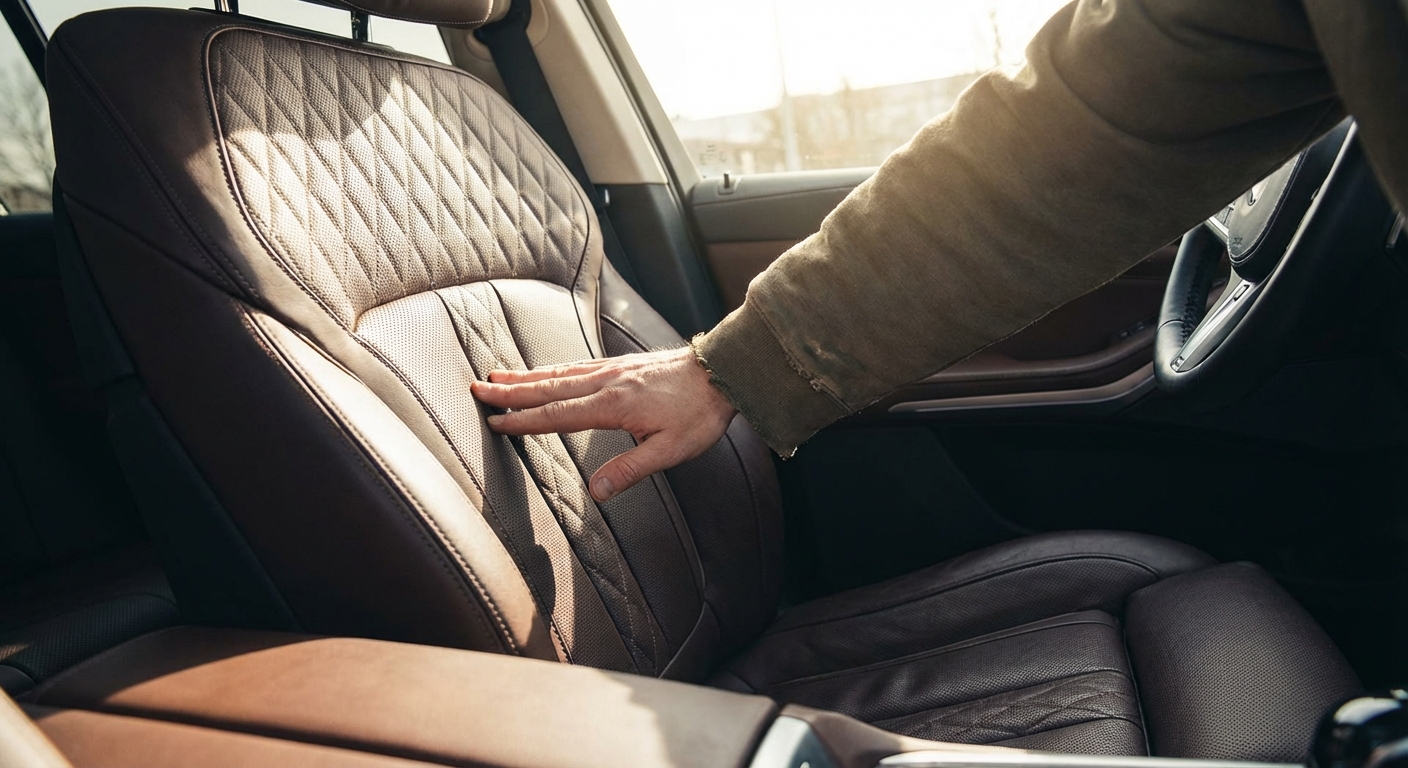
Most mainstream “leather” seats in mid-range cars are top-grain. The surface is corrected and finished, which makes it:
- More uniform in look
- More resistant to stains
- A bit less breathable than full-grain but still comfortable
When I tested a top-trim Honda Accord with top‑grain leather and did a 3‑hour loop I use for seat testing (yes, I’m that person), my back felt fine, but I did notice more warmth buildup than in a BMW with softer full‑grain.
Nappa leather
Automakers love to use this word in brochures. It’s usually softer, smoother, and more supple—basically top-grain that’s been treated to feel extra premium.
Comfort-wise, Nappa can feel buttery and reduce pressure points, but it’s also more delicate. When I borrowed a friend’s Mercedes E‑Class with Nappa leather for a week, I noticed how insanely comfortable the bolsters felt… and how quickly blue jeans started leaving color transfer.
Leatherette (synthetic leather)
Here’s the controversial one. Brands call it different things: MB-Tex (Mercedes), Sensatec (BMW), SofTex (Toyota), etc. It’s technically not leather.
Pros:
- More durable and easy to clean
- Often more eco-friendly than traditional tanning
- Can feel surprisingly close to the real thing
Cons:
- Can run hotter and feel less breathable, especially in humid climates
When I tested a Toyota with SofTex in July, short trips were totally fine, but on a 2‑hour highway drive I definitely felt more sweat buildup versus real leather.
The Secret Sauce: Cushioning and Foam Density
Here’s something I almost never see in marketing brochures but feel every single time I sit down: foam density and layering.
Two cars can both have “leather seats,” but the one with cheap, low-density foam will:
- Feel amazing for 15 minutes
- Turn into a backache factory at the 90-minute mark
In my experience, the most comfortable seats usually combine:
- A firmer base layer for support
- A softer top layer for pressure relief
European brands like Volvo, BMW, and Mercedes tend to go firmer but more supportive. When I tested a Volvo XC60, the seats felt almost too firm at first, but three hours later my lower back was oddly grateful.
Meanwhile, some American SUVs go for plush, couch-like softness. Comfortable on short trips, but on long drives I’ve felt my hips sink and my posture slowly collapse.
If you can, do a real test drive: at least 30–45 minutes, not just a spin around the block. Pay attention to:
- Pressure on your tailbone
- Whether you’re constantly shifting around
- If your lower back feels “supported” or “hanging”
Bolstering, Shape, and Lumbar: Where Design Gets Real
Side bolsters
When I first got into a sporty sedan with aggressive bolsters, I thought: “Wow, race car vibes.” Twenty minutes later, my thighs were begging for mercy.
Good bolstering should:
- Hold you in place during cornering
- Not dig into your thighs or ribs
If you’re broader in the shoulders or hips, watch out for very tight sport seats. They look cool, but comfort can suffer fast.
Seat contour and thigh support
Look for seats with an extended thigh cushion or an adjustable front edge. On longer drives, this spreads your weight better and reduces pressure on your sit bones.
Some BMW and Audi models have extendable thigh supports. When I tried one on a long drive, I noticed I wasn’t pushing my feet into the floor as much to stabilize myself—my legs were just… relaxed.
Lumbar support
This one is huge. I used to ignore lumbar adjustments completely, until one road trip left me with an aching lower back and a weird hatred for cruise control.
Better seats offer:
- 4-way lumbar (up/down + in/out)
- Sometimes even massage functions
The trick (for me) is to set lumbar so it fills the natural curve of your lower back without shoving you forward. Too much lumbar is just as bad as none.
Perforation, Ventilation, and Heating: Temperature Is Comfort
One summer, I tested a sedan with solid (non‑perforated) black leather seats. I left it in the sun for 30 minutes. Getting in felt like sitting on a baking tray.
Perforated leather
Tiny holes in the leather do two things:
- Let the seat breathe better
- Allow ventilated/“cooled” seats to actually work
Perforated leather usually feels less sticky in hot weather and pairs with:
- Heated seats for winter
- Ventilated seats (fans blowing air through the seat) for summer
Just be aware: perforations can trap crumbs and dust. I’ve spent more time than I’d like to admit vacuuming tiny holes.
Heated and ventilated seats
From a comfort perspective:
- Heated seats relax muscles and help blood flow, especially on long winter drives
- Ventilated seats don’t really “cool” you like AC, but they reduce sweat and that nasty back‑suction feeling
When I tested ventilated seats in a Kia Telluride on a 100°F day, my shirt stayed much drier than in a similar SUV without them. The difference after an hour was very obvious.
Stitching, Panels, and Pressure Points
This sounds nitpicky, but once you notice it, you can’t unsee it: where the seams and panels sit on the seat.
Poor design puts thick stitching or panel joins right under:
- Your thighs
- Your tailbone
- The side of your ribs
After a while, that creates hot spots and discomfort. Premium seats often:
- Use larger center panels and push seams outward
- Use softer or flatter stitching in high-contact zones
When I compared two midsize SUVs back-to-back, the cheaper one had a thick, raised seam right under my left thigh. It was fine around town, but during a 90‑minute test loop, I could feel that seam constantly.
When Leather Isn’t Always the Most Comfortable Choice
I love the look and feel of quality leather, but I’ll be honest: it’s not always the comfort king.
Cloth seats can:- Stay cooler in summer and warmer in winter
- Be less slippery, so you don’t slide around as much
On one long ski trip, I actually preferred the high-quality cloth seats in a rental Subaru over the leather seats in my own car. They just felt more temperature-neutral and grippy.
So if you’re not obsessed with luxury aesthetics or resale value, a well-designed cloth seat can absolutely beat a mediocre leather seat for pure comfort.
How I Personally Evaluate Leather Seat Comfort (You Can Steal This)
When I’m testing a car’s seats, here’s the rough checklist I use:
- Short sit test (5 minutes)
- Do I feel any obvious pressure points right away?
- Is the leather surface slippery, sticky, or just neutral?
- Adjustment test
- Can I adjust seat height, tilt, lumbar, and steering wheel enough to get a natural driving position?
- Does the headrest meet the back of my head, or push it forward?
- 30–45 minute drive
- Do I forget about the seat (good sign) or keep fidgeting (bad sign)?
- How does my lower back feel?
- Are my legs tingling or going numb?
- Heat/vent test (if available)
- Do the heated seats warm evenly or create hot spots?
- Do ventilated seats actually move air or just make noise?
If a car passes that test, I start trusting the leather seat design a lot more.
Final Thoughts: Matching Leather Seat Design to Your Real Life
If I had to boil all this down to how I’d help a friend choose, I’d say:
- If you drive long distances regularly, prioritize:
- Supportive, firmer seats with good lumbar
- Perforated leather with heat and ventilation if budget allows
- If you do mostly short city trips, you can lean more toward:
- Softer, more plush leather
- Less aggressive bolstering for easier in/out
- If you live in a very hot climate:
- Perforation and ventilation are game changers
- Lighter leather colors help more than people think
- If you have kids, pets, or messy hobbies:
- High-quality synthetic leather or durable top-grain might be more practical than delicate Nappa
I’ve learned the hard way that a car can have all the tech in the world, but if the seat design is wrong for your body, you’ll resent driving it. When you’re shopping, ignore the sales pitch for a moment, sit down, breathe, adjust, and listen to what your back and legs are telling you.
Your spine doesn’t care about trim names. It cares about design.
Sources
- NHTSA – Driver Fatigue and Discomfort - Research report on seating, posture, and driver fatigue
- Harvard Health – Tips for Back Pain Relief - Guidance on car posture and back support
- Volvo Car Group – Ergonomic Seat Design - Volvo’s approach to seat ergonomics and comfort
- BMW USA – Seat Technology Overview - Manufacturer info on multi-contour, ventilated, and lumbar seats
- Consumer Reports – Car Seat Comfort Insights - Testing-based discussion of seat comfort factors