Guide to Rent to Own ATV Programs
t later.” Then I actually dug into a few programs, sat down with a dealership finance manager, and even ran numbers on two different deals I was eyeing.
That deep dive changed my mind… somewhat.
Rent to own ATV programs can be a smart path if you understand how they work and don’t get hypnotized by the “low weekly payment” sales pitch. Let me walk you through what I learned, what I tested myself, and where the traps are.
What “Rent to Own” Really Means for ATVs
When I first started researching, I realized a lot of people confuse three things:
- Traditional financing (a standard loan)
- Lease-to-own / rent-to-own
- Straight rental (no ownership at the end)
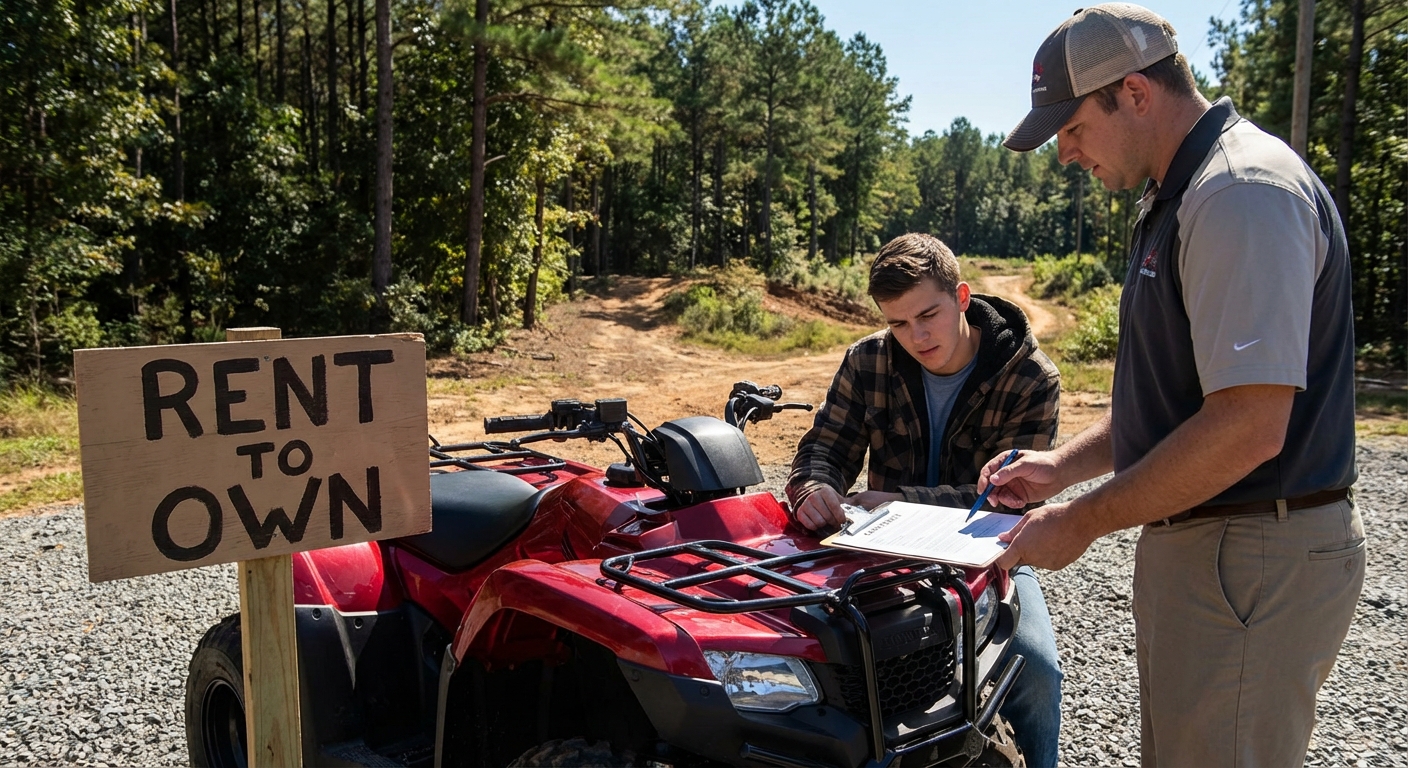
Most rent to own ATV programs you’ll see at powersports dealers or online fall into the lease-to-own bucket:
- You make weekly or monthly payments
- You ride the ATV during that term
- At the end, you either pay a final buyout or the contract automatically converts to ownership (depending on the program)
From the dealer’s perspective, it’s a way to move inventory to riders who:
- Have low or thin credit
- Don’t want a big traditional loan
- Want low entry cost (low or even zero down)
From your perspective, it feels more like a rental with a built‑in path to ownership.
When I tested this at a local dealership here’s how the finance manager explained their program to me:
> “We’re not a bank. Technically you’re leasing the unit. Complete all the term payments and the buyout, you own it. Default, and we come pick the machine up.”
That’s the mindset you need: they can (and will) repo the ATV much faster than a traditional lender, and the contract is written with that in mind.
How Rent to Own ATV Programs Actually Work
Here’s the typical structure I kept seeing when I shopped around and read sample contracts:
- Application & approval
Many programs don’t use a hard credit check, or they focus more on income than score. That’s the big draw.
- Initial payment
Often marketed as “$0 down,” but you might still pay:
- First week/month’s payment
- Document or setup fees
- Taxes and registration
- Lease term
You make recurring payments (weekly, biweekly, or monthly) for a fixed period. I saw terms like 24–36 months most often.
- Ownership option
At the end you either:
- Pay a residual / buyout (like $500–$2,000 depending on the ATV value), or
- Automatically own it once the last payment clears (some “progressive lease” models do this).
- Early purchase options
This is where it gets interesting. Several programs let you buy out early at a discount. When I ran numbers, an early buyout at 90 days or 6 months could shave a lot off the total cost compared to just letting the full term run.
The Federal Trade Commission has actually flagged rent‑to‑own style contracts in other industries for being much more expensive than retail over time, even though the weekly payment looks tiny. The same logic absolutely applies to powersports.
Pros: When Rent to Own Can Make Sense
In my experience, these programs shine in a few specific scenarios.
1. You’ve got rough credit but solid income
When I tried a sample approval process with a 620 FICO (long story involving a project car that went way over budget), a traditional bank offered me a rate that made me laugh out loud. The rent to own program, though, only asked for proof of income and a bank statement.
If you:
- Have recent credit dings
- Are rebuilding after bankruptcy
- Don’t have a long credit history
…rent to own might be one of the only realistic ways a dealer will put you on a new or late‑model ATV.
2. You need flexibility more than the rock‑bottom cost
Some rent to own contracts let you:
- Return the ATV without a massive penalty after a minimum period
- Upgrade to a different unit mid‑term (this is rarer but I did see it once)
If you’re not 100% sure you’ll want to keep the ATV long‑term — say you only need it for 1–2 hunting seasons or a specific land project — that flexibility actually has real value.
3. You’re disciplined about early buyout
This is where I’ve seen people make it work really well.
A friend of mine used a rent to own program on a used Polaris Sportsman. He:
- Paid the initial fees
- Made six months of payments
- Then used his tax refund to do an early buyout
When we broke it down, he paid more than cash, sure, but not absurdly more. Compared to the subprime loan he was offered, his total cost was actually similar, with slightly less risk if he’d lost his job in those first few months.
Cons: The Expensive Hooks No One Brags About
The downside list is longer, and this is where you need to be brutally honest with yourself.
1. Total cost can be very high
Consumer groups and the CFPB have repeatedly found that rent‑to‑own structures (on furniture, electronics, etc.) often lead to effective APRs north of 100% once you factor every fee and payment in. Powersports contracts can be a bit tamer, but they’re still usually more expensive than a standard loan.
When I ran numbers on a $9,000 ATV at one dealer:
- Traditional loan at ~12% APR over 48 months: about $11,300 total
- Rent to own with low weekly payments: roughly $13,500–$14,000 total after buyout
Same ATV. Different path. Big price gap.
2. You don’t fully “own” it until the end
This sounds obvious, but it matters:
- They can repossess it quickly if you miss payments
- You may not be able to sell or trade it easily mid‑term
- Some contracts limit mileage or abuse (jumping dunes like you’re in a Red Bull video technically violates a few I read)
So yes, it’s “yours” to ride. But not yours in the legal, do‑whatever‑you‑want-with-it sense until you’re fully done.
3. Aggressive fees and add‑ons
When I sat with that finance manager, the printed offer sheet had:
- An “acquisition fee”
- A “processing fee”
- Mandatory GPS/recovery device fee
- Optional but heavily pushed maintenance plan
None of these were illegal. All of them added up.
If you’re not the kind of person who reads every line before signing, rent to own is a dangerous playground.
Red Flags I Learned to Watch For
I got in the habit of flipping straight to the ugly pages of the contract. Here’s what I’d tell anyone else to check before you sign:
1. Early buyout formulaOne program I saw advertised a “huge early payoff discount.” The actual math in the contract? Not so huge. You want a clear formula, not vague language.
2. Total of payments disclosureAsk for a printout that shows:
- Total you’ll pay if you go full term
- Total if you buy out at various points
If the salesperson dodges this, that’s a sign to walk.
3. Insurance requirementsSome programs require full coverage with specific limits. When I checked with my insurer, bumping coverage to meet those limits was an extra monthly cost I hadn’t initially budgeted for.
4. Wear‑and‑tear / damage clausesOne contract basically said if I returned the ATV with “excessive wear,” there’d be additional charges. That’s super subjective. If your plan involves possibly returning it, you need clarity here.
Smarter Ways to Use (or Avoid) Rent to Own
After playing with scenarios and talking to a few fellow riders who’d done this, here’s the strategy I’d personally follow:
- Price out three paths side by side
- Cash (even if you have to wait and save)
- Traditional loan (dealer or your bank/credit union)
- Rent to own with full‑term and early‑buyout costs
- Ask your credit union first
I’ve seen credit unions offer powersports loans at rates way better than the in‑house financing. They’re not as flashy, but they’re often cheaper.
- Use rent to own only if it’s a stepping stone
For example:
- You badly need an ATV for work (farm, ranch, land maintenance)
- You can absolutely handle the payment
- You have a realistic early buyout plan (bonus, seasonal work, tax refund)
- Never assume “if I miss a payment, I’ll just catch up”
Rent to own contracts can be less forgiving than banks. Once you’re behind, it can spiral fast.
Who I’d Recommend Rent to Own ATVs For
Based on my experience and the research I’ve done, rent to own makes the most sense for:
- People with damaged credit who still have stable income and don’t want to wait years
- Buyers who understand contracts and are willing to read every clause
- Riders with a clear plan to either:
- Return the ATV within a defined timeframe, or
- Buy out early to minimize the cost hit
Who should probably avoid it:
- Anyone who could qualify for a normal loan at a decent rate
- Impulse buyers who saw a shiny side‑by‑side on TikTok and “need it this weekend”
- People who struggle to make on‑time payments consistently
When I finally pulled the trigger on an ATV myself, I actually walked away from a rent to own offer and went with a used machine plus a small traditional loan from a credit union. For my situation, the math just worked better.
But I’ll say this: the rent to own option I turned down? If my credit had been worse, or if I’d needed that machine for income immediately, I might’ve made a different call.
The key is knowing exactly what you’re signing up for, not just how it looks on a glossy sign in the showroom.
Sources
- Consumer Financial Protection Bureau – What is rent-to-own and how does it work? - Explains general rent-to-own mechanics and cost concerns
- Federal Trade Commission – Rent-to-Own: Costly Convenience - FTC overview of rent-to-own pitfalls and pricing
- U.S. Bureau of Labor Statistics – Consumer Expenditures Survey - Data on consumer spending and financing patterns
- Polaris Off-Road – Financing Options - Example of manufacturer financing and program structure
- National Credit Union Administration – Credit Union Locator - Tool to find local credit unions that may offer powersports loans