Guide to Small Electric Car Features and Benefits
accident (the bigger petrol cars were sold out), and when I slipped into a space that would’ve made an SUV driver cry, I thought: ok, I get the hype now.
If you’ve been eyeing small electric cars but aren’t sure what really sets them apart, let me walk you through what I’ve learned hands‑on and from covering EVs for years.
What Counts as a “Small” Electric Car?
When I say small electric car, I’m talking about:
- City EVs / microcars (think Fiat 500e, Dacia Spring, Wuling Mini EV)
- Subcompact and compact hatchbacks (Nissan Leaf, Chevy Bolt, MINI Electric, Peugeot e‑208, VW ID.3)
These usually have:
- Shorter wheelbases and overall length under ~4.3m (about 14 ft)
- Battery packs typically in the 30–60 kWh range
- 2–5 doors, mostly hatchbacks
They’re built around urban and suburban life: shorter trips, tighter parking, more stop‑and‑go traffic.
Key Features That Actually Matter Day to Day
1. Compact Size and City-Friendly Design
When I tested a MINI Electric in London, the thing felt like a go‑kart with number plates. The short overhangs and tight turning radius made U‑turns and alleyway escapes almost… fun.
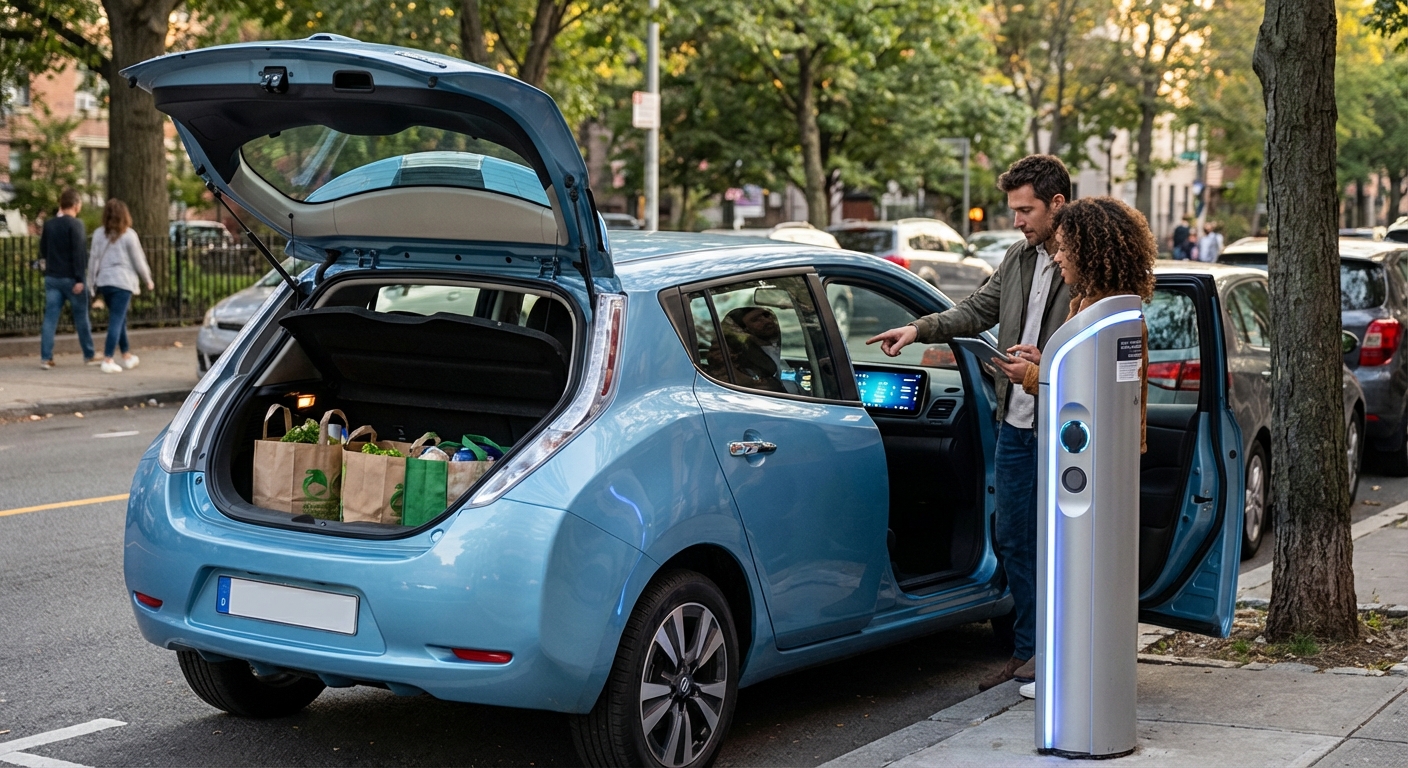
- Parking becomes trivial – you genuinely start considering spaces you’d never try in a bigger car.
- Agility in traffic – quicker lane changes, easier gap‑finding in dense traffic.
- Stress reduction – I felt less mentally drained after city drives compared to wrestling a long sedan.
2. Instant Torque and Surprising Acceleration
One of the biggest mindset shifts: small doesn’t mean slow.
Even modest small EVs can do 0–60 mph in the 7–9 second range, which is perfectly punchy for real‑world driving. When I drove a Peugeot e‑208, the jump from 0–30 mph at traffic lights felt like a much more powerful petrol car.
What gives them that “zip” factor:- Electric motors deliver peak torque instantly – no waiting for revs or downshifts.
- Single‑speed transmissions – smooth, linear pull without gear hunting.
However, push them hard repeatedly (especially on hot days), and you may feel thermal throttling — the car slightly reducing power to protect the battery and motor. Most drivers will never notice, but it’s there.
3. Battery Sizes, Range, and the “99% Rule”
A lot of people I talk to are hung up on range anxiety. Let’s get specific.
Most modern small EVs offer estimated WLTP ranges in the ballpark of:
- City micro EVs: 100–200 km (60–125 miles)
- Compact hatch EVs: 250–450 km (155–280 miles)
Real‑world range is usually 10–25% lower than the quoted figure, depending on:
- Driving style (heavy right foot vs. calm cruising)
- Temperature (cold weather = less range)
- Highway vs. city (highway drains faster)
When I tracked my own use over a month with a compact EV, I realized 90% of my trips were under 40 km (25 miles) per day. I was easily within range even with a smaller battery.
There’s a phrase EV analysts use that I love: “Design for the 99%, rent for the 1%.” For that once‑a‑year cross‑country trip, rent a long‑range car. For daily use, small EV range is usually more than enough.
Cons to be honest about:- If you regularly drive 300+ km in areas with poor charging infrastructure, a small EV can feel limiting.
- Winter range drops can be nasty in some models (heat pumps help, resistive heaters hurt range).
4. Charging: Home, Workplace, and Public
When I first got a test EV, I seriously underestimated how much home charging changes the entire ownership experience.
For small EVs, the charging story usually looks like this:
- AC charging (home / workplace): 7–11 kW is common with a wallbox. For a 50 kWh battery, that’s roughly 6–8 hours from near‑empty to full.
- DC fast charging (on the road): 50–100 kW on many small EVs; newer models go up to 120–170 kW.
With my own test routine, I’d plug in at night like a smartphone. The car would “refuel” while I slept. That alone killed most of the gas‑station vs. charging anxiety.
But there are catches:- Apartment living without assigned parking can be a major barrier.
- Some cheaper small EVs have relatively slow DC charging curves; they may hit their peak rate only briefly.
- Real charging sessions often add 20–80% in 25–45 minutes, not the perfect-lab numbers from the brochure.
If you’re considering one, check both peak kW and 10–80% time from independent testers, not just the brochure.
5. Running Costs: Where Small EVs Quietly Win
Let’s talk numbers, because this is where small EVs can shine.
From various TCO (total cost of ownership) studies and my own spreadsheets (yes, I’m that person), I’ve noticed:
- Electricity vs. fuel: On a per‑km or per‑mile basis, home charging is often 60–80% cheaper than gasoline in many regions, especially with off‑peak tariffs.
- Maintenance: No oil changes, fewer moving parts, and less brake wear (thanks to regenerative braking). My service visits have mostly been checks, filters, tire rotations.
- Tax and incentives: Many countries and cities offer reduced registration fees, EV rebates, or exemptions from congestion charges for EVs.
The caveat: The purchase price can still be higher than similar‑sized gasoline cars, especially in markets with weak incentives. Over 5–8 years, though, the math frequently tilts in favor of the small EV, especially if you rack up city miles and can charge cheaply at home.
6. Interior Space: The TARDIS Effect (and Where It Fails)
One of the coolest engineering tricks with EVs is packaging. Because the battery is under the floor and there’s no big engine up front, small electric cars often have:
- Surprisingly generous legroom for front passengers
- Flat floors in the rear (no transmission tunnel)
When I tested the VW ID.3, the cabin space felt closer to a mid‑size car, even though the exterior footprint was compact.
But let’s be transparent:
- Trunk space can still be compromised, especially in retrofitted EVs that share a platform with gasoline cars.
- Rear headroom in some stylish hatchbacks is… optimistic for taller adults.
- Micro EVs are properly small — they’re more “urban pod” than family hauler.
If you’ve got kids, strollers, or a habit of carrying half your apartment around, actually sit in the car with your stuff before committing.
7. Safety and Tech: Are Small EVs Safe Enough?
When I first put family members in a tiny EV, the safety question came up immediately: “It’s so small… is this actually safe?”
Modern small EVs usually offer:
- Standard ESC (Electronic Stability Control) and multiple airbags
- Advanced driver‑assistance systems (ADAS) like:
- Automatic emergency braking (AEB)
- Lane-keeping assist
- Adaptive cruise control on some trims
Because the battery pack is low and central, small EVs often have:
- Low center of gravity, improving stability
- Strong underbody structures to protect the pack
But physics still matter:
- In a collision with a much heavier SUV or truck, a small car is at a disadvantage simply due to mass.
- Some budget small EVs aimed at developing markets may not meet the same safety standards or have as many airbags/ADAS features.
Always check Euro NCAP, IIHS, or your local test ratings for the exact model and trim you’re looking at, not just assume “EV = safe”.
8. Environmental Impact: Cleaner, But Not Magic
I’ve seen the full spectrum of hot takes on EVs — from “they’re perfectly green” to “they’re worse than diesel”. Reality sits somewhere in the middle.
Advantages small EVs have environmentally:- Zero tailpipe emissions in your city: less NOx and particulates where people actually breathe.
- Typically smaller batteries than big SUVs, meaning less raw material per vehicle.
- Lower energy use per km due to lighter weight and smaller frontal area.
However:
- Battery production has a real environmental footprint — mining, refining, and manufacturing aren’t clean fairy dust.
- The climate benefit depends heavily on your electricity mix. A small EV powered by renewable-heavy grids has a far lower lifetime CO₂ footprint than one powered mostly by coal.
Most lifecycle assessments from independent researchers still show that even with a coal‑heavy grid, EVs generally beat comparable gasoline cars over their full lifetime. Small EVs, with their smaller batteries and higher efficiency, tend to sit on the better end of that comparison.
Who Small Electric Cars Are (and Aren’t) For
After driving and reviewing a lot of these, there’s a pretty clear pattern of who ends up the happiest.
They’re usually an excellent fit if:- Your typical daily drive is under 80–100 km (50–60 miles).
- You live in a city or dense suburb with tough parking.
- You can charge at home or at work reliably.
- You’re comfortable renting or borrowing a bigger car a few times a year for road trips.
- You regularly drive long distances in an area with limited DC fast chargers.
- You need serious cargo space or tow regularly.
- You can’t install or access reliable charging where you park.
When I mapped my actual life (not my aspirational cross‑country‑every‑weekend version), I realized a small EV would cover about 95% of what I do with a car. That last 5%? I’d rather rent than drag around a bigger, more expensive vehicle every day “just in case”.
Final Thoughts: Try Before You Judge
I’ve noticed something consistent: people’s opinions about small electric cars shift dramatically after a proper multi‑day test drive.
The quiet, the instant torque, the no‑gas‑station routine, the way it just fits into city life — these things are hard to grasp from spec sheets and comment sections.
If you’re even mildly curious:
- Rent or car‑share a small EV for a full weekend.
- Do your normal life: commute, grocery run, night out, maybe a short highway trip.
- Check how often you actually worry about range vs. how much is just theoretical fear.
In my experience, small electric cars aren’t perfect and they’re not for everyone — but for the right driver in the right setting, they’re one of the most satisfying, quietly transformative upgrades you can make to daily mobility.
Sources
- U.S. Department of Energy – Fuel Economy: All-Electric Vehicles - Technical overview of EV efficiency, costs, and operation
- International Energy Agency – Global EV Outlook 2024 - Data on EV adoption, range, and policy trends worldwide
- Euro NCAP – Latest Safety Ratings - Safety test results for many small electric cars sold in Europe
- MIT Climate Portal – Are Electric Cars Really Better for the Climate? - Lifecycle emissions comparison of EVs vs. gasoline vehicles
- BloombergNEF – Electric Vehicle Outlook - Industry analysis of EV costs, market share, and future projections