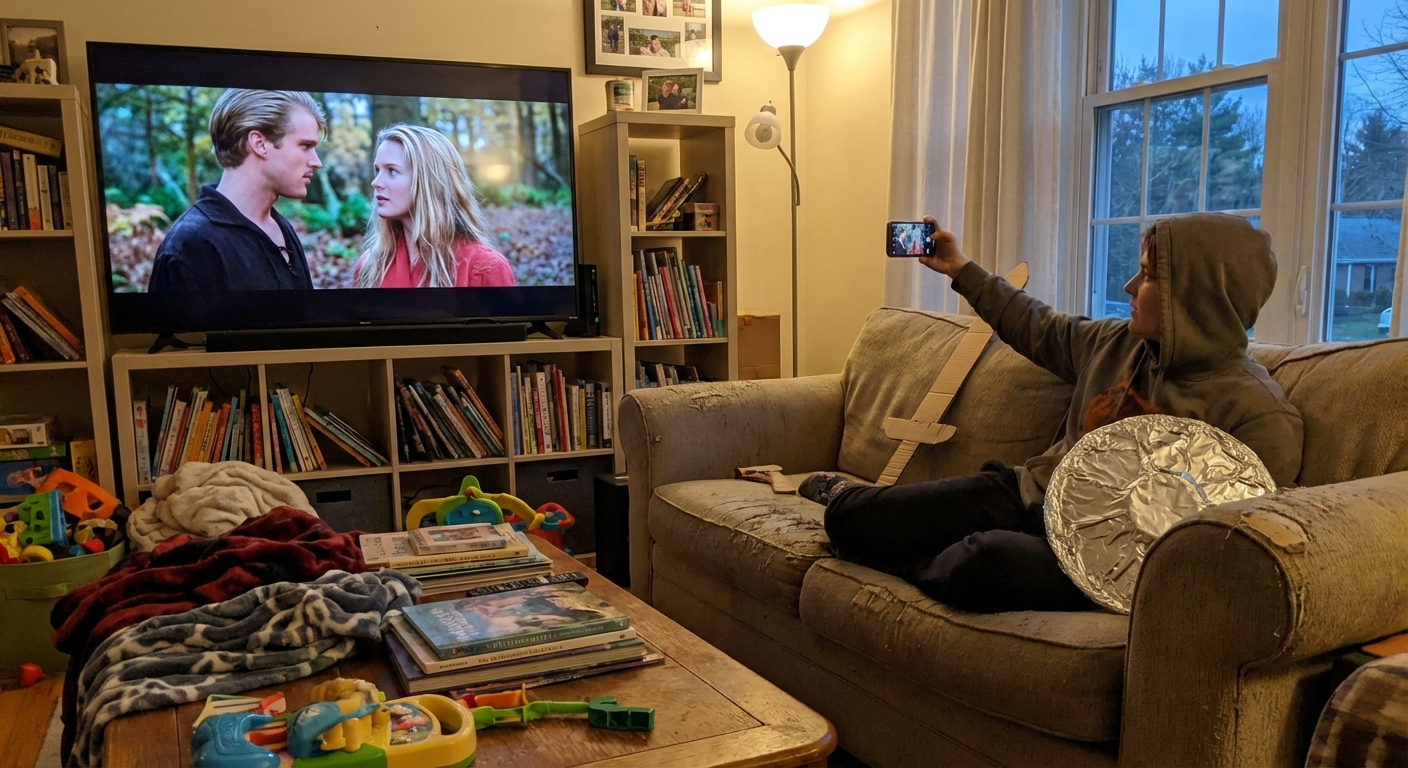
How “Background Movies” Quietly Rewired My Creative Brain
Then I accidentally left Blade Runner 2049 playing while answering emails… and 40 minutes later, my inbox was done, my anxiety was down, and my brain felt weirdly dialed in. I wasn’t exactly following the plot, but the soundscape and pacing did something I couldn’t ignore.
That rabbit hole led me to a strange habit I now swear by: background movies — films and shows I play specifically not to binge, but to shape my focus, mood, or creativity while I’m doing other things.
It’s not the same as “Netflix on while I scroll.” It’s more intentional than that, and when I tested it across different genres, directors, and tasks, I realized: background movies can be a kind of DIY creative toolkit… if you use them right.
Let me break down what I’ve learned (and where this absolutely backfires).
How I Stumbled Into Using Movies Like Soundtracks
The first time this clicked, I was on a deadline writing a dense, technical article. I put on The Social Network “just for company.” Bad idea, or so I thought. It’s one of my all-time favorites, the pacing is relentless, the dialogue is razor sharp. I figured I’d just end up re-watching it.
But something odd happened.
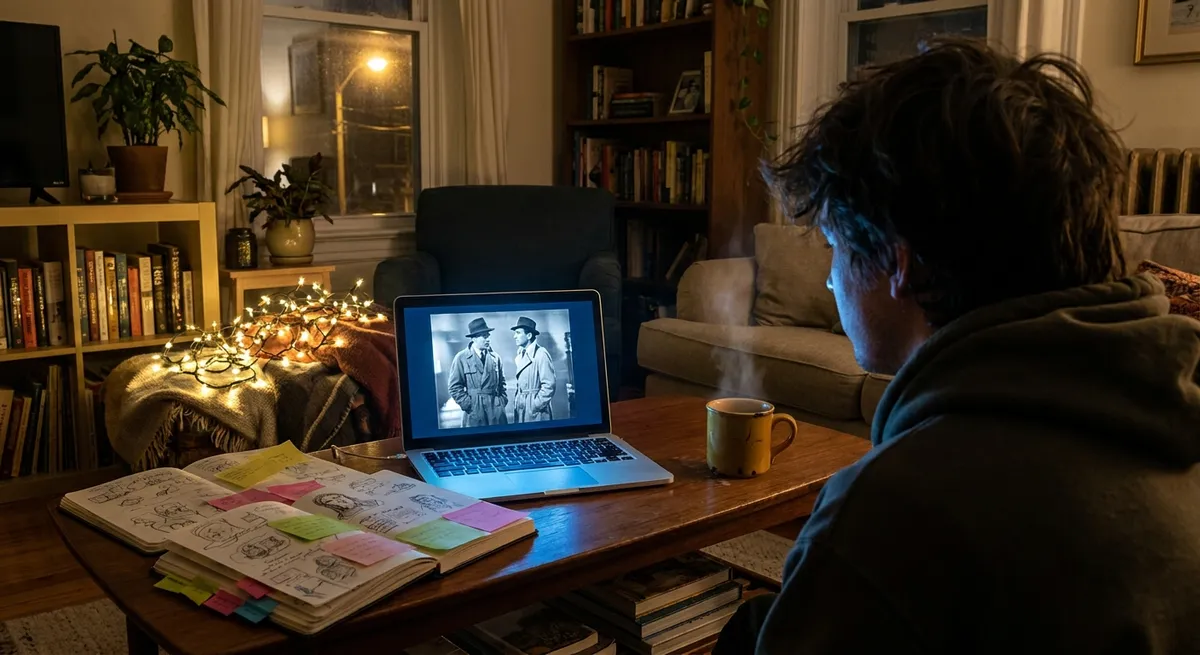
I stopped looking at the screen after 10 minutes. What stayed was the tone — Reznor and Ross’s score pulsing underneath, the keyboard clacks, overlapping dialogue, the muted campus ambience. My brain wasn’t trying to track every line anymore; it was just riding the rhythm of the movie.
The work felt faster, almost like I’d synced to the film’s tempo.
So I started playing around with this:
- For shallow admin tasks, I put on loud, chaotic action movies I’d already seen three times.
- For deep writing, I went for slow-burn sci‑fi and drama with strong scores.
- For boring chores (laundry, cleaning), I used sitcoms I half-remembered from years ago.
Patterns emerged. Some movies:
- Boosted my focus
- Spiked my anxiety
- Hijacked my attention completely
It wasn’t random. It lined up disturbingly well with what media psychology and attention research have been saying for years about background TV and cognitive load — I’d just accidentally built my own tiny, questionable lab.
What Background Movies Do To Your Brain (When You’re Not Really Watching)
When I dug into the research, a bunch of stuff snapped into place.
Media psychologists have been studying “background television” for decades, especially its effects on kids. One 2011 study found that background TV significantly reduced the length and quality of toddlers’ play episodes — not because the kids were glued to the screen, but because the noise and narrative fragments kept grabbing little slices of their attention.
As adults, we’re not immune; we’re just better at pretending we are.
What I noticed — and what the research quietly supports — is this:
- Narrative complexity steals focus. If the movie has a twisty plot, dense exposition, or heavy emotional swings, my brain keeps poking at it even when I’m turned away. It’s like having an open Slack thread in your peripheral vision.
- Familiarity is a cheat code. When I used movies I already knew, my brain didn’t need to spend resources decoding the story. The film became more like a mood engine than a puzzle.
- Sound design is the real puppet master. A lot of cognitive load comes from audio — shifts in volume, music cues, sudden sound effects. In my experience, score-heavy films without constant dialogue made the best background companions.
That tracks with broader attention research: humans are extremely sensitive to auditory changes, especially sudden ones, because evolution decided “loud weird noise = maybe predator.” Great for survival, annoying for writing in an open-plan apartment.
Where it gets interesting is the mood regulation side.
I started noticing:
- Slow, atmospheric movies calmed me.
- Fast-cut blockbusters made me type faster… but also hit Twitter more.
- Comfort comedies reduced stress but wrecked deep work.
When I looked up research on “background music vs silence” for work and studying, it mirrored my mess of experiences. Some people benefit from moderate, predictable stimulation; others need silence. Genre, tempo, lyrics — everything matters.
Background movies? They’re like music playlists with a much more demanding ego.
My “Background Movie” Field Test: What Actually Worked
I didn’t want this to live in the land of vibes only, so I tried a semi-structured experiment for a month.
The setup:- 3 types of tasks:
- Deep work (writing, editing, detailed planning)
- Shallow work (email, file organizing, formatting)
- Physical/house tasks (cleaning, cooking, folding laundry)
- 4 “background movie” categories:
- Familiar comedies
- Slow sci‑fi / drama
- Bombastic action
- Nature / experimental / low-dialogue films
I tracked two things after each session:
- How productive I felt (subjective, but consistent)
- How drained or energized I felt afterward
Here’s the honest breakdown.
Familiar Comedy: Amazing For Chores, Terrible For Focus
I put on shows like Brooklyn Nine-Nine and movies like Mean Girls that I could practically quote.
What happened:- During chores: time vanished. I actually wanted to keep cleaning to finish the episode.
- During deep work: disaster. Jokes kept hijacking my attention. I’d “just look for a second” and lose 5 minutes.
- During shallow work: not awful, but I made way more small mistakes.
My conclusion: familiar comedy works like emotional caffeine — great when I need comfort and motion, terrible when I need precision.
Slow Sci‑Fi & Drama: Quiet Superpower, With A Catch
These were movies like Arrival, Her, Blade Runner 2049, Lost in Translation.
What happened:- Deep writing sessions were noticeably better. I got into flow faster and stayed there longer.
- I barely looked at the screen after the first 5–10 minutes.
- The pacing and soundscapes kept my brain “occupied but not demanded.”
The catch: if I was even slightly emotionally fragile, these movies could flip the table. A stray melancholy scene and suddenly I’m spiraling about life choices instead of finishing my outline.
These became my go-to for focused work — but only when I was already baseline okay.
Action & Superhero Chaos: Good For Speed, Bad For Quality
Think Fast & Furious, Marvel movies, Mad Max: Fury Road.
What happened:- Shallow tasks got done fast. I’d plow through bulk email or filing while explosions went off in the background.
- My typing speed went up. My error rate also went up.
- For anything creative or complex, my mind felt jumpy and impatient.
These were like having three espressos in movie form. Perfect when I needed to brute force through low-stakes, repetitive work. Absolutely not for anything nuanced.
Nature / Visual / Experimental Films: Secret Weapon I Didn’t Expect
I tried stuff like Planet Earth II, abstract visual films, and even long aquarium/live-cam streams.
What happened:- For both deep and shallow work, my stress stayed low.
- I rarely felt the urge to look, but when I did, the visuals were calming, not demanding.
- Tasks felt less “urgent,” but they did get done.
This category felt closest to using music — specifically ambient or post-rock — but with a richer texture.
In my experience, this was the safest, most universally useful background category, especially for anyone who gets easily distracted by dialogue.
The Hidden Downside: When Background Movies Quietly Make Life Worse
I’m not going to pretend this habit is all upside.
When I abused it, three problems popped up fast.
1. My Attention Span Started Fracturing
I noticed I was getting worse at just… doing one thing.
If I sat down to eat without something on in the background, I felt weirdly restless. If a movie ended mid-task, I’d almost immediately check my phone or open YouTube “just for noise.”
It was a signal I didn’t love: my brain getting dependent on constant audiovisual stimulation to do even simple tasks.
2. I Started Half-Experiencing Great Art
This one bugged me the most.
Cinema is designed to be immersive. Directors sweat over shot choices, sound design, color grading, pacing. Watching masterpieces as wallpaper felt a little like reading poetry as a CAPTCHA.
I caught myself “kind of” knowing incredible films only as vibes. I’d recognize their soundtracks and a couple of frames, but not the full narrative weight. It made my inner film nerd wince.
My fix: I made a hard rule for myself.
- Background mode is only for movies I’ve already watched fully at least once, or for things explicitly designed to be ambient (nature docs, slow TV, experimental visuals).
- New or highly recommended films get proper, phone-off, lights-down attention — or I don’t put them on at all.
3. Sleep And Mood Got Messy
On days where I had background movies on for 6+ hours, my brain felt like it had been lightly sandblasted by other people’s emotions.
Even if I wasn’t actively watching, my nervous system was still hearing every argument, explosion, and cliffhanger. My sleep on those nights? Choppy. Dreams? Extremely weird and cinematic.
Research on media use before sleep backs this up: heavy audio-visual stimulation, especially with emotional content, can mess with sleep quality and nervous system regulation.
Now, I cut things off at a certain time and let my brain breathe in actual silence.
How To Build Your Own “Background Movie” Toolkit (Without Melting Your Attention)
If you’re tempted to try this without turning your brain into an overstimulated raccoon, here’s what’s worked best for me.
Step 1: Match The Movie To The Task, Not Your Mood
It’s tempting to pick what you feel like watching. That’s how you end up rewatching your favorite sitcom and getting nothing hard done.
Instead, ask:
- Do I need precision or just motion?
- Do I need to be calm or pumped?
- Is this creative work or mechanical work?
Rough guide from my experiments:
- Deep, creative work: slow, atmospheric movies you already know, or nature/visual films.
- Repetitive admin: light action or familiar mid-tier movies you don’t care much about.
- Chores: comfort comedies, familiar franchises, or light rom-coms.
Step 2: Protect Some Movies As “Sacred”
If a film is on your “must experience properly” list, don’t background it. It’s like speed-running a fine dining meal while answering emails.
I keep a simple mental rule: If I’d recommend it to a friend, I owe it at least one undistracted watch.
Step 3: Use Audio Settings To Your Advantage
I got a lot more mileage out of background movies when I tweaked how I listened:
- Turn on subtitles and keep volume slightly lower, so you’re less yanked by every line.
- Prioritize films with rich scores over constant dialogue when working.
- If a movie keeps making you “just look up,” it’s not a background movie. Retire it to full-watch mode.
Step 4: Create “Silent Hours”
At least once a day, I now do a block of real silence — no podcasts, no background movies, no playlists. Just my own brain, doing one thing.
It feels awkward at first. Then strangely clean.
It’s my way of making sure background movies are a tool, not the default soundtrack of my entire attention span.
Why This Weird Habit Made Me Appreciate Cinema More
Here’s the twist: using movies this way didn’t make me love them less. It made me respect them more.
When I treat some films as background, it forces me to contrast that with the ones I watch with total focus. I notice craft more clearly. I’m pickier about what deserves my full, undivided two hours.
It also made me realize how powerful soundtracks and pacing are. I started recognizing composers by ear. I caught tiny sound design choices I’d missed before. Even while half-listening, my brain was learning the grammar of cinema.
And outside work, there’s this very human thing I didn’t expect:
On rough days, putting on a familiar movie quietly humming in the corner feels like having a friend in the room — one who doesn’t need you to perform, respond, or post about it. Just a presence. A tone.
When I use it intentionally, not compulsively, that’s honestly kind of beautiful.
Sources
- American Academy of Pediatrics – Media and Young Minds – Policy statement summarizing research on background TV and its impact on attention and play
- NPR – How Background Noise Affects the Way We Work – Discusses studies on noise, creativity, and focus in work environments
- Harvard Medical School – Blue Light Has a Dark Side – Explains how screens and audiovisual media near bedtime can disrupt sleep quality
- BBC Future – Is Background TV Really That Bad For Kids? – Overview of research on background television, attention, and family habits
- University of Central Florida – Music and the Brain: Listening to Music While Studying – Breaks down how different types of audio affect concentration and academic performance