I Daily-Drive a 15-Year-Old Hybrid in 2026 — Here’s What Nobody Tells You
in it every day. Now friends hop in, see the odometer, and hit me with: “Wait… this thing has HOW many miles?”
If you’ve ever wondered whether keeping (or buying) an older car in 2026 is genius or insane, I’ve basically turned my life into that experiment. And the results have been way more interesting than just “it saves money.”
Why I Bet On an Old Hybrid Instead of a New Car Payment
When my old gas-only sedan started eating money in repairs, I went down the typical rabbit hole: new car sites, finance calculators, endless YouTube reviews.
I almost walked into a dealership for a shiny compact SUV… and a $550/month payment. Then I did some math that slapped me back to reality.
I realized if I could find a well-maintained older hybrid, I might:
- Cut fuel costs dramatically
- Avoid big monthly payments
- Still get decent tech and comfort
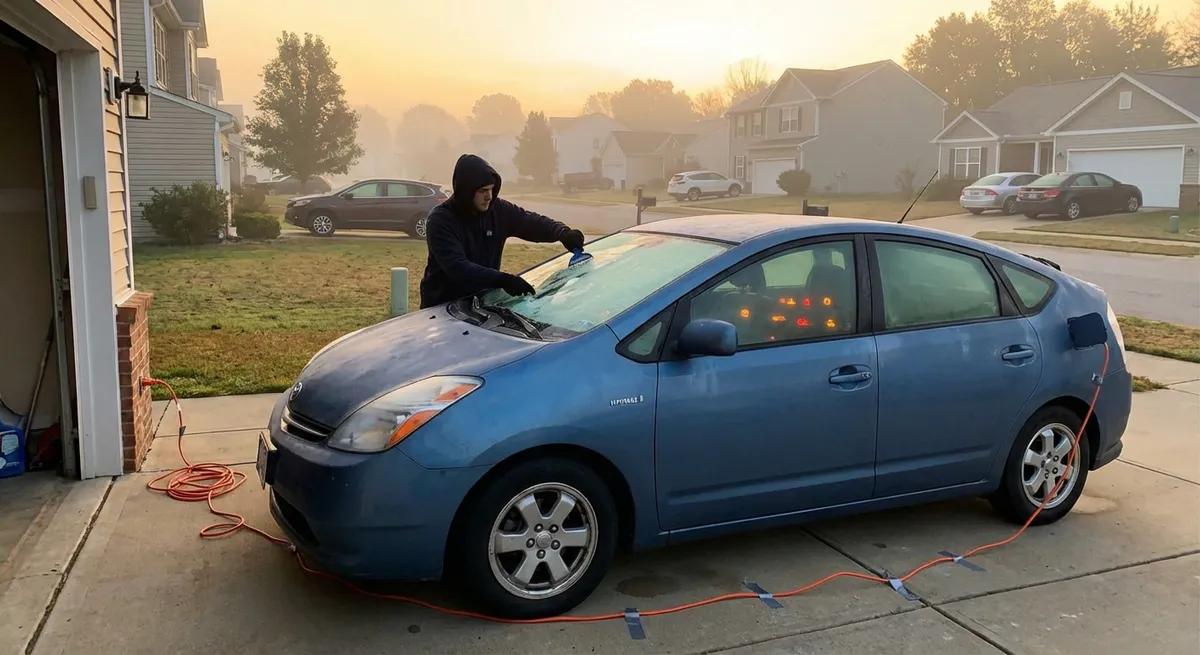
So I hunted down a 2011 hybrid with service records thick enough to qualify as a short novel. It had around 150,000 miles, a clean title, and a previous owner who clearly believed in dealer maintenance and saving every invoice like it was a tax document.
When I tested it on the highway, two things hit me:
- It didn’t feel “old” at all. It cruised at 70 mph with zero drama.
- The fuel economy display was showing nearly double what my previous car got, even with my slightly aggressive “I’m late” driving style.
I bought it for less than the sales tax alone would’ve been on a new crossover. Yes, I was nervous about the hybrid battery, the age, the mileage — all of it. But I also knew something most people don’t realize: a lot of modern cars are designed to live way past 200,000 miles if you don’t treat maintenance like a suggestion.
What Actually Breaks (And What Doesn’t) on an Aging Hybrid
Before owning one, “hybrid battery failure” sounded like the bogeyman hiding under the used-car market. Now that I’ve lived with one, here’s what’s actually gone wrong — and what hasn’t.
In my experience, the hybrid system itself has been the least dramatic part of the car. What has needed attention is all the regular stuff people forget is technically “wear items”:
- Suspension bits that got creaky
- Rubber bushings and boots drying out
- A wheel bearing that started humming like a distant airplane
This isn’t unique to hybrids. It’s what happens when a vehicle is old enough to remember when TikTok didn’t exist.
As for the battery: when I bought the car, I had a shop run a diagnostic on the high-voltage pack. The readings showed all the modules within range, no big imbalances, and normal capacity for its age. Hybrids like the Toyota Prius and similar systems are designed with a large safety buffer — they don’t constantly charge and discharge from 0–100%, which helps them last.
I did my homework and found that in many real-world cases, hybrid batteries routinely last 150,000–200,000+ miles, sometimes even more. Replacement costs have also come down a lot; depending on car and brand, a new or remanufactured pack can run somewhere between a painful, but survivable, repair and “this is still cheaper than years of car payments.”
What surprised me most, though, was this: the more proactively I kept up with fluid changes, cooling system maintenance, and software updates, the less I worried about catastrophic hybrid issues. It felt less like walking a tightrope and more like owning a slightly neurotic but dependable older laptop — if you don’t abuse it, it just keeps going.
The Money Side: Where the Real Savings (and “Gotchas”) Show Up
Let’s talk numbers, because the financial side is where this experiment either looks brilliant or dumb.
Fuel first. My previous gas-only sedan averaged about 24 mpg in mixed driving. This hybrid sits near 42–45 mpg in the same commute, even with traffic and my occasional “sport mode” impulses. Over a year of driving roughly 12,000–15,000 miles, that’s hundreds of dollars saved, especially when gas prices spike.
But here’s the twist: the biggest savings hasn’t just been fuel. It’s been:
- No monthly payment. That alone feels like a raise.
- Lower insurance premiums, because it’s an older vehicle with a lower value.
- Less panic when I hear a weird noise, because I’m not also thinking about a big loan balance.
Are there surprise expenses? Absolutely. In one year, I had:
- A $600 suspension repair
- A $300 set of decent tires
- A $200 sensor replacement
If I’d rolled those into the story of a “cheap old beater,” I’d call it a money pit. But compared to a $550/month payment ($6,600 per year) plus higher insurance on a new car? The math still worked solidly in my favor.
The real “gotcha” is mental: you have to budget for repairs the way people budget for a car payment. I keep a separate “car emergency” fund and assume I’ll need at least one $500–$1,000 hit per year. When it doesn’t happen, great. When it does, I’m not panicking or reaching for a credit card.
Tech FOMO and the Weird Comfort of “Old but Good Enough”
This is the part nobody warns you about: driving an older car in 2026 means you’ll constantly see ads, videos, and reels about giant touchscreens, self-parking, and lane-keeping systems that practically babysit you.
Meanwhile, I’m over here with:
- CarPlay via an aftermarket head unit I installed on a Saturday
- A backup camera I added for under $100
- No built-in lane-keeping, no fancy ambient lighting, no auto-open tailgate
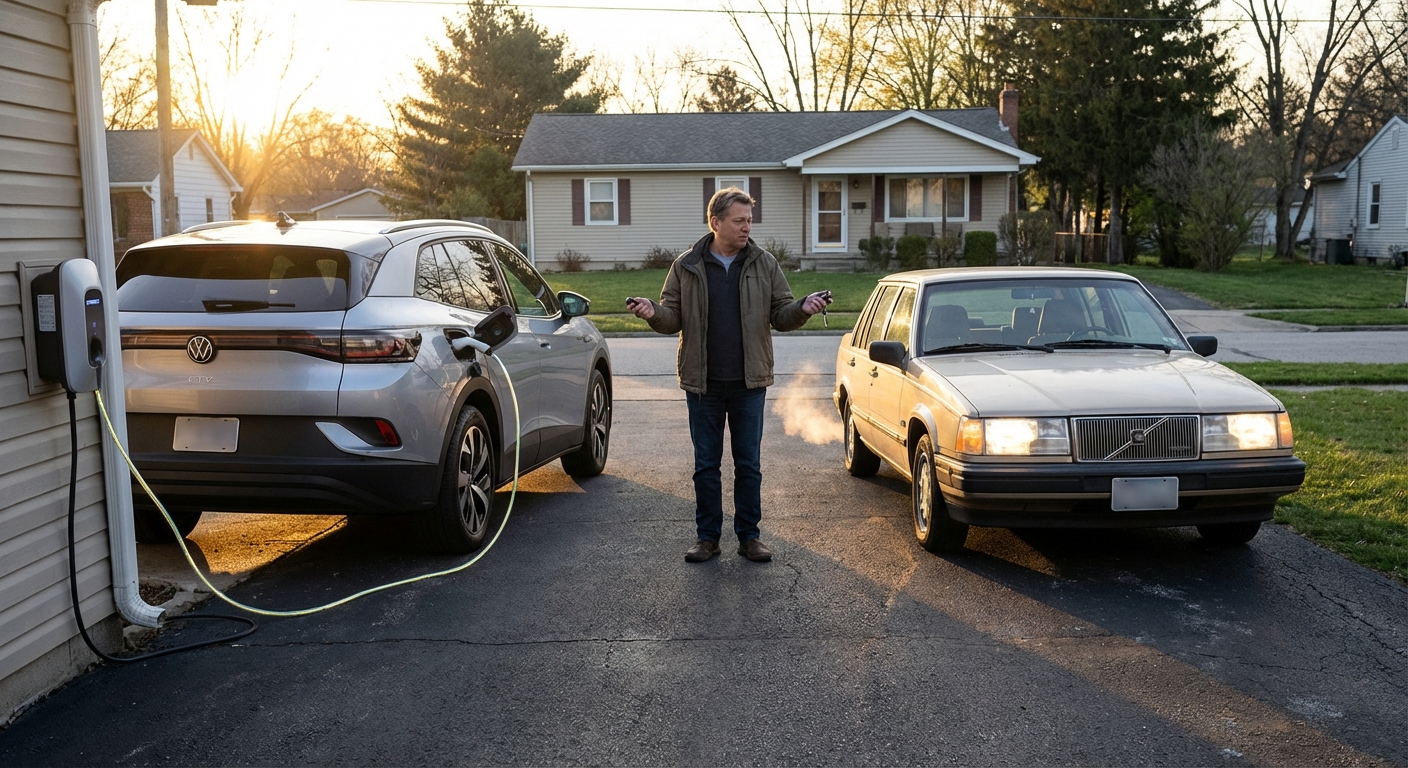
At first I had serious tech FOMO. My friend’s newer EV felt like sitting in a rolling smartphone. But after a few months, I noticed something I didn’t expect: I was less distracted and a bit more engaged with the actual driving.
Also, I’m strangely calm about minor dings and scratches. When you’re not terrified of hurting a $45,000 status object, you park closer to the grocery store entrance, you parallel park in tight spaces, you lend the car to a friend without needing a Xanax.
I’ve learned to treat the car like a well-worn, broken-in tool rather than a fragile tech trophy. I’m not anti-new-car — there are legit safety and efficiency advances that are amazing — but I’ve realized a lot of the “must-have tech” is really “nice-to-have, but you’ll forget about it in three weeks.”
And honestly, slapping in a modern head unit with Android Auto/CarPlay brought 80% of what I actually use (maps, music, calls) into a 2011 cabin for a fraction of the cost.
The Emotional Side: Why Driving an Old Hybrid Weirdly Feels… Freeing
I didn’t expect an old hybrid to change how I feel about money and status, but it absolutely has.
On paper, it’s just a car: modest, slightly dated, quiet, surprisingly efficient. On the road, it’s become this rolling reminder that “good enough” can be deeply satisfying.
When I’m stuck in traffic watching luxury SUVs and brand-new crossovers shuffle along with me at the exact same speed, I have this tiny, smug internal monologue: we’re all going nowhere together, but I’m spending half as much to do it.
There’s also this weird confidence that comes from knowing your car isn’t fragile or precious. When I drove newer cars, every door ding felt like a personal failure. Now? I care that the car is mechanically healthy and safe, not whether the paint could win an Instagram contest.
Would I recommend everyone rush out and buy a 15-year-old hybrid? No. If you live somewhere with harsh winters and a ton of rust, you have to be extra picky. If the previous owner treated oil changes like optional suggestions, run. If you don’t have access to a competent hybrid mechanic, that’s a legit factor.
But if you’re willing to research, get a pre-purchase inspection, and budget realistically, an older hybrid (or just an older, well-built car in general) can be this sweet spot: modern enough to be safe and comfortable, old enough to be paid off and unpretentious.
Every time I pass a dealership now, I still peek at the latest models. I like cars. I geek out on new tech. But I also know my daily life doesn’t actually require a monthly payment to get me from A to B in comfort and reasonable style.
For now, I’m sticking with my aging hybrid experiment. And as long as it keeps purring along and sipping fuel like a polite guest at a dinner party, I’m honestly in no rush to “upgrade.”
Conclusion
Living with a 15-year-old hybrid has taught me something that car ads never say out loud: the real luxury isn’t always the newest thing, it’s control. Control over your budget, your stress, and how much of your brain is occupied by “what if something happens to my car.”
Old doesn’t automatically mean unsafe or unreliable. New doesn’t automatically mean smart. The sweet spot is finding a car whose age, condition, and cost actually match your reality — not your Instagram feed.
If my hybrid finally throws a giant, expensive tantrum one day, sure, I’ll reevaluate. But for now? I’m cruising past gas stations, skipping car payments, and feeling oddly rich in the one way that matters most: options.
Sources
- U.S. Department of Energy – Fuel Economy Guide – Solid overview of how hybrid systems work and their real-world fuel economy advantages
- Consumer Reports – How Long Do Hybrid Car Batteries Last? – Data and expert insight on typical hybrid battery lifespan and replacement considerations
- Edmunds – Should You Buy a Used Hybrid? – Pros, cons, and what to check before purchasing an older hybrid
- AAA – Your Driving Costs 2023 – Breaks down the true annual cost of vehicle ownership, including fuel, maintenance, and depreciation
- National Highway Traffic Safety Administration (NHTSA) – Safety ratings and crash-test data to compare older models with newer vehicles