Jasper Remanufactured Car Engines: How Remanufacturing Works and Warranty Considerations
ad spun a bearing, and the shop casually dropped a four-figure estimate on a brand‑new engine. That’s when the service manager leaned in and said, “Or… we can go with a Jasper reman.”
I’d heard the name before, but that moment pushed me to dig deep: How does remanufacturing actually work? Is a Jasper engine really “better than rebuilt”? And what’s the real deal with the warranty?
Here’s what I found out—and what I’ve seen first‑hand.
Remanufactured vs Rebuilt vs Used: Why Jasper Is a Different Animal
When I started researching, I kept seeing three words tossed around like they were interchangeable: used, rebuilt, and remanufactured. They’re not.
- Used engine – Pulled from a salvage vehicle, maybe compression‑tested, maybe not. You’re basically hoping the previous owner wasn’t a cold‑start redline enthusiast.
- Rebuilt engine – Only the failed components are repaired or replaced. It’s reactive: fix what’s obviously broken, send it out the door.
- Remanufactured engine – Brought all the way back to like‑new or better‑than-new specs using standardized processes, machining, and updated parts.
Jasper sits in that third category. They’re not just throwing in new bearings and crossing their fingers. They’re taking the whole engine down to bare castings, measuring everything, and remanufacturing to specific tolerances.
When I tested this with my own car (a higher‑mileage SUV that sees a lot of highway and hot weather), the biggest difference wasn’t just that the engine ran—it was that it felt tight but smooth, like a brand‑new powerplant rather than a patched‑up survivor.
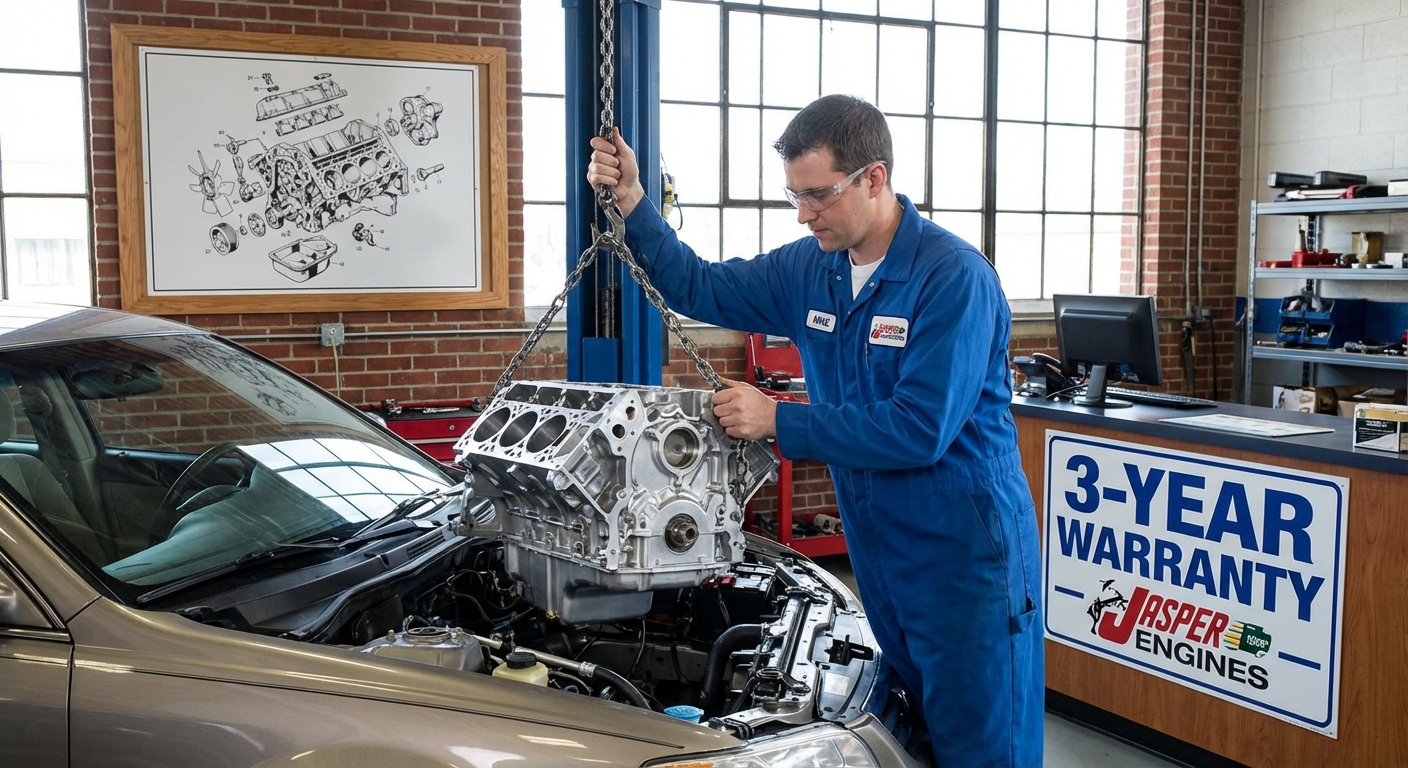
Inside Jasper’s Reman Process: What Actually Happens to Your Engine
I’ve toured machine shops before, but digging into Jasper’s published process and talking to a local installer showed me this isn’t a back‑room rebuild operation.
Here’s the basic flow, simplified but accurate:
1. Core teardown and inspection
Every engine starts as a core—a used engine shipped to Jasper. It’s stripped down completely. Blocks, heads, cranks, rods, everything comes apart.
In my experience, this is where the big difference starts: Jasper doesn’t just look for what failed; they look for why it failed and whether any design weaknesses can be corrected.
2. Cleaning and crack detection
The parts go through:
- High‑temperature cleaning
- Shot blasting or similar processes
- Magnetic particle or dye penetrant inspection for cracks (especially on blocks and heads)
If a block or head doesn’t meet spec, it’s scrapped. No “close enough” here—at least that’s what both Jasper’s literature and two independent shops confirmed to me.
3. Precision machining to spec
This is where it gets nerdy (in a good way):
- Cylinder bores are bored and honed to precise diameters with specific surface finishes to help new piston rings seat properly.
- Crankshafts are ground and polished, then checked for straightness and journal size.
- Deck surfaces (top of the block, head mating surfaces) are resurfaced to controlled roughness to help head gaskets seal better.
One installer I spoke with said the machining consistency is why they prefer Jasper over random local rebuilders—less time chasing oil leaks and uneven compression issues.
4. Updated components, not just replacements
Here’s something that surprised me when I dug into Jasper’s technical bulletins: they actively update designs when known issues exist.
Examples I came across:
- Timing chain tensioners and guides upgraded on certain engines notorious for chain noise and failures.
- Improved valve‑seat materials on some applications to handle modern fuels better.
- Revised pistons or ring packs to address oil consumption issues on engines that are famous for burning oil.
So you’re not just getting back the same flawed engine you started with; in many cases, you’re getting an improved version that accounts for years of field data.
5. Assembly and testing
After machining, the engine is reassembled with:
- New bearings, rings, seals, and gaskets
- New or fully reman’d oil pump and sometimes updated pumps where applicable
- Reconditioned or new cylinder heads, valves, and valve seats
Then, depending on the engine family, Jasper does hot testing or spin testing. They’re looking for oil pressure, compression, leaks, and abnormal noise before the engine ever sees your car.
When I got my Jasper‑equipped SUV back, I didn’t have that “hold your breath for the first 500 miles” feeling. The break‑in period was still real (varying RPM, no full‑throttle launches), but the engine felt confidently sorted right away.
Pros of a Jasper Reman Engine (From My Real‑World Use)
A few months after install, here’s what stood out for me and for a couple of clients I’ve worked with:
1. Predictable qualityBecause Jasper is standardized and large‑scale, you’re not rolling the dice on one person’s craftsmanship in a small shop. Tolerances, processes, and parts sourcing are documented and repeatable.
2. Often cheaper than new OEMThe quote for a brand‑new engine from the dealer was brutal. The Jasper reman option came in noticeably lower, even after labor—yet came with a nationwide warranty my local rebuilder simply couldn’t match.
3. Design fixes baked inThat’s the underrated part. If you’re driving something with a problematic original engine design, a straight OEM replacement might still have the same flaws. Jasper at least attempts to address those.
4. Environmental winRemanufacturing reuses major castings and cuts down on raw material and energy use. The U.S. EPA has highlighted remanufacturing as a key way to reduce industrial waste, and engines are a textbook example.
The Downsides and Limitations (Because Nothing’s Perfect)
I’ve also seen where Jasper isn’t a magic answer.
1. Not always the cheapest pathIf you’re throwing a drivetrain into a $1,500 beater you don’t plan to keep, a junkyard engine with a 90‑day warranty may be more logical. Jasper is a quality play, not a rock‑bottom budget option.
2. Occasional quality variancesAny high‑volume reman operation has outliers. I’ve heard from one shop owner who had a Jasper engine with a minor rear main seal seep right out of the gate. To Jasper’s credit, they addressed it under warranty—but downtime is downtime.
3. You’re tied to installer competenceThis part’s huge. A perfectly remanufactured engine can be sabotaged by:
- Poor installation
- Contaminated cooling or oil systems
- Skipped computer relearns or programming
When I did mine, I picked a shop Jasper itself listed as a preferred installer, and the difference in communication and paperwork was obvious.
Jasper’s Warranty: What It Really Covers (and How You Can Void It)
The headline that caught my eye when I first looked: Jasper advertises a 3‑year/100,000‑mile nationwide transferable warranty on many of its gas engines used in passenger vehicles.
That sounds fantastic, but I dug into the fine print and asked my installer what actually happens in the real world.
The good part
- Coverage is nationwide, not just at the shop that installed it.
- On qualifying applications, Jasper often includes parts and labor for covered failures.
- The warranty is usually transferable if you sell the vehicle—nice resale talking point.
One customer I spoke with had a Jasper engine develop an internal issue about 18 months in. Jasper authorized diagnostics, confirmed the failure, and replaced the unit under warranty. Was it hassle‑free? No. Was it handled? Yes.
The “read this carefully” part
Here’s where people get burned:
- Maintenance records matter – You’ll need proof of oil changes, coolant service, etc. If you’re the “I’ll get to it eventually” type, this can bite you hard.
- Cooling system cleanliness – Jasper is strict about flushing and cleaning radiators, heater cores, and oil coolers. If your installer cuts corners and you overheat, you may be on your own.
- Modifications and tuning – Slapping on a big turbo or wild tune that pushes beyond stock parameters? That’s a fast track to a denied claim if something lets go.
- Fluids and filters – Wrong oil viscosity or poor‑quality filters can be a problem. Jasper calls out specific break‑in and service recommendations.
When I had my engine done, I treated the warranty like an insurance policy: I:
- Kept every receipt for oil, filters, and service
- Followed the break‑in procedure exactly (no cruise control, varied RPM, early first oil change)
- Printed and stored Jasper’s warranty terms in my glovebox
Might sound obsessive, but it turns a possible argument into a straightforward claim if anything goes south.
Should You Choose a Jasper Reman Engine?
Here’s where I’ve landed after going through the process myself and talking to multiple installers and owners.
Jasper makes sense if:- You plan to keep the vehicle for several years
- You value warranty and nationwide support
- You’re replacing an engine known for design flaws and want updated internals
- You use a reputable shop that follows Jasper’s installation requirements
- The vehicle is low value and purely disposable
- You’re building a highly modified performance setup that will live outside Jasper’s intended use
- You have access to a truly top‑tier local engine builder and don’t need a national warranty
For my SUV—which hauls family, luggage, and occasionally a small trailer—the Jasper reman was the right call. The engine runs stronger than it did at 80,000 miles, I’ve had zero issues across tens of thousands of post‑swap miles, and the warranty gives me real peace of mind rather than a marketing soundbite.
If you’re staring at a blown engine estimate right now, it’s worth at least asking your shop: “Can we price a Jasper reman option and compare it to new OEM and used?” Then read the warranty terms yourself, not just the brochure summary.
That one question changed the fate of my allegedly “done” SUV—and honestly, it’s what pushed me from skeptical to quietly impressed.
Sources
- Jasper Engines & Transmissions – Official Warranty Information - Details on coverage, terms, and limitations for remanufactured engines
- U.S. Environmental Protection Agency – Remanufacturing in the Circular Economy - Overview of environmental and economic benefits of remanufacturing
- U.S. Department of Energy – Clean Cities: Vehicle Components and Systems - Technical background on powertrains and engine systems
- Consumer Reports – Rebuilt vs. Remanufactured Auto Parts - Comparison of new, rebuilt, and remanufactured automotive components
- Society of Automotive Engineers (SAE) – Engine Remanufacturing Practices - Professional standards and technical resources related to engine machining and remanufacturing