Small Electric Car Features Guide
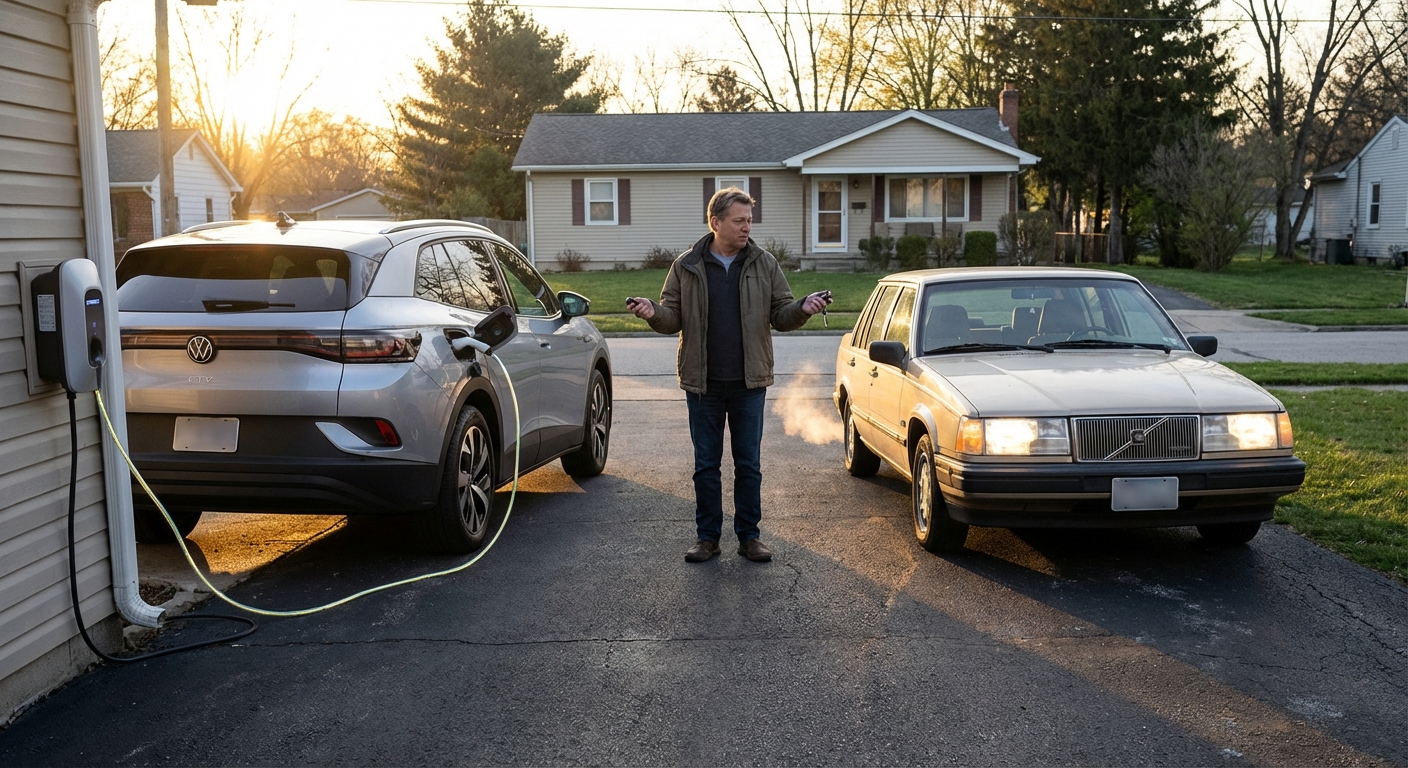
European city… and I’ve been low‑key obsessed ever since.
This guide is basically everything I wish I’d known before I started test‑driving small electric cars — what actually matters, what’s marketing fluff, and which features quietly change your daily life.
Why Small Electric Cars Are Having a Moment
When I tested my first small EV (a Renault Zoe, if you’re curious), the thing that hit me wasn’t the silence or the tech. It was how easy everything felt.
- I squeezed into parking spots I’d normally abandon.
- My stop‑start commute turned from jerky to smooth.
- My energy bill went up by about the price of two coffees a week… while I basically stopped buying gas.
According to the International Energy Agency, global electric car sales hit about 14 million in 2023, with compact and subcompact models leading adoption in many cities. Small EVs are often cheaper, easier to park, and more efficient in real-world urban driving than their big SUV siblings.
But not all of them are created equal. Let’s break down the features that really matter.
Range: The Number Everyone Obsesses Over (Sometimes Too Much)
When I started shopping, I was convinced I needed 300+ miles of range. Then I actually tracked my driving. Most days? Under 40 miles.
For small electric cars, you’ll usually see:
- Realistic daily range: 120–250 miles (WLTP or EPA rated)
- City advantage: Regenerative braking and low speeds mean you often get better range in town than on the highway.
What I’ve learned the hard way:
- Highway driving at 70–80 mph absolutely eats range.
- Winter knocks off 10–30% of your range, depending on how you use heating.
- A heat pump (more on that soon) helps a lot.
If you mostly do city and suburban runs, a small EV with 150–200 miles of real range is usually plenty. The U.S. Department of Transportation says the average American drives about 37 miles per day — well within that.
Battery & Charging: The Stuff Under the Skin
When I first heard terms like LFP and NMC, I thought they were esports teams. They’re actually different battery chemistries you’ll see in spec sheets.
Battery basics
- NMC (Nickel Manganese Cobalt): Higher energy density, better range, slightly more expensive, more sensitive to fast charging abuse.
- LFP (Lithium Iron Phosphate): Longer cycle life, more tolerant of regular 100% charging, slightly less range for the same size.
When I compared two similar small EVs — one LFP, one NMC — I noticed the NMC version felt more “road trip ready,” while the LFP version felt more “charge it however, it’ll be fine.”
Charging speeds that actually matter
You’ll see two main numbers:
- AC charging (home / slow): Usually 7–11 kW.
- DC fast charging: Typically 50–130 kW on small EVs.
In practice, this means:
- Overnight home charging: 0–100% in ~6–10 hours on a typical wallbox.
- DC fast charge: 10–80% in ~25–45 minutes, depending on the car.
When I tested a small EV on a 500‑mile trip, the difference between 50 kW and 100 kW fast charging was the difference between a relaxed coffee break and a “we’ve been here forever” wait.
If you don’t have home charging, prioritize:
- DC rate of at least 80 kW
- A decent charging curve (some small EVs hit peak power briefly, then drop fast)
Brands like Hyundai, Kia, and Tesla publish their charging curves fairly transparently. Others… you find out on YouTube road tests.
Real Interior Space: Don’t Trust the Photos
I made the mistake of judging a small EV by its promo shots — then bumped my head getting into the back seat.
Here’s how I evaluate space now:
- Wheelbase vs. overall length: Longer wheelbase usually means more cabin space in a small footprint.
- Battery pack placement: Flat “skateboard” platforms (like VW’s MEB or Stellantis’ STLA Small) often give better legroom and a flat floor.
When I sat in a Fiat 500e and a Peugeot e‑208 back-to-back, both felt small from the outside, but the Peugeot’s longer wheelbase made the rear seats way more usable for adults.
Things I physically check every time now:
- Can I sit “behind myself” comfortably? (Driver’s seat set for me, then sit in the back.)
- Is there space for a stroller or two carry‑on suitcases in the trunk?
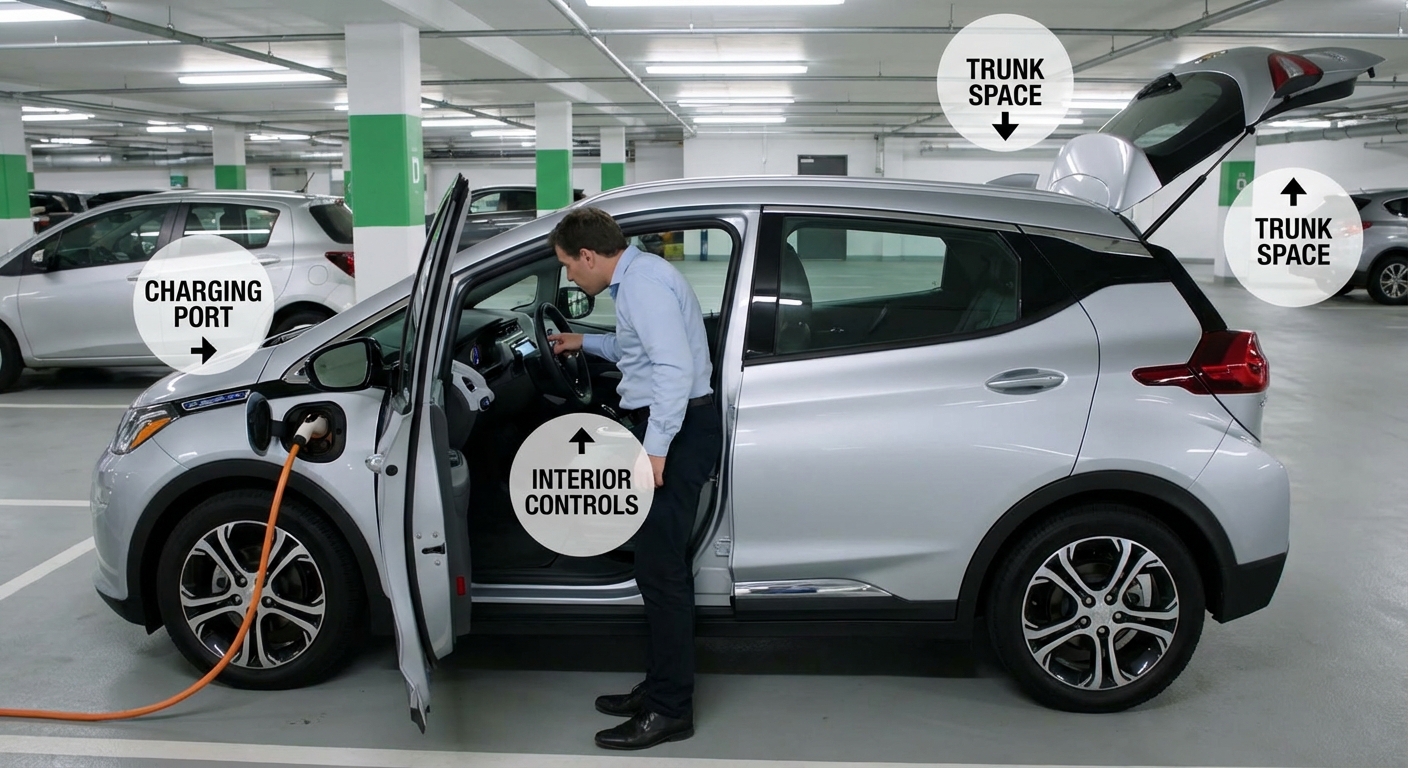
- Is there under‑floor storage for charging cables? (Huge deal; loose cables are annoying.)
Some small EVs also offer a tiny frunk (front trunk). It’s not huge, but tossing charging cables in there keeps your rear cargo area neat.
Everyday Comfort Features That Quietly Matter
When I tested a bare‑bones entry EV and then a slightly pricier trim, I realized the difference wasn’t the motor — it was the stuff I touched and used every day.
Heat pump & climate control
If you live somewhere with real winters, pay attention here.
A heat pump is like an efficient reverse air‑conditioner. Instead of using resistive heating (which is basically a giant electric hair dryer), it moves heat around more efficiently.
In my experience in a cold climate, a heat pump:
- Cut winter range loss from ~30% to closer to 15–20%
- Heated the cabin faster and more evenly
Many brands (Hyundai Kona Electric, VW ID.3, Nissan Leaf on some trims) offer this either standard or as an option. It’s one of those “quietly crucial” features.
Seats, noise, and ride quality
Small EVs can feel either like refined little pods… or like slightly upgraded golf carts.
Things I now pay close attention to on test drives:
- Seat height and adjustment: Can I get a natural driving position, or am I perched too high/low?
- Road noise: EVs are naturally quiet, so tire and wind noise stand out more.
- Ride over bad pavement: Short wheelbases can feel bouncy. Test it on the roughest road nearby.
The mini‑EV that won me over had thick door seals, decent sound insulation, and seats that didn’t feel like folding chairs. I could’ve driven it for hours without feeling beat up.
Tech & Infotainment: When Software Makes or Breaks It
The first small EV I tried had a gorgeous screen… and lag so bad I thought it had crashed. I turned the wrong way twice because Google Maps took too long to load.
Features that genuinely make life easier:
- Wireless Apple CarPlay / Android Auto: Let your phone handle navigation and media.
- Physical climate controls: I’m biased, but twiddling a knob is still better than hunting tiny touchscreen icons while driving.
- Decent reversing camera and parking sensors: Small car, yes, but tight parking garages are still chaos.
Some brands are updating software over‑the‑air (Tesla, Hyundai, Kia, VW, etc.). That means bug fixes and new features without visiting a dealer. My own EV got a better charging screen and smarter route planning a year after I bought it — a small but surprisingly satisfying upgrade.
Safety & Driver Assistance: What to Look For
When I put my family in a car, “it’s tiny” can’t mean “it’s fragile.” Fortunately, many small EVs score well on crash tests.
I always check:
- Euro NCAP / IIHS / NHTSA ratings where available
- Number of airbags and whether side curtain airbags are standard
For driver assistance, the sweet spot (for me) is:
- Adaptive cruise control: Takes the edge off highway traffic.
- Lane keeping assist: Helpful if it’s not overly intrusive.
- Automatic emergency braking: Now fairly common and genuinely life‑saving.
Some systems feel natural; others ping‑pong you between lane lines. When I tested a small EV with aggressive lane assist, I turned it off within 10 minutes. Another model from a different brand was so smooth I forgot it was doing half the work.
Running Costs & Battery Longevity
People always ask me: “But won’t the battery die?” So here’s what I’ve seen and what the data says.
Most major brands offer 8‑year / 100,000–125,000‑mile battery warranties, usually guaranteeing around 70% capacity by the end.
Real‑world studies of early Nissan Leafs, Teslas, and other EVs show many packs losing only around 10–20% capacity after 150,000+ miles, especially in moderate climates.
In my own case:
- After ~3 years and ~45,000 miles, my small EV’s battery health app shows ~93–94% capacity.
- My “full” range dropped maybe 10–15 miles. Mildly annoying on paper, basically irrelevant day‑to‑day.
As for costs:
- My electricity costs per mile are roughly 1/3–1/4 of what I paid for gas in a similar‑size petrol car.
- Maintenance has been mostly tires, cabin filters, and brake fluid. No oil, no timing belt, fewer moving parts to break.
There are caveats:
- Insurance can be higher, especially on newer or less common models.
- Out‑of‑warranty repairs (especially on early tech) can be pricey.
When a Small Electric Car Doesn’t Make Sense
I’m a fan of small EVs, but I’ve also told a few friends: “You’d hate this, don’t do it.”
They’re usually in one of these groups:
- Regularly drive 200+ miles in a day with limited fast charging on the route
- Need to carry 4–5 adults and luggage all the time
- Tow trailers or heavy loads
A compact crossover EV or a plug‑in hybrid often fits those lives better.
But if your world is mostly:
- City + suburban commutes
- Occasional weekend trips
- Tight parking and narrow streets
…a small electric car starts to feel like a bit of a cheat code.
How I’d Shortlist a Small Electric Car (Quick Checklist)
This is literally the filter I use when friends ask for help:
- Range: At least 1.5× your typical daily distance, with 30–40% headroom for winter and aging.
- Charging: Home or reliable public options nearby + DC fast charging of 80 kW or more.
- Comfort: Solid seats, tolerable road noise, and a ride that doesn’t beat you up.
- Tech: Wireless CarPlay/Android Auto, usable infotainment, backup camera.
- Climate: Heat pump if you get cold winters.
- Safety: Strong crash ratings + basic driver assistance that doesn’t annoy you.
The right small electric car feels weirdly liberating: low running costs, easy parking, and that instant EV torque that still makes me grin at traffic lights.
If you haven’t test‑driven one yet, book two different models back‑to‑back. I did that once on a random Tuesday and, honestly, it completely rewired what I expect from a “city car.”
Sources
- International Energy Agency – Global EV Outlook 2024 - Data on electric vehicle sales, range trends, and market share.
- U.S. Department of Transportation – Bureau of Transportation Statistics - Average daily driving distances and usage patterns.
- Euro NCAP – Electric and Hybrid Car Safety Ratings - Crash test results and safety assessments for small EVs in Europe.
- U.S. Department of Energy – Alternative Fuels Data Center - Technical and cost information about EV charging, energy use, and infrastructure.
- Tesla Vehicle Warranty – Battery and Drive Unit Coverage - Example of common EV battery warranty terms and capacity guarantees.