Small Electric Cars for City Driving: Range, Charging, and Features
Then I test-drove one across my city during rush hour, in the rain, hunting for parking near a packed café. That little EV squeezed into a spot an SUV wouldn’t have even attempted, cost me about the price of a latte in electricity, and slipped through traffic like it was designed by someone who hates congestion as much as I do.
That was the moment I stopped treating small EVs as a niche curiosity and started seeing them as the default choice for city driving.
Let’s break down what actually matters: range, charging, and real-world features—without the marketing fluff.
Why Small EVs Just Work in the City
When I talk to people about electric cars, the first thing they ask is, “But what about the range?” Honestly, that’s the wrong first question for city drivers.
Here’s the reality I’ve seen over and over, both in my own use and in data:
- Average urban commute in the US: roughly 15–20 miles per day round trip (U.S. DOT, 2017 travel survey).
- Modern small EVs: typically 120–250 miles of EPA-rated range.
So if you’re mostly doing commuting, grocery runs, school drop-offs, and the occasional cross-town visit, range is often the least of your worries—as long as you pick the right car for your habits.
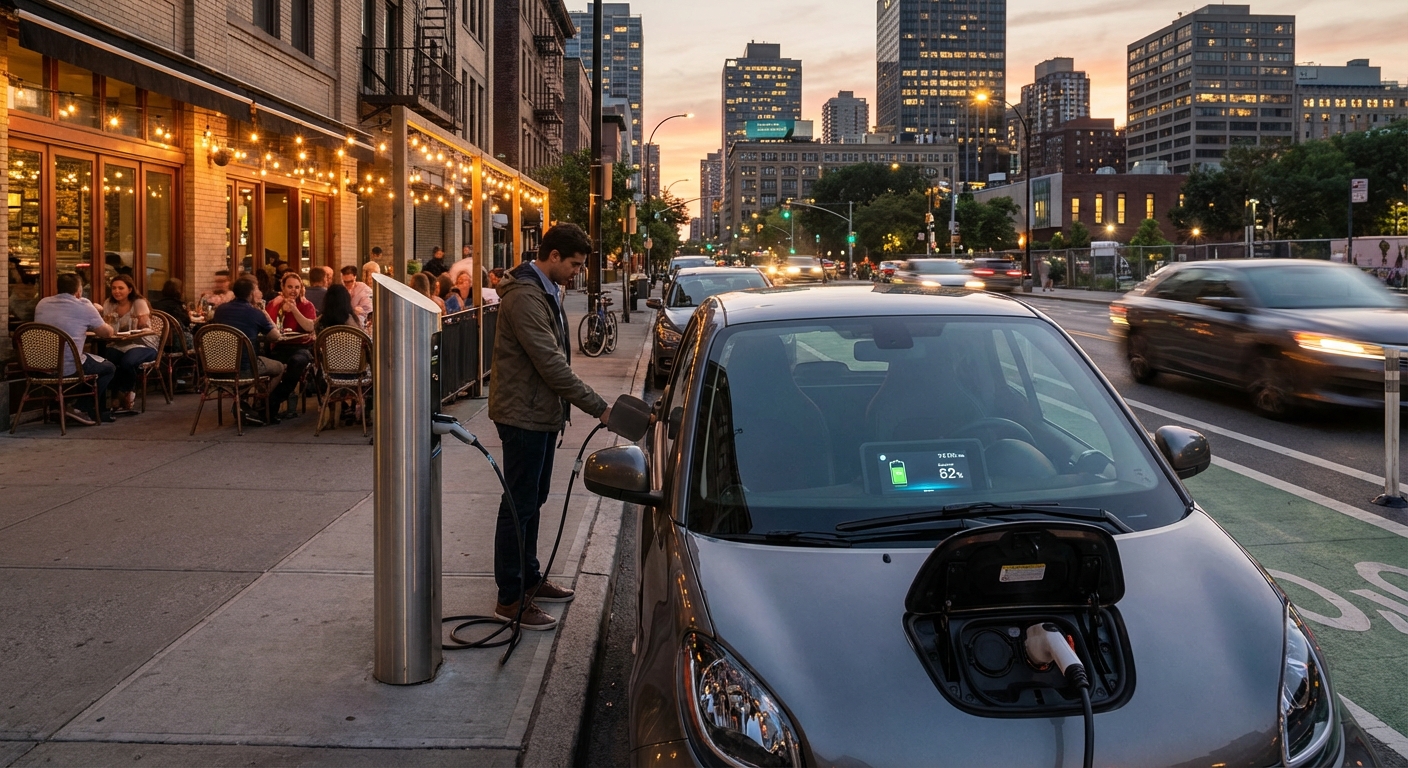
When I tested a Fiat 500e for a week, my daily driving around town never exceeded 40 miles. I plugged it in at home every other night, and the battery never dropped below 40%. The big mental shift was realizing I didn’t need a “road-trip car” for my city life.
Range: How Much Do You Actually Need?
Range anxiety is mostly planning anxiety. Once you know your real usage, the fog lifts.
In my experience, small EVs fall into three useful range brackets for city drivers:
1. 100–150 miles: Pure city warriors
These are the tiny urban specialists—think older Nissan Leaf models, MINI Electric, earlier Fiat 500e versions.
When I borrowed a 2020 MINI Electric for a downtown-only week, it had about 110–120 miles of real-world range. I:
- Did my 18-mile daily commute
- Made a few spontaneous detours
- Charged twice the entire week
Who this works for:
- You have home or reliable workplace charging
- You rarely do more than 60–70 miles in a day
- You’re okay planning ahead for those odd long days
Who it doesn’t work for:
- You regularly drive between cities
- You don’t have consistent charging access
2. 150–220 miles: The sweet spot for most city drivers
This is where many current small EVs sit—like newer Nissan Leaf Plus, Chevy Bolt EV (when it was still in production), and some compact crossovers.
With ~200 miles of range, I found I basically stopped checking the battery every day. I could:
- Drive several days without charging
- Do a surprise airport run plus errands without thinking twice
3. 220–300 miles: Overkill for some, perfect for anxious brains
Some newer compact EVs like the Hyundai Kona Electric, Kia Niro EV, and certain trims of the Tesla Model 3 break the 250+ mile barrier.
Does a city driver need 300 miles of range? Not really.
Do a lot of people feel better having it? Absolutely.
If you’re the kind of person who starts to sweat when your phone is under 30% battery, a bigger-range small EV might be worth it purely for peace of mind.
Key point from real life:Once I understood my own driving pattern—about 200–250 miles per week, almost all urban—anything over 180–200 miles of range felt completely comfortable.
Charging: Home, Work, and Public Reality
This is where the story gets a bit less glossy, because charging experience varies massively.
When I installed a Level 2 charger (240V) at home, my entire EV life changed. Overnight, the car went from “thing I have to manage” to “appliance that’s always ready.”
Home charging (the game-changer)
Level 1 (standard wall outlet, 120V)- Adds roughly 3–5 miles of range per hour
- Great if you drive very little or can leave the car plugged in for long stretches
- I used this for a week on a test car; it worked, but it felt like refilling a swimming pool with a garden hose
- Adds roughly 20–30+ miles of range per hour depending on the car
- Most small EV batteries can go from 20% to 80% overnight
When I tested a Chevy Bolt with a 240V home charger, I’d plug in at night with 40–50% battery, wake up to 90–100%. Zero micromanaging.
If you live in an apartment, things get trickier. I’ve had friends successfully:
- Use workplace charging as their “home base”
- Get their building to install shared Level 2 chargers
- Rely on a nearby public Level 2 charger and treat it like weekly grocery shopping
Public DC fast charging (don’t rely on it daily)
Fast chargers (DCFC) are the ones that promise 10–80% in 25–45 minutes.
In my experience, they’re fantastic for:
- Occasional longer trips
- Emergencies
- Topping up when you completely misjudge your week
But they’re not a great everyday plan:
- Higher cost per kWh
- More battery wear long term
- Stations can be busy or occasionally out of service
When I tested a small EV relying mainly on fast charging for a month, I started to resent the detours and waiting. As a backup, great. As a lifestyle, annoying.
Rule of thumb I live by:If you can’t reliably access home or workplace Level 2 charging, think very carefully before committing to an EV as your only car.
Features That Actually Matter in a City EV
Manufacturers love to brag about 0–60 times, panoramic roofs, and giant screens. When I’m weaving through tight side streets and parallel parking in spots I’d swear are 10% smaller than my car, those aren’t the features I care about.
1. Size and maneuverability
My favorite “city magic trick” moment was in a Fiat 500e, where I pulled a U-turn in a narrow street that would’ve required a three-point turn in a sedan. The turning radius on many small EVs is ridiculously good.
What I look for:
- Short overall length (easier parking)
- Tight turning circle
- Good visibility and big windows
2. One-pedal driving and regen
Most modern EVs offer strong regenerative braking—you lift your foot, the car slows down and recaptures energy.
In dense traffic, one-pedal driving is a game changer. When I tested the Nissan Leaf e-Pedal in bumper-to-bumper traffic, my right foot barely moved for 30 minutes. Less fatigue, more control.
3. Interior space vs exterior size
Small EV doesn’t have to mean cramped. Because EVs don’t need a big engine up front, many pack surprising space inside.
When I drove a Honda e in Europe, I was stunned: tiny on the outside, but two adults in the back were fine for city trips. Look for:
- Flat floors (no transmission tunnel)
- Fold-flat rear seats
- Smart storage (under-floor trunk space, front trunk in some models)
4. Tech that actually matters
I’ve grown skeptical of giant touchscreens for every single function. While I love good tech, this is what’s genuinely useful in a city EV:
- 360° cameras or at least good rear + front parking sensors
- Wireless Apple CarPlay/Android Auto for navigation and calls
- Efficient climate control, preferably with a heat pump (saves range in winter)
One underrated feature: preconditioning. Being able to preheat or precool the car while it’s still plugged in is huge. My winter range losses were noticeably lower when I preheated the cabin and battery before unplugging.
Costs: Where Small EVs Quietly Win
When I sat down and did five-year cost comparisons between a small EV and a similar gas car, the spreadsheet honestly surprised me.
What I found (and multiple studies back this up):
- Fuel cost: Electricity is usually cheaper per mile than gasoline. The U.S. Department of Energy’s fuel cost comparisons consistently show EVs at a lower cost-per-mile than similar gas cars.
- Maintenance: No oil changes, fewer moving parts, no exhaust system. A 2020 Consumer Reports study estimated EV owners spend about half as much on maintenance and repairs over the life of the vehicle compared to gas vehicles.
But there are caveats:
- Higher upfront price (though federal and some state incentives can help)
- Home charger installation cost (mine was around $1,100 including hardware and electrician)
If you:
- Drive regularly
- Plan to keep the car several years
- Have access to cheap overnight electricity
…a small EV can absolutely come out cheaper overall.
Who Small City EVs Are (and Aren’t) For
Perfect for you if:
- Most of your driving is within one city or metro area
- You have reliable access to home or workplace charging
- You want something easy to park and cheap to run
Probably not ideal if:
- You live in an apartment with no realistic charging options
- You regularly do long highway trips and don’t want to plan charging stops
- You need to carry lots of people or cargo frequently
I’ve met plenty of people who’ve happily adopted a small EV as their second car—city runabout plus a larger gas or plug-in hybrid vehicle for long trips. For many households, that combo quietly makes a ton of sense.
For me personally, once I had home charging and a realistic understanding of my routes, a small EV went from “experimental tech toy” to “obvious default city car.”
If you’re EV-curious, my honest advice: rent or car-share a small electric car for a week. Track your miles, your charging, what annoyed you, and what delighted you. That real-life trial will tell you far more than any spec sheet or YouTube review ever will.
Sources
- U.S. Department of Energy – Fuel Economy: All-Electric Vehicles - Technical overview of EV efficiency, costs, and charging
- U.S. Department of Transportation – 2017 National Household Travel Survey - Data on typical daily driving distances and travel patterns
- Consumer Reports – Electric Vehicle Ownership Costs: Today’s Electric Vehicles Offer Big Savings - Analysis of maintenance and fuel savings for EVs vs gas vehicles
- Nissan USA – LEAF Specifications - Real-world example of range, charging, and features in a compact EV
- Hyundai – Kona Electric Specifications - Example of higher-range compact EV and charging capabilities