Small SUVs for Seniors Guide
end project. It turned into test drives, research binges, and more seat-height debates than I ever expected.
Somewhere around the third dealership, I realized: small SUVs are kind of the sweet spot for a lot of older drivers—if you pick the right one.
This guide is what I wish I’d had before we started.
Why Small SUVs Work So Well for Seniors
When I tested small SUVs with my aunt, three things kept coming up: ease of getting in and out, visibility, and how “stressful” the car felt to drive.
1. Easier entry and exit
Sedans sit low; trucks sit high. Small SUVs usually hit that “hip-height” sweet spot. My aunt doesn’t like to climb or drop into a seat. The compact crossovers with a seat height around 17–19 inches from the ground were ideal.
In my experience, these features made the biggest difference:
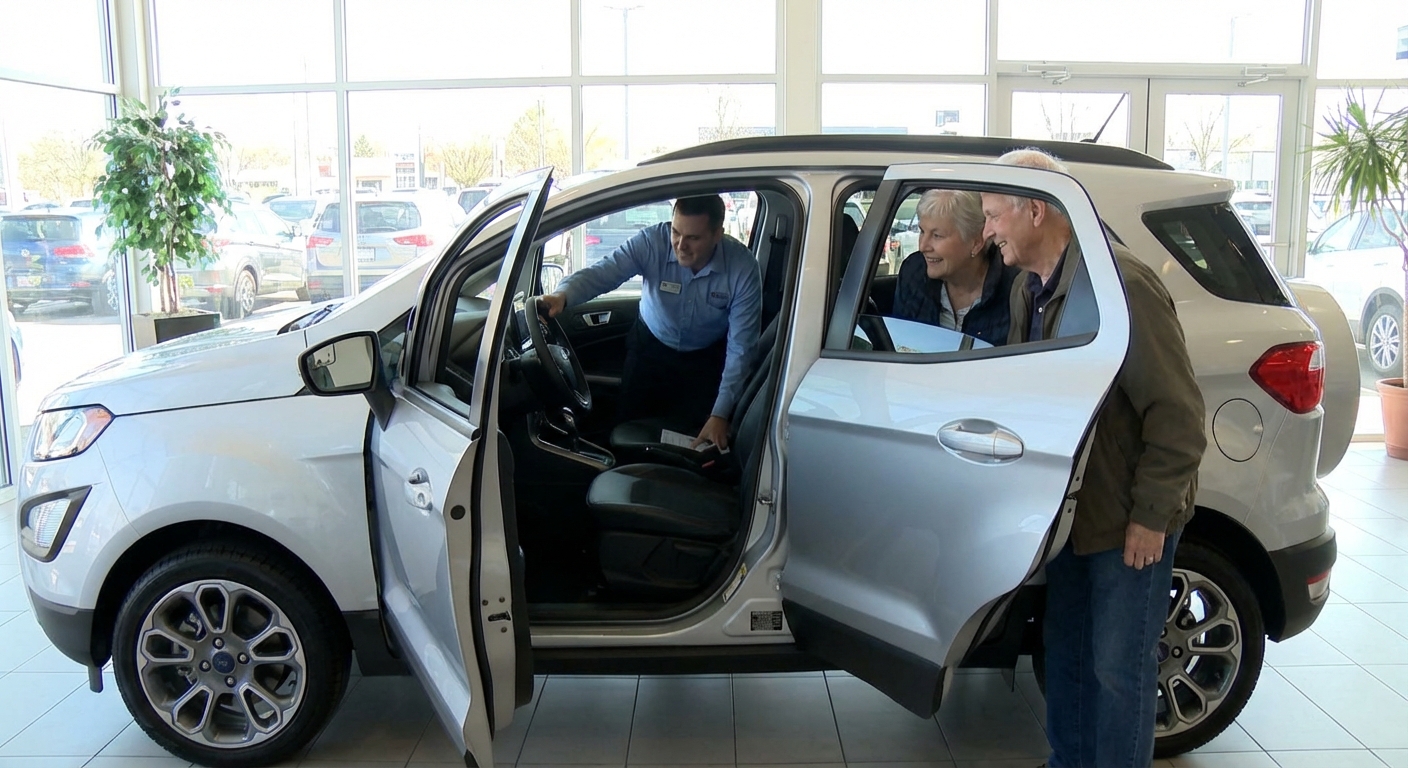
- Wide door openings (especially front doors)
- Grab handles positioned above the door frame
- Non-sloping roofline so you don’t bang your head every time
When we compared a Subaru Crosstrek to a Honda Civic, the Crosstrek’s higher, flatter seat literally cut her “getting in” time in half. You could see the relief on her face.
2. Better visibility (but not always by default)
A lot of seniors tell me, “I just want to see everything around me.” Fair. Smaller SUVs typically offer:
- Higher driving position vs sedans
- Larger side mirrors
- Rear windows that aren’t postage-stamp tiny (looking at you, some coupe‑ish SUVs)
But I’ve also noticed modern SUVs can have thicker roof pillars, which can hide pedestrians or cyclists. During one test drive, we almost missed a cyclist in the right-side blind spot of a stylish but overly chunky SUV.
So visibility isn’t just about height; it’s about pillar design, glass area, and camera systems.
3. Easier to maneuver than big SUVs
Full-size SUVs can feel like driving a couch with wheels. Small SUVs—RAV4-size and under—tend to be:
- Shorter overall
- Easier to park
- Lighter steering
My aunt instantly rejected anything that felt “boat-like.” The cars that won her over had light steering at low speeds and a tight turning radius. If parking lots make you nervous, pay attention to how often you’re correcting the wheel during a slow U‑turn.
Safety Features Seniors Should Actually Care About
I’m not into fearmongering, but numbers are numbers: according to the Insurance Institute for Highway Safety (IIHS), drivers 70+ have higher crash fatality rates, partly due to physical fragility. That doesn’t mean you should panic. It does mean safety tech isn’t just marketing fluff.
When I help older drivers shop, these features are non-negotiables:
Forward collision warning & automatic emergency braking
When I tested these systems in a Toyota RAV4 and Honda CR‑V, they weren’t perfect—but they did react faster than most humans during simulated sudden stops.
Look for:
- Automatic Emergency Braking (AEB) with pedestrian detection
- Good IIHS ratings for “Front Crash Prevention”
Blind-spot monitoring & rear cross-traffic alert
On a Mazda CX‑5 test drive, my aunt straight-up missed a car in her blind spot. The small orange light on the mirror saved us from a very awkward lane-change moment.
These systems are especially helpful if:
- Neck rotation is limited
- Multi-lane highways cause anxiety
Lane-keeping assist (with caution)
When I tested Honda’s Lane Keeping Assist, it worked… most of the time. But it also ping-ponged slightly between lines on a poorly painted road. My aunt hated that.
My honest take: lane-keeping is nice, but don’t buy a car just for this. It can be more annoying than helpful for some drivers.
Big, clear screens and simple controls
One of the worst offenders we tried was a small SUV with three layers of touch menus just to adjust the fan speed. Watching my aunt try to change the temperature while driving made me nervous.
What works better:
- Physical knobs for climate and volume
- Big text on the screen
- Apple CarPlay / Android Auto if you use a smartphone
If you’re shopping, sit in the car without the engine on and pretend you’re changing radio stations, temperature, and navigation. If it feels like operating a spaceship, skip it.
Comfort: Where the Good and Bad Really Show Up
I underestimated comfort at first. Then I sat in the wrong seat for 30 minutes and my back reminded me I’m not invincible either.
In my experience, seniors notice these things the most:
Seat support & adjustability
We test-drove a Nissan Rogue and a Subaru Forester back-to-back. The Rogue’s seats were softer and cushier at first, but after 20 minutes, my aunt’s lower back started to ache. The Forester’s firmer seat with better lumbar support actually felt better long-term.
What to look for:
- Height-adjustable driver’s seat
- Lumbar adjustment (even basic manual is helpful)
- Cushion length that supports the thighs without cutting off circulation
Ride quality vs handling
There’s a trade-off:
- Softer suspension = more comfort, but more body roll in turns
- Firmer suspension = better handling, but you’ll feel more bumps
When I tested the Mazda CX‑5, I loved the sporty feel. My aunt? She preferred the smoother, less “busy” ride of the Honda CR‑V. It’s personal.
If you have arthritis, back issues, or joint pain, prioritize ride comfort over sporty handling.
Step-in height and cargo loading
A detail no brochure ever highlights properly: trunk height. We loaded groceries into a Hyundai Tucson and then a RAV4. The Tucson’s slightly lower load floor made a real difference when lifting heavier items.
If you’re regularly carrying:
- Groceries
- Walkers
- Folded wheelchairs
- Golf clubs
…test the actual lifting motion into the cargo area. Don’t be shy; bring your real-life gear to the dealership.
Popular Small SUVs Seniors Often Like (And Why)
I’m not sponsored by any brand, so here’s my honest, mixed take based on test drives, owner feedback, and reliability data from sources like Consumer Reports and J.D. Power.
Honda CR‑V
When I tested the CR‑V, it felt like the default answer to “What should I buy if I don’t want drama?”
Pros:- Spacious interior and cargo area
- Smooth ride, good visibility
- Strong safety scores, good resale value
- Prices can be higher used because they hold value
- Touchscreen interface isn’t the fastest or fanciest
Best for: Seniors who want a safe, stress-free car that’ll likely last a long time.
Toyota RAV4
The RAV4 my neighbor drives is basically the family mule—reliable, unexciting, always ready.
Pros:- Excellent reliability history
- Available hybrid with great fuel economy
- Many trims, including more rugged or more comfort-focused
- Ride can feel a bit firm on rough roads
- Interior feels more “functional” than cozy on base trims
Best for: Anyone who prioritizes reliability and fuel economy.
Subaru Forester
When I tested the Forester, the visibility honestly blew me away. It’s like Subaru asked, “What if we just gave you more windows?”
Pros:- Outstanding visibility
- Standard all-wheel drive
- Comfortable ride and roomy cabin
- Acceleration is adequate, not exciting
- Infotainment can feel a little dated compared to flashier rivals
Best for: Seniors in snowy or rainy regions who want confidence and a calm, airy cabin.
Mazda CX‑5
This is the one I’d buy for myself. But for some seniors, it’s a maybe.
Pros:- Upscale interior, feels more premium
- Great handling and steering feel
- Strong safety ratings
- Ride is a bit firmer than CR‑V/Forester
- Back seat and cargo space slightly tighter
Best for: Drivers who still love the feel of driving and don’t mind a firmer ride.
Practical Buying Tips I Learned the Hard Way
After a dozen test drives and a few “nope, absolutely not” moments, here’s what I’d do differently next time.
1. Schedule longer test drives
The standard 10-minute spin around the block isn’t enough. When I convinced one dealer to let us take the car for an hour, everything changed.
Try this:
- Drive on the highway, in traffic, and through tight parking lots
- Pay attention to seat comfort after 30+ minutes
- Test visibility at night if possible
2. Bring your actual life with you
We brought my aunt’s walker on the second day instead of “assuming it would fit.” That saved us from choosing a car with a weirdly shaped cargo area.
Bring:
- Mobility aids (canes, walkers, portable oxygen, etc.)
- Reusable grocery bins or luggage
- Glasses/sunglasses to check screen glare
3. Test all the tech before you fall in love with the car
When I tested a model with a beautiful interior, I almost ignored how annoying its touchscreen was. But tech annoyances don’t disappear after you buy; they get worse.
Sit in the parked car and:
- Pair your phone
- Try voice commands
- Adjust climate, radio, and navigation
If you’re muttering “Why is this so complicated?”—that’s your answer.
4. Check insurance and safety data, not just opinions
Before my aunt bought anything, we:
- Looked up crash-test ratings on IIHS and NHTSA
- Got real insurance quotes for 2–3 finalists
One surprising discovery: a slightly smaller SUV had higher insurance than a larger one because of repair costs.
Final Thoughts: What Actually Matters Most
When I started helping my aunt, I was obsessed with brand names and trim levels. By the end, here’s what truly mattered for her:
- She could get in and out without wincing.
- She felt like she could see everything around her.
- The car didn’t overwhelm her with tech.
- It had strong safety and reliability ratings, so she didn’t have to think about it.
Small SUVs can be game-changers for older drivers—but only if they fit your body, your eyes, and your daily life. Specs and reviews (even this one) are just a starting point.
If you’re able, bring someone you trust to test drives, take your time, and listen to that quiet inner voice that says, “Yes, I could live with this” or “Nope, this feels wrong.”
That voice was right every single time we listened to it.
Sources
- IIHS – Older Drivers: Crash Statistics and Safety Considerations - Data and analysis on crash risk and vehicle safety factors for older adults
- NHTSA – Choosing the Right Vehicle for Older Drivers - U.S. government guidance on features that benefit senior drivers
- Consumer Reports – Best Cars for Seniors - Independent test-based recommendations for older drivers
- AAA – Smart Features for Older Drivers - Overview of vehicle features that address age-related changes
- Subaru Official Site – 2024 Forester Safety Features - Example of modern small SUV safety tech and design