Why Your “Lazy” Indoor Cat Might Be Secretly Stressed (And How I Fixed It)
apartment at 3 a.m., attacking shadows, and randomly chewing on plastic bags. I told myself, “She’s just quirky.”
She wasn’t quirky. She was bored… and low‑key stressed.
Once I started digging into feline behavior research and actually testing changes at home, I realized how many indoor cats are struggling in silence behind cute Instagram photos. So here’s the deep dive I wish I’d read years ago—straight from my own apartment experiments, plus what behaviorists and vets are actually saying.
The Myth of the “Easy” Indoor Cat
For a long time, I treated my cat like a tiny, low‑maintenance roommate: food → water → litter box → cuddles → done.
Then I stumbled on a study from 2019 that mentioned indoor cats can show stress through things we often ignore: over‑grooming, random aggression, litter box issues, or just seeming “lazy” all day. When I read that, I immediately thought of my cat’s bald patch on her belly from constant licking and those mystery “accidents” outside the box.
When I asked my vet, she basically confirmed what the research said: indoor life is safe, but it can also be under-stimulating and predictable to the point of frustration. We’ve taken an animal that, in the wild, would hunt up to 30 small prey a day… and given them a bowl that magically refills itself with zero effort.
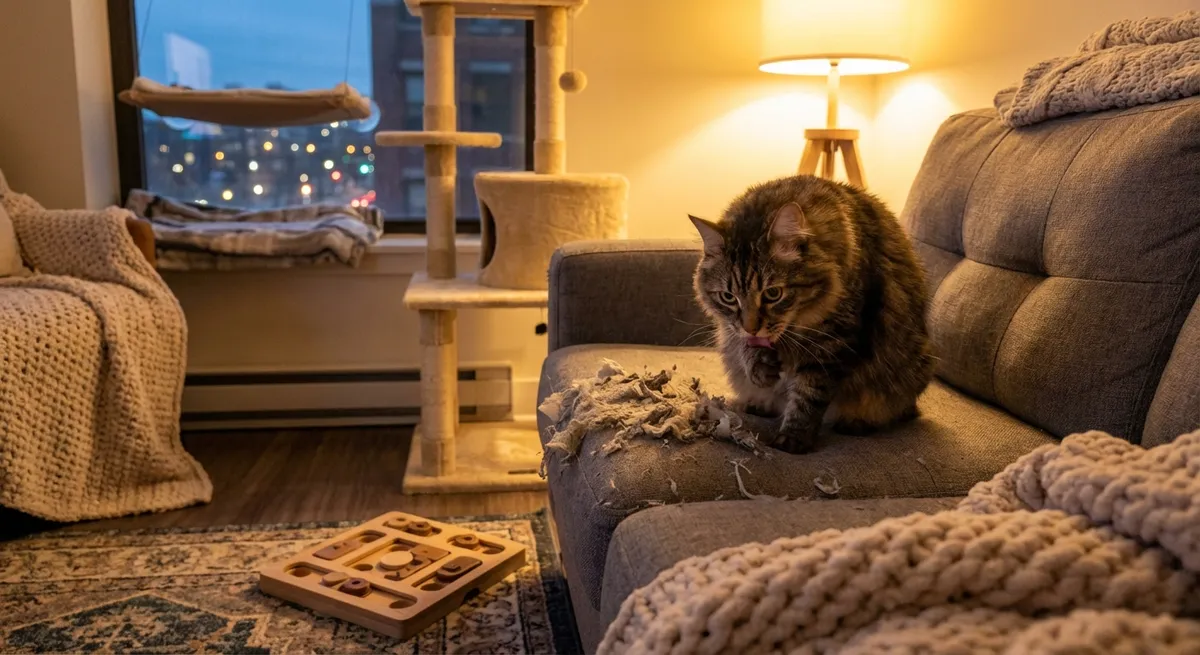
In my experience, once I stopped treating my cat like a decorative cushion and more like a tiny, bored predator, everything shifted. She got calmer, more affectionate, and (surprise) she stopped waking me up at 3 a.m. with hallway zoomies.
Signs Your Indoor Cat Might Be Bored, Anxious, or Both
I used to miss almost all of these. Looking back, they were neon signs.
Here are patterns I’ve seen in my own cat and in cats I’ve fostered, plus what behavior experts flag as red alerts:
- Over-grooming or bald spots
My cat had a small patch on her stomach that looked “clean” but bare. I thought it was no big deal. My vet called it what it likely was: stress‑related grooming, also known as psychogenic alopecia.
- Random aggression that “comes out of nowhere”
When I tested more play sessions and better outlets to “hunt,” her surprise ankle attacks almost disappeared. It wasn’t random; she just had nowhere to put that predatory energy.
- Litter box drama
Peeing just outside the box, intermittently, drove me nuts. But once I started tracking it, I saw a pattern: it spiked after loud days (construction, visitors) and on days we didn’t play much.
- Constant meowing or… weirdly silent
Excessive vocalizing when you’re home, or a cat that seems shut down and uninterested in anything, can both be flags. One of my fosters barely moved off the couch for the first three days—classic “I’ve checked out” behavior.
- Zoomies at night / “ghost hunting”
This one hit me personally. All that pent‑up hunting drive comes out during the one time your home is finally quiet—nighttime.
None of these alone prove your cat is stressed. Medical issues can mimic behavior problems, and I’ve learned to rule those out first. But when multiple signs show up together, especially in an indoor cat with a very static routine, boredom and anxiety jump way up the suspect list.
Turning Your Apartment into a “Hunt Zone” (Without Ruining the Aesthetic)
When I tested this idea—treating my home like a basic “habitat” instead of just a human space with a cat in it—everything changed. Not overnight, but noticeably.
Here’s what worked best when I experimented:
1. Vertical highways, not just one cat tree
I started with a basic cat tree. She loved it… for two weeks. Then it turned into background furniture.
What helped was creating routes:
- A window perch → top of bookshelf → cat tree
- A floating shelf that led to a high resting spot above my desk
Cats are climbers and “perch predators.” Higher levels give them a sense of control and safety. When I added one extra high perch near the window, my cat started spending hours there watching birds and pedestrians like she was running neighborhood surveillance.
2. Food is no longer “free”
I stopped letting food appear like magic. I’d read behaviorists talk about foraging and food puzzles, so I tried two things:
- Breaking her meals into 3–4 mini‑meals hidden in different spots
- Using a simple puzzle feeder ball that releases a few kibbles when batted around
At first she looked annoyed—“Excuse me, why is my food inside a plastic obstacle course?” Within a week, she was actively hunting for meal stations.
Bonus effect: she stopped inhaling food and then vomiting it back up. Slower eating + mental effort = calmer cat.
3. Daily “hunt sessions” instead of random play
I used to wave a toy around for 30 seconds and call it playtime. When I actually followed the hunt sequence behaviorists talk about—stalk → chase → pounce → “kill” → eat—she got so much more satisfied.
My basic routine now:
- Evening: 10–15 minutes with a wand toy (to simulate a bird or mouse)
- Let her “win” by catching it and chewing it
- Immediately follow with a small snack
When I stick to this pattern, her nighttime zoomies are way less intense. When I skip it for a few days, she goes back to restless hallway sprints and batting things off shelves at 2 a.m.
The Hidden Stressors We Don’t Notice (Until the Pee Hits the Floor)
One of my biggest mistakes was underestimating how “small” things can feel huge to a cat.
Noise and chaos
I live in a city apartment, which basically means random, unpredictable noise. Building repairs, neighbors slamming doors, music, sirens—it’s constant.
I noticed my cat hid under the bed more on noisy days. When I tested giving her:
- A covered hideout (a simple cardboard box with a blanket inside)
- White noise near her favorite room
- One room where I never play loud videos or music
…her hiding decreased, and so did her “stress grooming.”
The litter box situation
I used to have one covered box in a corner. It looked neat. It was also a tiny, stinky cave with one exit. From a cat’s perspective, that’s a trap.
With help from my vet, I changed:
- Number: 2 boxes for 1 cat
- Type: large, open, no lid
- Placement: different rooms, not next to food, not stuck in a noisy laundry area
Not glamorous, but once I adjusted this, her occasional “revenge peeing” (which isn’t really revenge, it’s usually stress) stopped within weeks.
When Enrichment Isn’t Enough: Balancing Real Talk and Vet Talk
I love DIY behavior hacks, but there’s a hard line where “just play more” stops being fair advice.
In my experience, these are the moments you move from Instagram tips to actual veterinary help:
- Sudden behavior change: A usually chill cat starts hiding all the time, or an energetic cat suddenly goes flat.
- Aggression that draws blood: Towards you or another animal. That’s not “spicy personality”; it’s a problem.
- Frequent vomiting, diarrhea, or peeing outside the box: Behavior and medical issues overlap a lot.
Once, my cat started peeing outside the box again after months of doing great. I assumed stress. My vet found early signs of a urinary tract issue. The antibiotics plus some environmental tweaks solved what I would’ve mis-labeled as “she’s just mad at me.”
There are cats who need more than enrichment—short‑term anti‑anxiety meds, pheromone diffusers, or even behavior therapy plans. I’ve fostered one cat who couldn’t be safely handled until we combined environmental changes with medication prescribed by a vet behaviorist. Within months, he was a lap cat. But getting there required professional input, not just more toys.
The Real Payoff: A Calmer Cat and a Way Better Bond
Once I viewed my cat not as a “house pet” but as a full‑on predator living in a tiny modern box, my entire approach shifted.
Here’s what changed in my home after a few months of consistent effort:
- She stopped obsessively grooming that bald patch on her belly.
- Litter box incidents went from “sometimes” to “never, unless sick.”
- Her affection changed—from restless attention‑seeking to calm cuddles where she actually relaxes and purrs deeply.
- I finally stopped being the 3 a.m. victim of hallway parkour.
Is my setup perfect? No. Some days I’m too tired for a 15‑minute hunt session. Sometimes I forget to refill the puzzle feeder. But even doing this most days has made my cat feel less like a bored roommate and more like an animal whose needs I actually understand.
If your “lazy” indoor cat seems off—too sleepy, too wild, too needy, too shut down—there’s a good chance they’re not broken or dramatic. They’re just a tiny hunter stuck in a comfort‑filled but stimulation‑poor apartment, waiting for you to level up their world.
Sources
- Cornell Feline Health Center – Behavior Problems in Cats – Overview of common stress and behavior issues in cats and how they manifest
- American Association of Feline Practitioners – Environmental Needs Guidelines – Detailed, vet‑developed guidance on enriching indoor environments for cats
- Ohio State University – Indoor Pet Initiative (Cats) – Practical tips from veterinary behavior experts on meeting emotional and behavioral needs of indoor cats
- American College of Veterinary Behaviorists – Decoding Your Cat – Book by board‑certified veterinary behaviorists explaining feline stress, behavior, and evidence‑based solutions
- ASPCA – Cat Care: Enrichment – Accessible guide to enrichment strategies, play ideas, and stress reduction for indoor cats